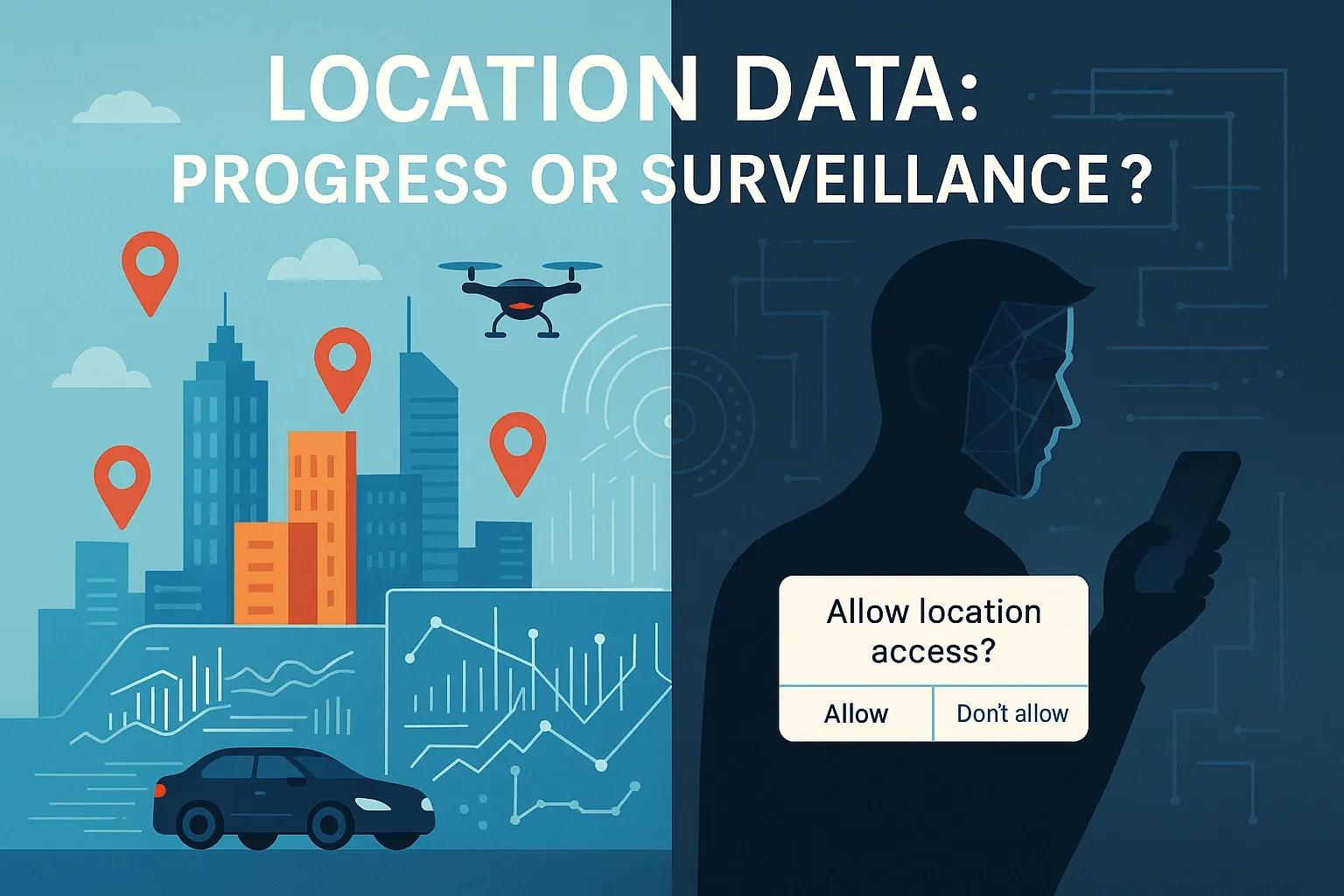
Location data has emerged as a cornerstone of modern digital innovation. It powers everything from ride-hailing apps and smart city planning to public health interventions and targeted marketing. In India, the proliferation of geospatial technologies, IoT-enabled devices, and AI-driven location intelligence platforms offers immense opportunities for businesses and governments alike. However, as organizations collect, process, and share this data at unprecedented scale, they are also confronted with a fundamental challenge, balancing innovation with the ethical obligation to protect individual privacy.
This article explores the ethics and ethical dimensions of location data usage, focusing on how Indian stakeholders must navigate the Digital Personal Data Protection (DPDP) Act, 2023, while aligning with evolving global privacy frameworks such as the EU’s GDPR, California’s CCPA, and OECD Privacy Guidelines.
1. The Value and Vulnerability of Location Data
Location data is inherently sensitive because it can reveal a person’s habits, affiliations, and movements, sometimes with alarming precision. Unlike anonymized demographic or behavioral datasets, geolocation information often includes timestamps and device identifiers that can be used to re-identify individuals, even when explicit personal identifiers are removed.
Common use cases include:
Smart mobility : Real-time traffic monitoring, route optimization, and predictive maintenance
Retail analytics : Footfall analysis and personalized marketing
Public health : Disease outbreak mapping and contact tracing
Urban governance : Land use planning and civic resource allocation
While these applications bring efficiency and insight, they also raise the risk of location surveillance , unauthorized profiling, and data misuse , especially when collected without transparent consent mechanisms.
2. Ethical Principles for Responsible Location Data Use
Ethical location data governance hinges on a few foundational principles:
a. Informed Consent
Users must know what data is being collected, how it will be used, and who it will be shared with. Consent should be granular, revocable, and not bundled with unrelated services.
b. Data Minimization
Collect only the minimum data necessary for the stated purpose. For instance, if a service only needs city-level data, capturing precise GPS coordinates is excessive.
c. Purpose Limitation
Use data only for the purpose for which it was collected. Repurposing location data for unrelated commercial gains (e.g., selling to advertisers) without user knowledge violates this principle.
d. Transparency and Accountability
Organizations must maintain audit trails of data access, disclose third-party sharing arrangements, and implement policies to handle data breaches and misuse.
e. Right to Be Forgotten
Users should have the ability to erase their location data from systems where it is no longer required or where continued retention poses a privacy risk.
3. India’s DPDP Act: Key Provisions for Location Data Governance
The Digital Personal Data Protection (DPDP) Act, 2023 marks India’s most significant step toward codifying digital privacy rights. While not specific to geospatial or location data, the Act covers all personal data , which includes geolocation information when it can be linked to an individual.
a. Consent-Based Framework
The DPDP Act mandates that data fiduciaries (i.e., data collectors) obtain explicit, informed, and freely given consent before processing personal data. In the context of location-based services (LBS), this means pop-ups, app permissions, and disclosures must be clear and detailed.
b. Notice Requirements
Before collecting data, fiduciaries must issue a data processing notice outlining the purpose of data collection, duration of storage, and third-party sharing. For apps using background location access, this provision becomes especially relevant.
c. Significant Data Fiduciaries (SDF)
Organizations handling large volumes of sensitive data or data that affects national interest may be designated as SDFs and are subject to stricter compliance measures. Firms dealing with continuous geolocation tracking, such as logistics providers or navigation apps, may fall under this category.
d. Cross-Border Data Transfers
While the Act allows international data transfers to notified countries , organizations must ensure the receiving country has comparable data protection measures. This is critical for companies relying on foreign cloud providers to store or process Indian location data.
e. User Rights
Data principals (users) have the right to:
Access their personal data
Request corrections
Withdraw consent
File grievances with the Data Protection Board of India
In sum, the DPDP Act creates a regulatory environment that demands transparency and responsibility from entities handling location data, aligning India more closely with global privacy norms.
4. Global Benchmarks: GDPR, CCPA, and OECD Guidelines
a. EU General Data Protection Regulation (GDPR)
The GDPR considers location data as personal data and enforces:
Lawful processing with consent or legitimate interest
Data portability and erasure rights
Strict penalties for violations
GDPR also requires Data Protection Impact Assessments (DPIA) for high-risk processing activities, including real-time tracking and profiling based on location data.
b. California Consumer Privacy Act (CCPA)
CCPA grants consumers:
The right to know what personal information (including location data) is collected
The right to opt-out of data sales
The right to request deletion of personal data
CCPA's opt-out mechanism is particularly relevant for businesses using location data for marketing or ad-tech purposes.
c. OECD Privacy Principles
Although non-binding, the OECD’s guidelines emphasize:
Individual participation
Purpose specification
Use limitation
Security safeguards
These principles have influenced privacy frameworks globally and serve as a foundation for ethical data practices in both developing and developed economies.
5. Challenges in the Indian Context
Despite legislative progress, several challenges remain:
a. Low Digital Literacy
Many users may not fully understand app permissions or the implications of sharing their location. Without proper digital education, consent remains superficial.
b. Ambiguous Boundaries
Distinguishing between personal and anonymized location data can be complex. Even aggregated datasets can be de-anonymized when combined with other data sources.
c. Enforcement Gaps
The operationalization of the Data Protection Board and sectoral coordination across ministries will determine how effectively the DPDP Act can be enforced.
d. Startups and SMEs
Smaller firms may struggle to implement full compliance due to lack of resources. Simplified toolkits or compliance-as-a-service models may be needed.
6. The Path Forward: A Balanced Ecosystem
To build trust and foster innovation, India must:
Promote privacy-by-design principles in app and platform development
Develop ethical frameworks and industry codes of conduct specific to geospatial and location data use
Incentivize innovation in privacy-preserving technologies , such as federated learning, differential privacy, and edge analytics
Conduct public awareness campaigns about data rights and risks
Encourage stakeholder collaboration between regulators, technologists, academia, and civil society to refine policy frameworks
Conclusion
Location data is a powerful tool for innovation, especially in a rapidly digitizing country like India. However, its misuse can lead to serious consequences for citizen privacy and democratic rights. The DPDP Act is a step in the right direction, but its success will depend on how it is interpreted, enforced, and aligned with global norms.
As India navigates this evolving landscape, balancing technological progress with ethical responsibility is not just a legal mandate, it’s a societal imperative. Organizations that embrace this balance are likely to earn public trust, foster long-term user engagement, and position themselves as leaders in the responsible data economy.