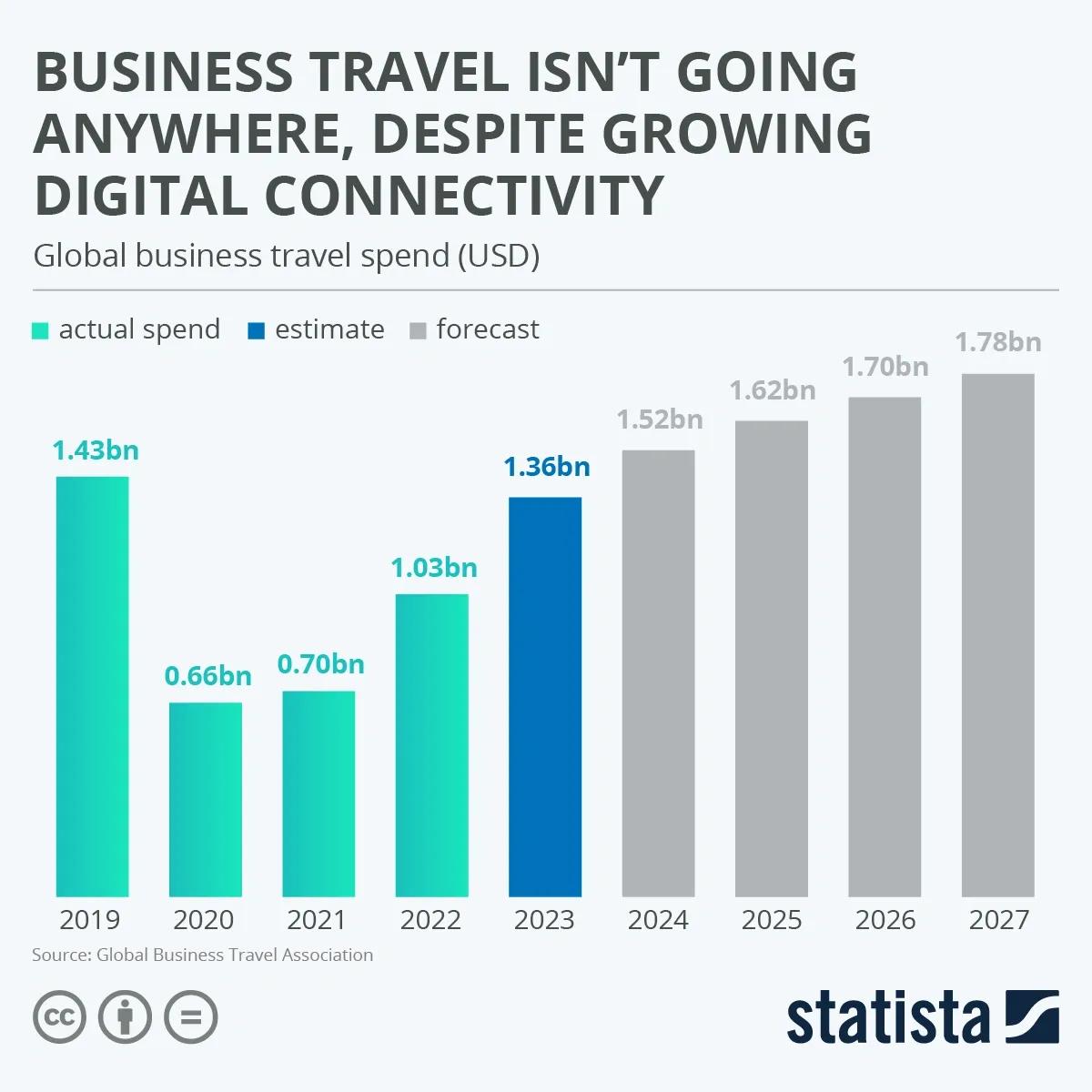
The interplay between business travel and geospatial technologies offers a rich tapestry of opportunities for the discerning entrepreneur. The global business travel landscape is undergoing significant transformation, driven by various factors from health concerns to digital disruption. Notably, despite the burgeoning growth of digital connectivity, business travel remains resilient, as illustrated by recent data. This nexus between travel and technology, particularly geospatial technologies, is where modern entrepreneurs can carve a niche.
Travel Analytics: Deciphering Patterns and Behaviors One of the most promising areas for geospatial intervention is travel analytics. By analyzing the spatial patterns of business travelers, entrepreneurs can glean insights into preferred destinations, peak travel times, and even emerging business hubs. This predictive modeling can enable airlines, hotels, and allied industries to anticipate demand, refine their marketing campaigns, and optimize services for the discerning business traveler.
Optimal Site Selection: The Geospatial Edge For hotel chains and even conference centers contemplating expansion, geospatial analysis emerges as a game-changer. Determining the perfect location isn't just about real estate prices. The proximity to business districts, transportation hubs, local amenities, and even the competitive landscape becomes crucial. Through advanced geospatial tools, businesses can simulate various scenarios, assessing the potential success and challenges of different sites.
Smart Transportation: Beyond Traditional Navigation The modern business traveler is not just looking for the fastest route but also the most efficient one. Geospatial technologies can revolutionize transportation options for these travelers. Whether it's optimizing shuttle services from airports, identifying less congested routes, or providing geofenced deals and offers, the scope is immense. Such tailored experiences can enhance the traveler's journey, ensuring they are more likely to choose a particular service again.
Augmented Reality: Merging Business with Pleasure With the rise of 'bleisure' (business + leisure), geospatial entrepreneurs have a unique opportunity to enhance the travel experience. Augmented Reality (AR), underpinned by geospatial data, can offer interactive, location-based insights to travelers. Imagine a business executive, on their way to a conference, receiving real-time AR insights about a historical monument they pass by. Such enriching experiences can redefine business travel.
Event Management and Geospatial Insights Geospatial tools offer a holistic perspective for event organizers. Selecting a venue isn't just about capacity but also about attendee distribution, transport links, and auxiliary services. Moreover, during the event, geospatial data can help in managing crowd flows, ensuring optimal experiences for attendees.
The Green Footprint: Geospatial Technologies and Sustainable Travel Sustainability is no longer a buzzword; it's a mandate. As businesses become increasingly conscious of their environmental footprint, geospatial technologies can offer invaluable insights. By assessing the environmental impact of various travel options or even suggesting eco-friendly accommodations and transit systems, geospatial tools can empower businesses to make responsible choices.
Mitigating Risks with Real-time Geospatial Insights In today's volatile world, risk management is paramount. Geospatial technologies, with their ability to provide real-time data, can alert businesses to areas of concern, be it political unrest, health emergencies, or impending natural disasters. Such timely insights can be crucial in safeguarding employees and assets.
Personalized Journeys with Geospatial Data In the age of customization, geospatial technologies can be the linchpin for offering bespoke travel experiences. By mapping a traveler's previous routes, feedback, and preferences, service providers can curate trips that resonate on a personal level.
The Infrastructure Imperative Lastly, for cities vying to be the next business hub, geospatial insights can guide infrastructure development. Whether it's designing a new airport terminal or planning an efficient public transport system, geospatial data offers a roadmap, quite literally.
In conclusion, the interstice of business travel and geospatial technologies is rife with opportunities. Entrepreneurs willing to delve deep into this space can not only revolutionize the business travel experience but also carve a sustainable, profitable niche for themselves. The future beckons, and it is mapped out in geospatial coordinates.