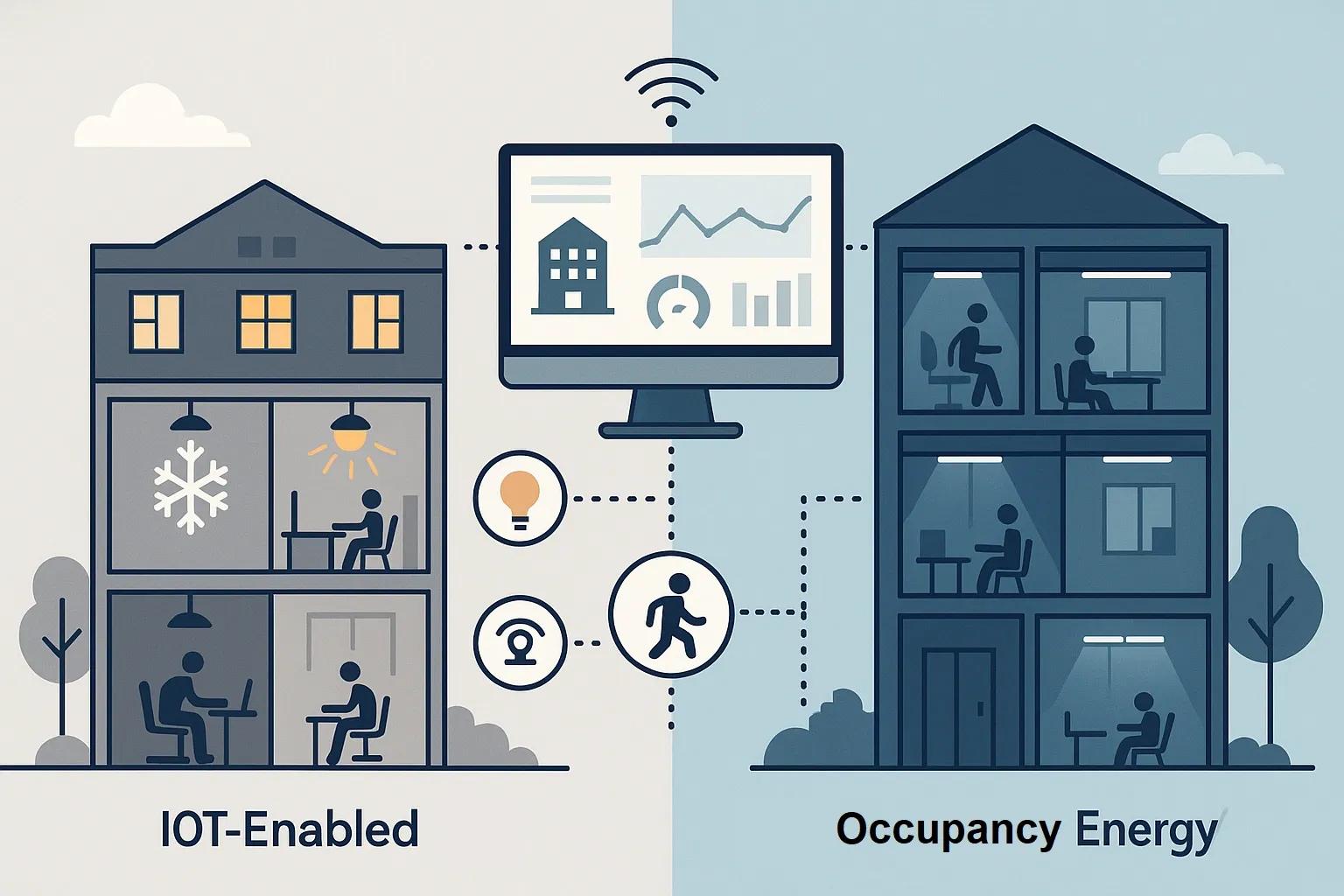
As commercial buildings grow more complex, energy efficiency remains a persistent challenge. According to the International Energy Agency (IEA), buildings account for nearly 30% of global energy consumption and a significant portion of CO₂ emissions. In commercial spaces, much of this energy is wasted due to unoptimized HVAC operations, inefficient lighting systems, and poor occupancy management. Enter the IoT-enabled Energy Twin, a digital representation of energy systems that integrates sensor data, simulation models, and AI-driven analytics to monitor and reduce energy wastage in real time.
This article explores how IoT-enabled Energy Twins function, their architecture, and how they improve operational efficiency through monitoring HVAC systems, lighting control, and occupancy behavior.
1. What is an IoT-Enabled Energy Twin?
An Energy Twin is a subset of a digital twin that focuses specifically on energy flows and consumption patterns within a building or facility. When integrated with the Internet of Things (IoT), it becomes a dynamic, real-time replica of the physical energy systems, including air conditioning, ventilation, lighting, and other electrical loads.
The goal is to continuously optimize energy use through feedback loops, predictive algorithms, and automated control mechanisms. It acts not just as a monitoring tool but also as an intelligent decision-making engine.
2. Architecture of an IoT-Enabled Energy Twin
A typical Energy Twin architecture includes:
IoT Sensors & Gateways : Collect real-time data on temperature, humidity, CO₂ levels, lighting intensity, occupancy, and energy consumption.
Data Aggregation & Edge Processing : Gateways preprocess data before transferring to the cloud or on-premise servers.
Digital Twin Platform : A 3D/semantic model simulates energy flow and building behavior.
Analytics Engine : Applies AI/ML for pattern recognition, anomaly detection, and forecasting.
User Interface : Dashboards and mobile apps for facilities managers to view and control systems.
Automation Layer : Sends control signals to HVAC systems, lighting controllers, and actuators.
This architecture supports bi-directional data flow, enabling not only monitoring but also active energy optimization.
3. Monitoring and Optimizing HVAC Systems
Heating, Ventilation, and Air Conditioning (HVAC) systems are often the largest energy consumers in commercial buildings, accounting for up to 40-50% of total usage.
Key Functions of Energy Twin for HVAC:
Dynamic Setpoint Adjustments : Based on occupancy and external weather forecasts, Energy Twin suggests or implements optimal temperature settings.
Zone-based Control : Instead of a uniform temperature, the system adapts HVAC outputs based on real-time zone occupancy.
Fault Detection & Diagnostics (FDD) : Identifies underperforming components (e.g., clogged filters, refrigerant leaks) using deviation from modeled behavior.
Predictive Maintenance : Alerts facility managers before failures, reducing downtime and increasing efficiency.
Example: A large office building in Bengaluru integrated IoT-based HVAC Energy Twins and saw a 22% reduction in energy bills within six months, driven by predictive control and peak load management.
4. Intelligent Lighting Systems
Lighting is another major contributor to energy usage, especially in buildings with 24/7 operations or large floor areas.
How Energy Twin Optimizes Lighting:
Occupancy Sensing : IoT sensors detect room usage and automatically dim or switch off lights in unoccupied zones.
Daylight Harvesting : The system adjusts artificial lighting levels based on ambient sunlight.
Scheduling & Automation : Enables smart schedules for corridors, conference rooms, and shared spaces.
Energy Modeling : Simulates energy savings from retrofitting old fixtures with LEDs or smart lighting systems.
By using spatial occupancy data, the Energy Twin ensures that lighting is personalized, location-aware, and consumption-efficient.
5. Occupancy Pattern Analytics
Understanding occupancy patterns is critical for fine-tuning both HVAC and lighting systems. IoT sensors, such as motion detectors, infrared sensors, and smart badges, feed real-time location and movement data into the Energy Twin model.
Key Benefits:
Space Utilization Insights : Helps determine underutilized zones, enabling space consolidation.
Demand-Based Energy Delivery : Energy systems are activated only when occupancy is detected.
Workplace Comfort : Maintains thermal and visual comfort based on occupant density and preferences.
Anomaly Detection : Identifies unexpected patterns (e.g., weekend usage) that may signal policy violations or equipment malfunctions.
This granular control allows for hyper-personalization of energy delivery, improving comfort while reducing waste.
6. Integration with Building Management Systems (BMS)
IoT-enabled Energy Twins are most effective when integrated with existing Building Management Systems (BMS) or Energy Management Systems (EMS). Through API-based communication, the twin can exchange data and control commands with chillers, air handling units, lighting panels, and occupancy counters.
This tight coupling enhances the capability of legacy BMS by adding predictive analytics, scenario simulations, and autonomous control based on real-time feedback.
7. Use of AI and Machine Learning
AI models play a central role in unlocking the full potential of Energy Twins:
Regression Models : Estimate future energy consumption based on historical trends.
Classification Algorithms : Distinguish between normal and abnormal consumption behavior.
Reinforcement Learning : Enables the system to learn optimal control strategies over time.
For instance, an AI model may learn that conference rooms are occupied 60% less on Fridays and adjust pre-cooling schedules accordingly.
8. Real-World Applications
Retail Malls : Adjust HVAC cooling based on footfall, saving costs during low-traffic hours.
Hospitals : Maintain 24/7 operation zones while optimizing non-critical areas using motion sensors.
Corporate Offices : Identify unused meeting rooms and optimize lighting/HVAC schedules accordingly.
Data Centers : Monitor energy-intensive cooling systems and fine-tune airflow in real time using the digital twin interface.
Each of these applications leads to measurable savings in both energy and operational costs.
9. Challenges and Considerations
Despite their advantages, Energy Twins face some implementation challenges:
Upfront Cost : Installation of IoT devices, cloud infrastructure, and software licenses can be significant.
Data Privacy : Occupancy tracking must comply with data protection laws.
Integration Complexity : Legacy systems may lack interoperability with modern IoT platforms.
Scalability : Maintaining performance across multiple buildings or campuses requires robust infrastructure.
These challenges can be mitigated through phased rollouts, open standards, and modular architecture.
10. The India Context
India’s commercial real estate sector, especially IT parks, malls, and educational campuses, presents a high potential for Energy Twin adoption. With rising energy costs and growing ESG mandates, organizations are exploring smart building technologies that offer both cost savings and sustainability.
Government initiatives such as the Energy Conservation Building Code (ECBC) and programs under Smart Cities Mission further encourage digitized energy management.
Conclusion
IoT-enabled Energy Twins offer a practical, scalable, and intelligent approach to reducing commercial energy wastage. By combining real-time data from HVAC systems, lighting, and occupancy sensors with AI-driven analytics, they enable continuous optimization of energy performance.
In an era where energy efficiency is both an economic and environmental imperative, Energy Twins serve as a critical tool for facility managers, building owners, and sustainability officers. As IoT adoption increases and digital infrastructure becomes more accessible, Energy Twins are poised to become the de facto standard for smart commercial buildings.