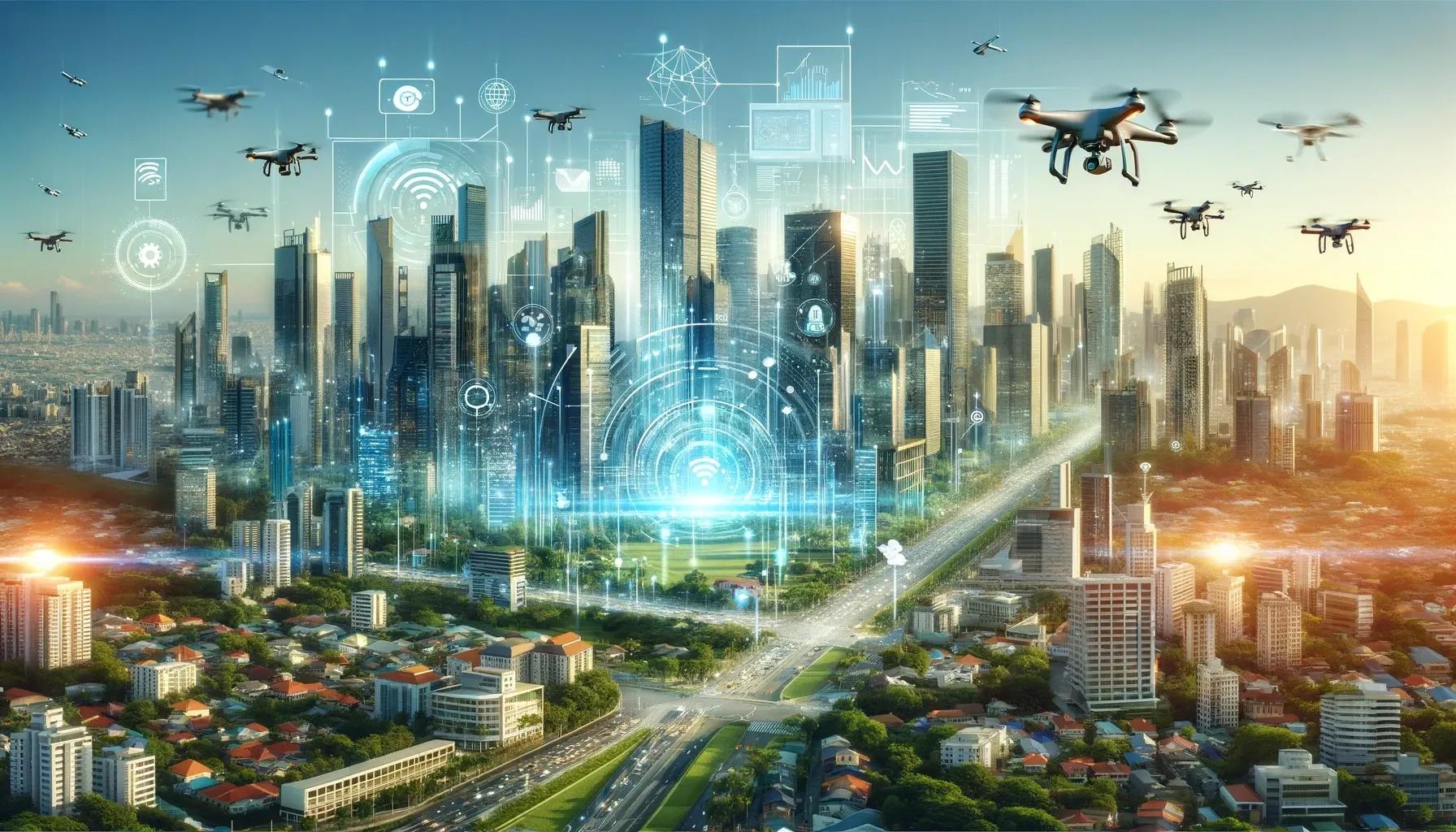
In the vibrant landscape of urban development, the integration of the Internet of Things (IoT) with drones and Building Information Modeling (BIM) is not just an innovative approach but a transformative one. This synergy offers a compelling vision of smart cities, where technology becomes the backbone of urban efficiency, sustainability, and resident well-being.
The Emergence of Smart Cities
Smart cities represent the pinnacle of urban planning and technology integration. They are designed to optimize resource use, enhance urban services, and provide a high-quality life through data-driven decision-making. At the heart of this development lies the fusion of IoT with drones and BIM, a triad that is redefining urban landscapes.
Role of IoT in Urban Development
IoT, a network of interconnected devices that communicate and share data, is crucial in smart city development. By collecting real-time data from various sensors, IoT devices offer insights into traffic patterns, environmental conditions, and resource usage. This data becomes the foundation upon which smart cities are built, offering a granular view of urban dynamics.
Enhancement of Drone Capabilities
Drones, when integrated with IoT, become powerful tools for urban planning and maintenance. Equipped with sensors and cameras, drones can collect aerial data that is invaluable in mapping, monitoring, and managing urban spaces. IoT enhances drone capabilities by enabling real-time data transmission, analysis, and decision-making. For instance, drones can monitor traffic congestion, air quality, and even assist in disaster management by providing critical, real-time information to response teams.
Synergy with Building Information Modeling (BIM)
BIM's role in urban development is pivotal. It creates detailed digital representations of physical and functional characteristics of structures, allowing for efficient planning and management of buildings and infrastructure. The integration of IoT with BIM takes this a step further. IoT devices embedded in buildings can provide real-time data on energy usage, structural health, and occupancy patterns, which can be fed into BIM models. This integration results in dynamic, live models that reflect current conditions, enhancing the ability to manage and optimize building performance and safety.
IoT, Drones, and BIM: A Triad for Sustainable Urban Planning
The combination of IoT, drones, and BIM fosters an environment of sustainable urban planning. Drones can quickly survey large areas, providing data that can be integrated into BIM models, which are then enriched with IoT data for comprehensive urban analysis. This approach supports sustainable development goals by enabling more efficient resource management, reducing waste, and improving energy efficiency.
Impact on Urban Services and Infrastructure
The practical applications of this triad are extensive. For instance, in transportation, IoT sensors can provide data on traffic flow, which, when combined with drone imagery and BIM models, can lead to more efficient traffic management and infrastructure planning. In terms of public safety, drones can be deployed quickly in emergency situations, providing real-time data that can be integrated into city models to enhance response strategies.
Enhancing Quality of Life
Beyond infrastructure and services, this technological integration significantly enhances the quality of life for urban residents. Smart buildings, informed by IoT and BIM, offer better living environments, optimizing everything from lighting to temperature based on real-time data. Furthermore, the environmental monitoring capabilities of drones contribute to a healthier urban environment, enabling cities to respond more effectively to pollution and climate challenges.
Challenges and Future Directions
While the potential is immense, challenges such as data privacy, security, and integration of disparate systems need to be addressed. Future advancements in AI and machine learning will further enhance the capabilities of this integration, making smart cities even more responsive and efficient.
In conclusion, the integration of IoT with drones and BIM represents a significant leap forward in the journey towards smart city development. This triad not only enhances urban planning and management but also promises a sustainable, efficient, and more livable future for urban residents. As technology continues to evolve, the potential for further innovation in this field is limitless, offering a bright vision for the cities of tomorrow.