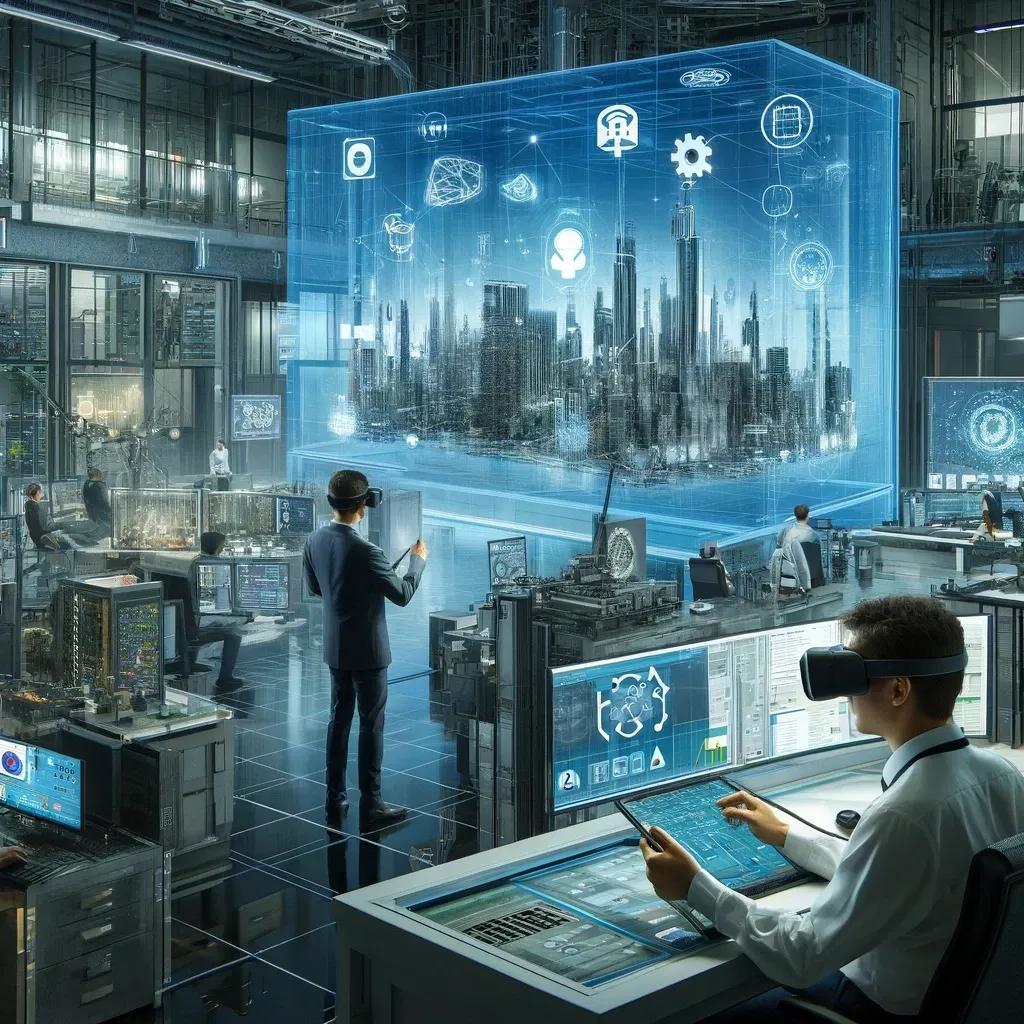
Digital twins, a cornerstone of modern engineering and design, have transcended their initial industrial applications to become a fundamental part of various sectors including manufacturing, automotive, healthcare, and urban planning. This technology involves creating a digital replica of a physical system, process, or environment that can be used for simulation, analysis, and optimization. The surge in digital twin adoption can be attributed to several innovative tools and technologies that enhance their capabilities and usability. This article explores these technologies, focusing on how they contribute to the broader adoption and effectiveness of digital twins.
1. Internet of Things (IoT)
The Internet of Things (IoT) stands out as a primary driver for digital twin technology. IoT devices collect real-time data from their physical environment and send this data to their corresponding digital twins, enabling them to mirror the live status of the physical object. This continuous flow of data helps in monitoring, maintenance, and operational planning. IoT sensors can track everything from temperature and pressure to more complex conditions like equipment performance, which feeds into predictive analytics to forecast potential failures before they occur.
2. Artificial Intelligence and Machine Learning
Artificial Intelligence (AI) and Machine Learning (ML) are pivotal in advancing digital twin technology. AI algorithms can analyze the vast amounts of data generated by digital twins and IoT devices, identifying patterns and anomalies that would be impossible for humans to detect efficiently. ML models can learn from this data and make increasingly accurate predictions about the future state of the physical counterpart. This predictive capability is essential for proactive maintenance, optimizing operations, and enhancing decision-making processes in real-time environments.
3. Augmented Reality (AR) and Virtual Reality (VR)
Augmented Reality (AR) and Virtual Reality (VR) technologies significantly enhance the interactivity of digital twins. They allow engineers and decision-makers to visualize complex data and simulations in a more intuitive and immersive manner. For instance, AR can overlay data from the digital twin onto a physical object using smart glasses or mobile devices, providing a comprehensive view of potential issues and improvements. VR, on the other hand, creates a fully immersive environment where one can interact with the digital twin as if it were a real object. This is particularly useful in training, where individuals can experience and manipulate complex systems in a controlled, risk-free virtual environment.
4. Cloud Computing
Cloud computing provides the necessary infrastructure for digital twins to function effectively. It offers scalable storage and powerful computational capabilities that are essential for handling the large datasets and complex simulations performed by digital twins. Cloud platforms enable seamless integration of data from disparate sources and facilitate collaboration across geographical boundaries. This accessibility makes digital twins more usable and practical for organizations of all sizes, enhancing their adoption across various industries.
5. 5G and Advanced Network Infrastructure
The deployment of 5G networks is a game-changer for digital twins, particularly in scenarios where real-time data transfer and connectivity are crucial. 5G offers much lower latency and higher bandwidth compared to previous telecommunications networks, which enhances the responsiveness and accuracy of digital twins. This is critical in applications like autonomous driving, remote surgery, and real-time remote monitoring of industrial equipment, where even minimal delays can lead to significant consequences.
6. Building Information Modeling (BIM)
In the construction and architectural sectors, Building Information Modeling (BIM) technologies converge with digital twins to create highly detailed and dynamic models of buildings and infrastructure projects. BIM facilitates the visualization, simulation, and analysis of construction projects over their entire lifecycle. Integrating BIM with digital twins allows for a real-time connection between the digital model and its physical counterpart, enhancing the ability to monitor construction progress, manage changes, and ensure compliance with design specifications.
7. Geographic Information Systems (GIS)
Geographic Information Systems (GIS) are particularly influential in the realm of urban planning and environmental monitoring. When integrated with digital twins, GIS provides spatial analysis tools that enhance the understanding of geographic data within the context of the digital twin. This integration allows for advanced simulations of environmental impacts, urban growth, and infrastructure resilience, providing planners and decision-makers with powerful tools to make informed decisions.
In conclusion, the integration of IoT, AI, AR/VR, cloud computing, 5G, BIM, and GIS technologies has significantly enhanced the capabilities and applications of digital twins. These tools not only improve the accuracy and efficiency of simulations but also make digital twins more accessible and useful across different industries. As these technologies continue to evolve, the adoption of digital twins is expected to increase, driving further innovation and transformation in various sectors. The future of digital twins looks promising, with ongoing advancements setting the stage for more integrated, interactive, and intelligent systems.