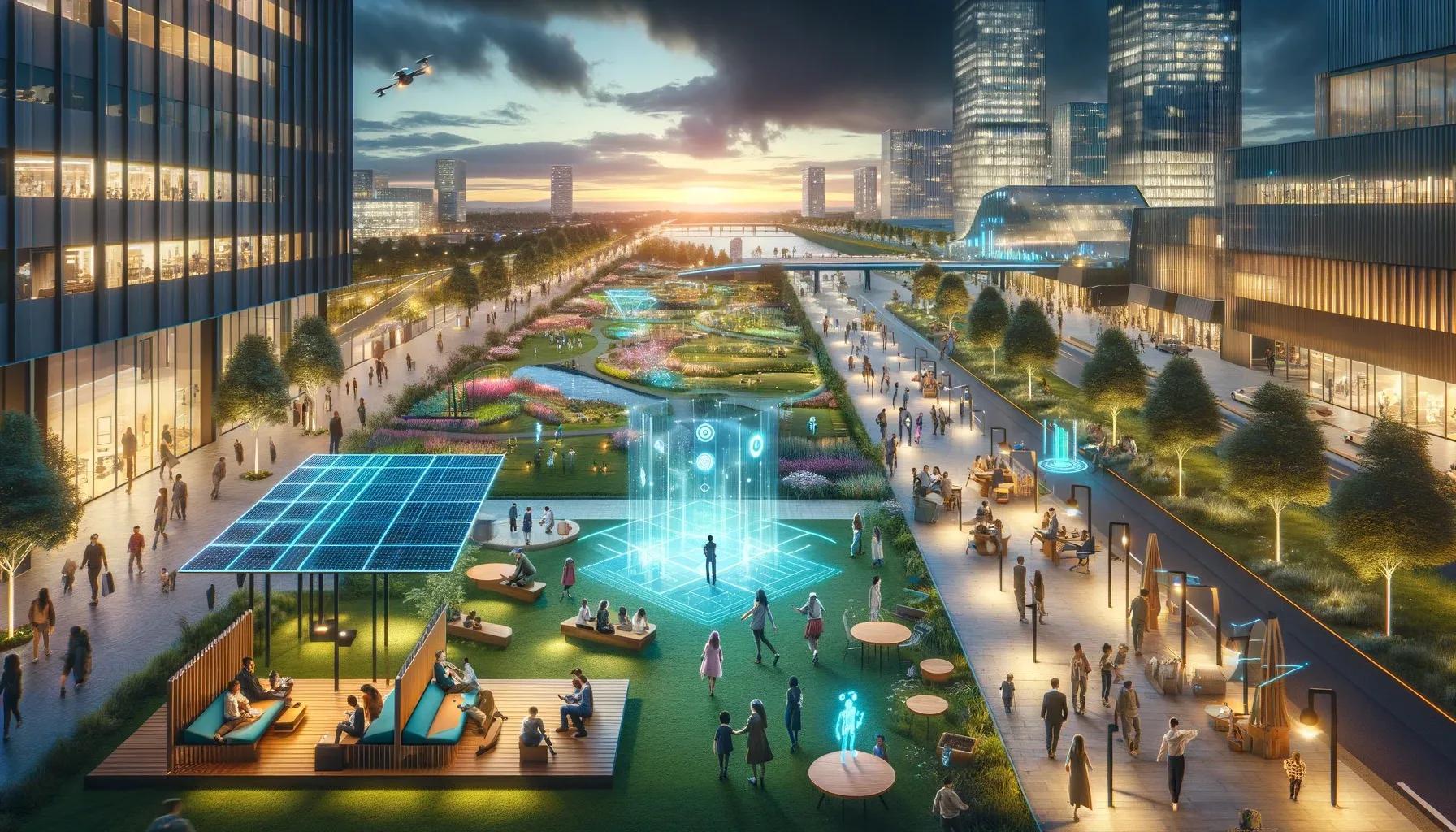
In the age of rapid urbanization, the concept of public spaces in cities is evolving, integrating advanced technologies to foster more interactive, inclusive, and sustainable environments. Smart cities leverage digital technologies to enhance the quality of urban services, including public spaces, which are central to community life and urban ecosystems. This article delves into how technology is used to revolutionize public space design in smart cities, enhancing community spaces and social interaction in profound ways.
Rethinking Public Spaces
Public spaces are the living rooms of a city, where social interactions flourish, cultures mix, and communities engage. In smart cities, these spaces are reimagined through the lens of technology, focusing on flexibility, sustainability, and connectivity. The innovative design of public spaces uses technology not as an end but as a means to achieve more adaptable, responsive, and engaging community areas.
Technological Interventions in Public Spaces
Interactive Installations and Digital Artworks : Smart cities are embedding technology into public art to create interactive installations that engage citizens and beautify urban areas. Digital sculptures and augmented reality (AR) experiences invite public interaction, transforming passive spaces into dynamic environments that respond to the presence and actions of individuals.
Smart Lighting and Energy : Adaptive lighting technologies adjust the brightness based on the time of day and the presence of people, improving safety and reducing energy consumption. Solar-powered benches and lighting contribute to sustainability, while smart grids can balance energy distribution based on demand across the city.
Enhanced Mobility and Accessibility : Technology improves mobility and accessibility in public spaces. Wi-Fi-connected bus shelters provide real-time transit information, and smart parking solutions reduce congestion. For individuals with disabilities, technology such as audible signals and tactile paving integrated with smartphone apps enhances navigability and safety.
Sustainable and Green Technologies : Green roofs, urban gardens, and permeable pavements are being incorporated into public spaces, supported by smart irrigation systems that optimize water use based on weather data and soil moisture levels. These green spaces offer not only recreational opportunities but also environmental benefits like improved air quality and temperature regulation.
Data-Driven Maintenance and Management : IoT sensors and AI algorithms analyze usage patterns and wear and tear in public spaces, facilitating proactive maintenance. Trash bins notify cleaning services when full, and wearables for maintenance staff can ensure efficient task allocation and safety.
Social Interaction Spaces Powered by Technology : Smart furniture, such as benches with charging stations and free Wi-Fi, encourages people to spend more time outdoors and interact. Virtual noticeboards and community apps foster a sense of community by sharing local events, alerts, and services.
Participatory Design and Feedback Loops : Technology also democratizes the design process of public spaces. Online platforms and apps allow citizens to provide feedback on existing spaces and participate in the planning of new projects. This participatory approach ensures that public spaces meet the needs and preferences of the community.
Challenges and Considerations
While technology offers numerous opportunities to enhance public spaces, there are challenges to address. Privacy concerns arise with the collection of data in public areas. Transparent policies and robust data protection measures are essential to maintaining trust. Additionally, the digital divide may exclude some community members from fully benefiting from technology-enhanced spaces. Ensuring universal access and designing intuitive, user-friendly interfaces are crucial.
Future Directions
The future of public spaces in smart cities lies in the seamless integration of technology and nature, creating environments that are not only sustainable and efficient but also nurturing and inclusive. Augmented and virtual reality could further blur the lines between physical and digital spaces, offering new ways to experience and interact with the urban environment. Meanwhile, the advancement of AI and machine learning will enable even more personalized and adaptive public spaces, anticipating the needs of citizens and evolving with the community.
In conclusion, innovative public space design in smart cities represents a paradigm shift in how we think about urban environments. By harnessing technology, these spaces can become more than just places of transit or leisure; they can be platforms for community building, cultural expression, and environmental stewardship. As cities continue to grow and evolve, the thoughtful integration of technology in public spaces will play a pivotal role in shaping vibrant, resilient, and connected urban communities.