Railway failures don’t happen instantly.
They build up over time, undetected, until it’s too late.
Introduction
In the previous articles, we explored how Digital Twins enable:
predictive maintenance in highways
integrated operations in smart cities
real-time coordination in airports
Now we move to another critical infrastructure system:
👉 Railways
Railways are not just transport systems.
They are complex, interconnected networks involving:
tracks
rolling stock
signaling systems
operational control
In Phase 3, the focus remains:
👉 how Digital Twins enable real-time monitoring, safety, and network-level intelligence
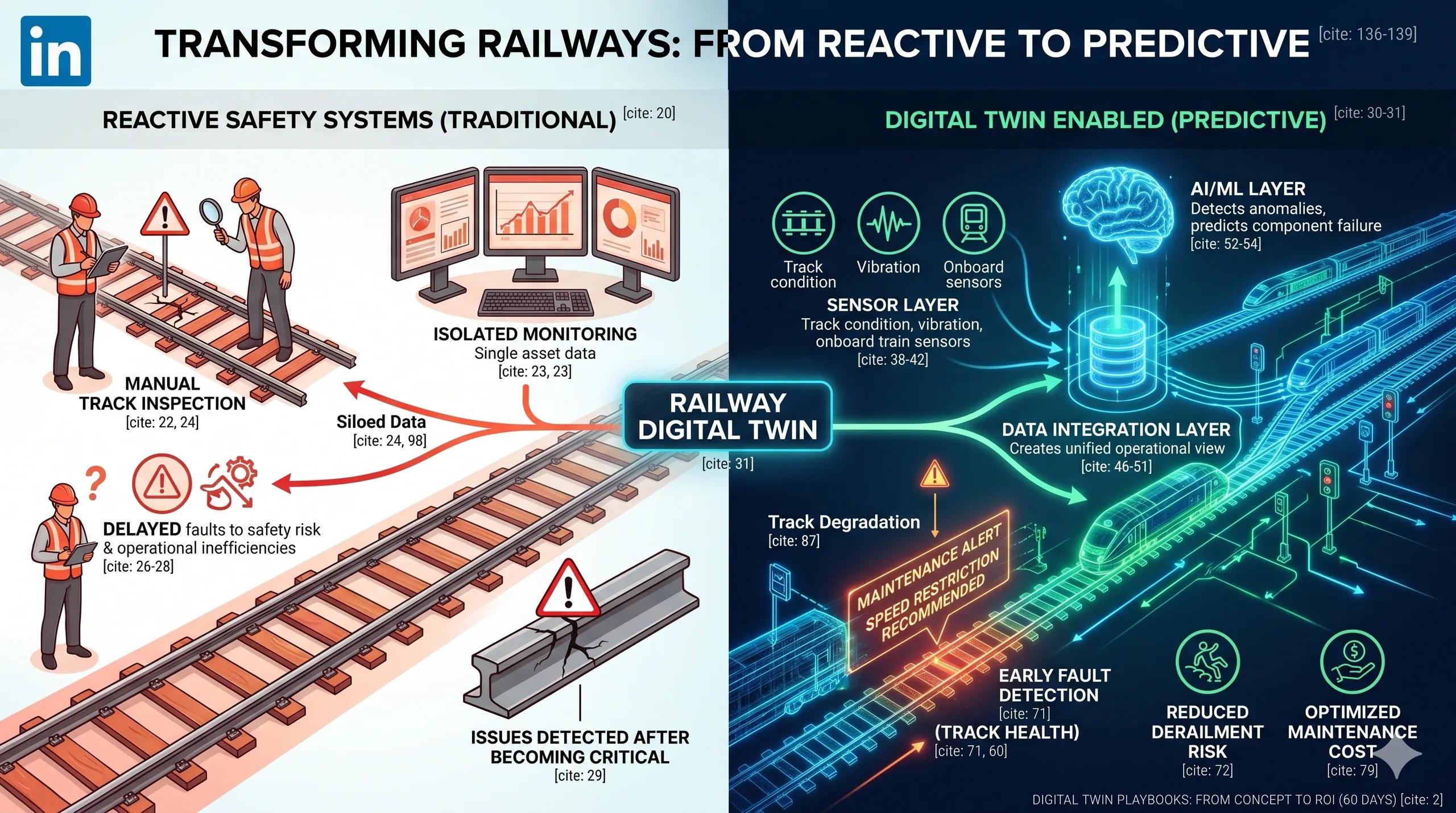
The Core Problem: Reactive Safety Systems
Traditional railway systems rely on:
periodic inspections
isolated monitoring systems
manual intervention
This leads to:
delayed fault detection
safety risks
operational inefficiencies
👉 Issues are often detected after they become critical
Where Digital Twins Change the Approach
A Railway Digital Twin enables:
👉 continuous, network-wide monitoring and predictive safety
Instead of:
isolated asset monitoring
It creates:
an integrated view of the entire railway system
Key Components of a Railway Digital Twin
1. Sensor Layer
track condition sensors
vibration monitoring
temperature and stress sensors
onboard train sensors: speed braking performance system health
2. Data Integration Layer
combines: track data train data signaling data
👉 creates a unified operational view
3. AI/ML Layer
detects anomalies in track conditions
predicts component failures
identifies safety risks
4. Visualization Layer
real-time dashboards for control centers
GIS-based network monitoring
3D models for asset-level insights
Use Case 1: Track Health Monitoring
Traditional Approach
scheduled inspections
manual assessments
👉 issues often detected late
Digital Twin Approach
continuous monitoring of: track stress vibration alignment
👉 Outcome:
early detection of faults
reduced derailment risk
Use Case 2: Predictive Maintenance
analyze wear patterns
forecast component failure
schedule maintenance proactively
👉 Outcome:
reduced downtime
optimized maintenance cost
Use Case 3: Safety Systems Integration
integrate signaling systems with real-time data
detect unsafe conditions
trigger alerts or automated responses
👉 Outcome:
improved operational safety
Practical Example
Scenario: Track Degradation
sensors detect increasing vibration in a track segment
AI model identifies:
👉 abnormal pattern compared to baseline
System triggers:
maintenance alert
speed restriction recommendation
👉 Outcome:
issue addressed before failure
safety risk minimized
Where Most Implementations Fail
1. Siloed Monitoring Systems
track, train, and signaling data not integrated
2. Lack of Predictive Capability
systems monitor but don’t anticipate
3. Delayed Response
insights not linked to action
4. Limited Network Visibility
focus on individual assets, not the entire system
Ask Yourself
Is your railway system:
👉 detecting problems
Or
👉 preventing them?
Indian Context
India operates one of the largest railway networks in the world through Indian Railways.
Challenges include:
vast network scale
aging infrastructure
high operational load
Digital Twins can help:
improve safety
optimize maintenance
enhance operational efficiency
Benefits & ROI
improved safety
reduced derailment risk
optimized maintenance
better network utilization
faster decision-making
Conclusion
Railway systems require:
👉 continuous monitoring
👉 predictive intelligence
👉 coordinated response
Digital Twins enable this by:
connecting data
predicting risks
guiding actions
This transforms railways from:
👉 reactive systems
To
👉 intelligent, safety-driven networks