Cities are not static systems.
They are constantly evolving yet most decisions are still made using static data.
Introduction
In the previous article, we explored how Digital Twins enable predictive maintenance in highways .
That was one dimension of infrastructure and construction.
Now we move to a more complex system:
👉 Smart Cities
In Phase 3, the focus is clear:
👉 how Digital Twins deliver real-world value
And cities are where this value becomes most visible because they combine:
infrastructure
mobility
environment
population dynamics
The Core Problem: Fragmented Urban Systems
Most cities today operate through:
isolated departments
disconnected data systems
reactive decision-making
Examples:
traffic systems operate separately from urban planning
utilities don’t share real-time data
environmental monitoring is not integrated with planning
👉 Result:
inefficiencies
delayed responses
suboptimal planning decisions
Where Digital Twins Change the Approach
A Smart City Digital Twin enables:
👉 a unified, real-time view of the urban environment
Instead of:
isolated systems
It creates:
connected urban intelligence
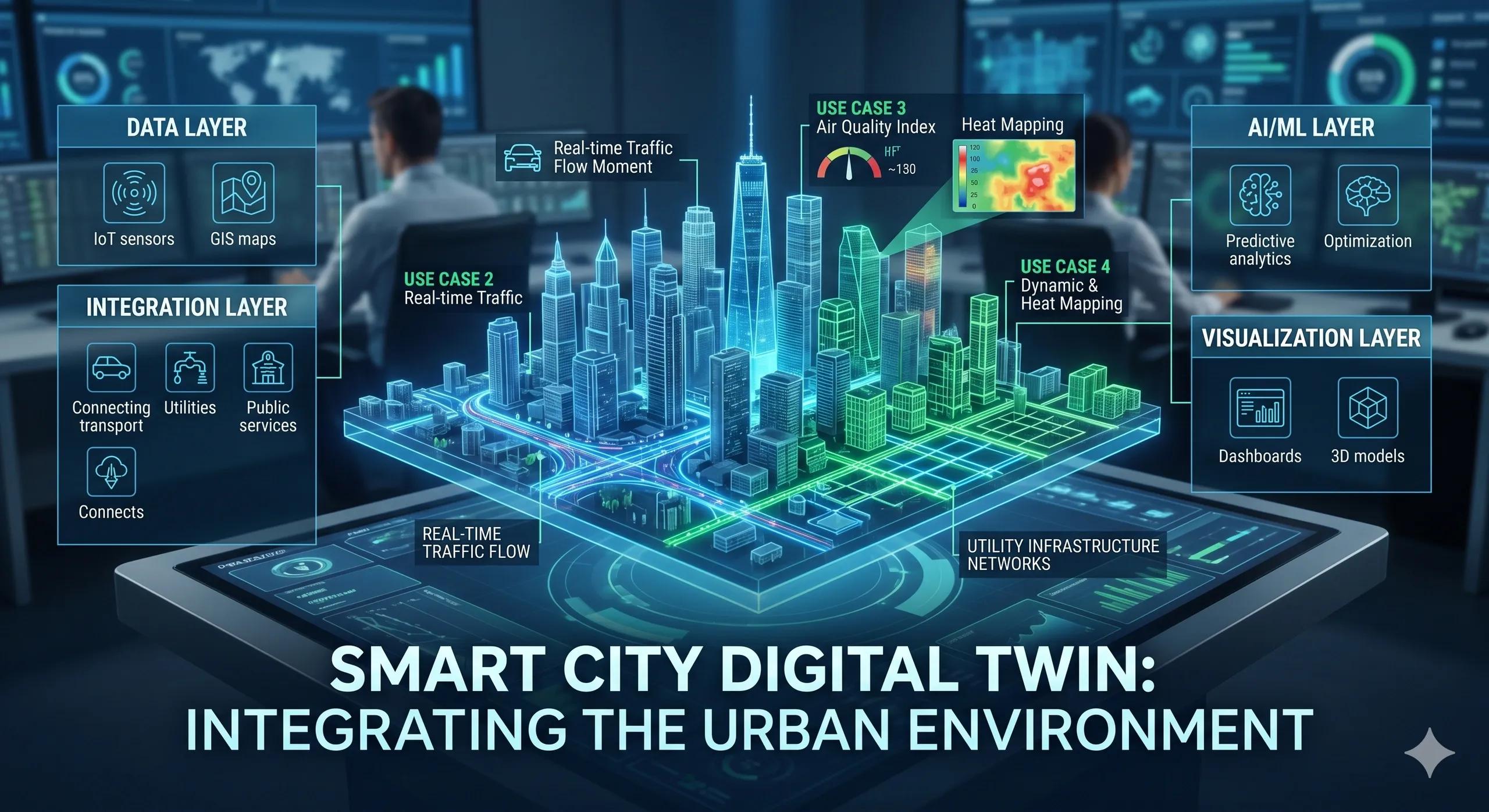
Key Components of a Smart City Digital Twin
1. Data Layer
IoT sensors: traffic air quality energy usage
GIS data: land use infrastructure zoning
external data: weather population trends
2. Integration Layer
combines data across: transport utilities public services
👉 creates a single operational view
3. AI/ML Layer
traffic prediction
pollution forecasting
demand analysis
4. Visualization Layer
dashboards for city officials
GIS maps for spatial understanding
3D city models for planning
Use Case 1: Urban Planning
Traditional Approach
static master plans
historical data
limited simulation
Digital Twin Approach
simulate urban growth scenarios
test infrastructure impact
optimize land use
👉 Outcome:
better long-term planning
reduced risk of poor decisions
Use Case 2: Traffic & Mobility Management
real-time traffic monitoring
predictive congestion analysis
dynamic signal optimization
👉 Outcome:
reduced congestion
improved commute times
Use Case 3: Environmental Monitoring
air quality tracking
heat island mapping
flood risk analysis
👉 Outcome:
proactive environmental management
Use Case 4: Utility Management
water supply monitoring
energy demand optimization
waste management
👉 Outcome:
efficient resource utilization
Practical Example
Scenario: Urban Traffic Congestion
sensors capture traffic flow
GIS maps road network
AI predicts congestion patterns
System triggers:
signal timing adjustments
alternate route recommendations
👉 Outcome:
smoother traffic flow
reduced delays
Where Most Implementations Fail
1. Data Silos Persist
departments don’t share data
2. Visualization Without Action
dashboards exist
decisions remain unchanged
3. No Real-Time Capability
systems rely on outdated data
4. Lack of Governance
no ownership of data and decisions
Ask Yourself
Is your city:
👉 connected digitally
Or
👉 operating as independent systems?
Indian Context
India is rapidly investing in Smart City initiatives .
However, challenges remain:
fragmented governance
legacy infrastructure
data integration issues
Digital Twins offer an opportunity to:
👉 move from isolated projects
To
👉 integrated urban intelligence systems
Benefits & ROI
improved urban planning
reduced congestion
better resource management
enhanced citizen services
data-driven governance
Conclusion
Smart Cities are not built by adding more technology.
They are built by:
👉 connecting systems
👉 enabling intelligence
👉 supporting decisions
Digital Twins make this possible.