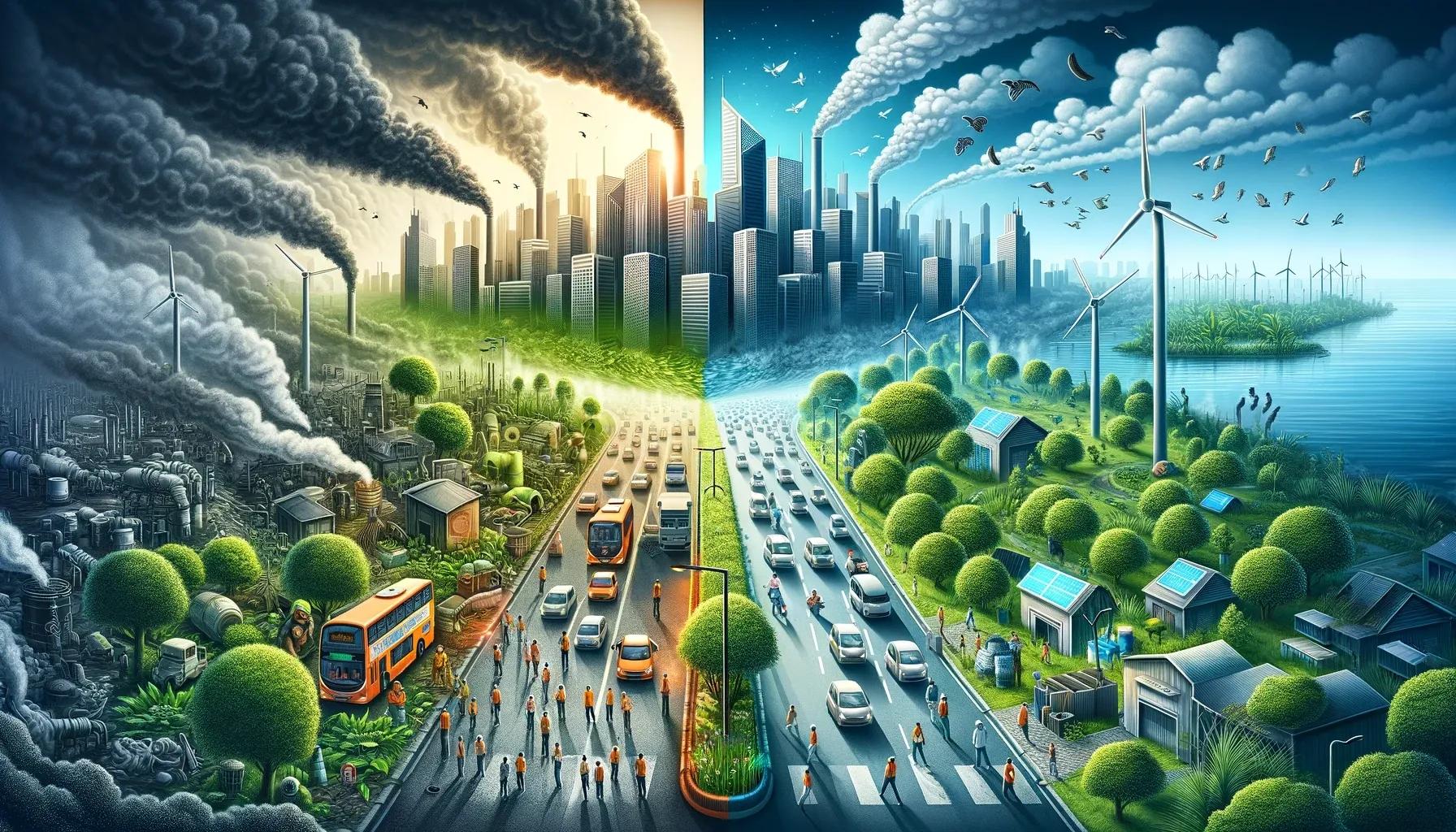
National Pollution Control Day in India, observed on December 2, serves as a poignant reminder of the catastrophic Bhopal Gas Tragedy of 1984, and underscores the critical importance of environmental stewardship and pollution control. This day is not just a commemoration but also a call to action, drawing attention to the urgent need for sustainable development and proactive measures to combat pollution in one of the world's most densely populated countries.
The State of Pollution in India: An Overview
India's battle with pollution is marked by alarming statistics that highlight the severity of the situation. One of the most significant indicators is the Nitrogen Dioxide (NO2) levels, which, during the COVID-19 lockdown, plummeted by 50% to 21 g/m³. This reduction, as noted by Balamadeswaran et al. (2021), starkly illustrates the impact of human activities on air quality. It also presents a unique perspective on how reduced industrial activity and transportation can significantly improve air quality, albeit temporarily.
PM2.5 pollution, tiny particulate matter that poses significant health risks, is another critical issue. Upadhyay et al. (2018) and Limaye et al. (2018) project that by 2030, PM2.5 levels in India could reach an annual mean of 74 g/m³, nearly eight times the World Health Organization's air quality guideline. This alarming projection is a clarion call for immediate and effective measures to curtail air pollution.
Health Impacts and Sources of Pollution
The health implications of pollution are dire. Etchie et al. (2017) report that the annual average PM2.5 concentration in India resulted in thousands of premature deaths and significant Disability-Adjusted Life Years (DALYs) in 2013. These figures not only represent a public health crisis but also highlight the economic and social costs of pollution.
Identifying the sources of pollution is crucial for formulating effective control strategies. Studies by Garaga et al. (2018) and Ravindra et al. (2016) pinpoint major sources of particulate matter in India, including dust and traffic emissions, with a particular emphasis on the under-predicted concentrations in urban areas like Delhi. This insight into the primary pollutants underscores the need for targeted pollution control measures in urban centers.
Media Perception and Indoor Air Pollution
The role of media in shaping public perception and policy response cannot be understated. Murukutla et al. (2017) found that a significant majority of news stories on air pollution in India emphasized the severity of health risks and called for urgent action. This media coverage plays a vital role in informing the public and influencing policy-makers.
Indoor air pollution is another critical aspect that often goes unnoticed. Saha & Chouhan (2020) identified several regions in India with high levels of indoor air pollution. Addressing this issue is essential for safeguarding the health of millions, particularly in rural and semi-urban areas.
Vehicle Emissions: A Major Contributor
Vehicle emissions, especially from older vehicles, are a significant contributor to air pollution in urban areas like Delhi, as Sharma et al. (2020) highlight. This fact underscores the importance of updating vehicle emission standards and promoting cleaner transportation alternatives.
Conclusion: The Path Forward
National Pollution Control Day provides an opportunity to reflect on the current state of pollution in India and to recommit to the goal of sustainable development. The statistics presented in this article paint a stark picture of the challenges ahead. However, they also offer a roadmap for addressing these challenges through targeted interventions, policy reforms, and public awareness campaigns.
Effective pollution control requires a multi-faceted approach, encompassing strict enforcement of environmental regulations, promotion of sustainable industrial practices, improvement of waste management systems, and encouragement of public participation in environmental conservation efforts. Additionally, advancing research in pollution control technologies and increasing investment in renewable energy sources are vital steps toward a cleaner, healthier environment.
In conclusion, National Pollution Control Day is not just an occasion to remember a tragic event but also a platform to galvanize action towards a more sustainable and environmentally conscious India. It is a day to renew our commitment to the planet and to each other, to ensure that the lessons learned from past tragedies guide us towards a future where economic development and environmental stewardship go hand in hand.
Citations
1. Balamadeswaran, Karthik, Ramakrishnan, & Bharath. (2021). Impact of COVID-19 Outbreak on Tropospheric Pollution Assessed.
2. Upadhyay, Dey, Goyal, & Dash. (2018). Projection of Near-Future PM2.5 in India.
3. Limaye, Schöpp, & Amann. (2018). Applying Integrated Exposure-Response Functions to PM2.5.
4. Etchie et al. (2017). Health Burden and Costs Averted by PM2.5 Pollution Reductions.
5. Garaga, Sahu, & Kota. (2018). Review of Air Quality Modeling Studies in India.
6. Ravindra, Sidhu, Mor, John, & Pyne. (2016). Air Pollution in India: Bridging the Science-Policy Gap.
7. Murukutla et al. (2017). Media Coverage of Pollution Risks and Policies in India.
8. Saha & Chouhan. (2020). Indoor Pollution and Preexisting Morbidities Among Children.
9. Sharma et al. (2020). Study and Analysis of Emission from Four-Wheelers and Its Impact.