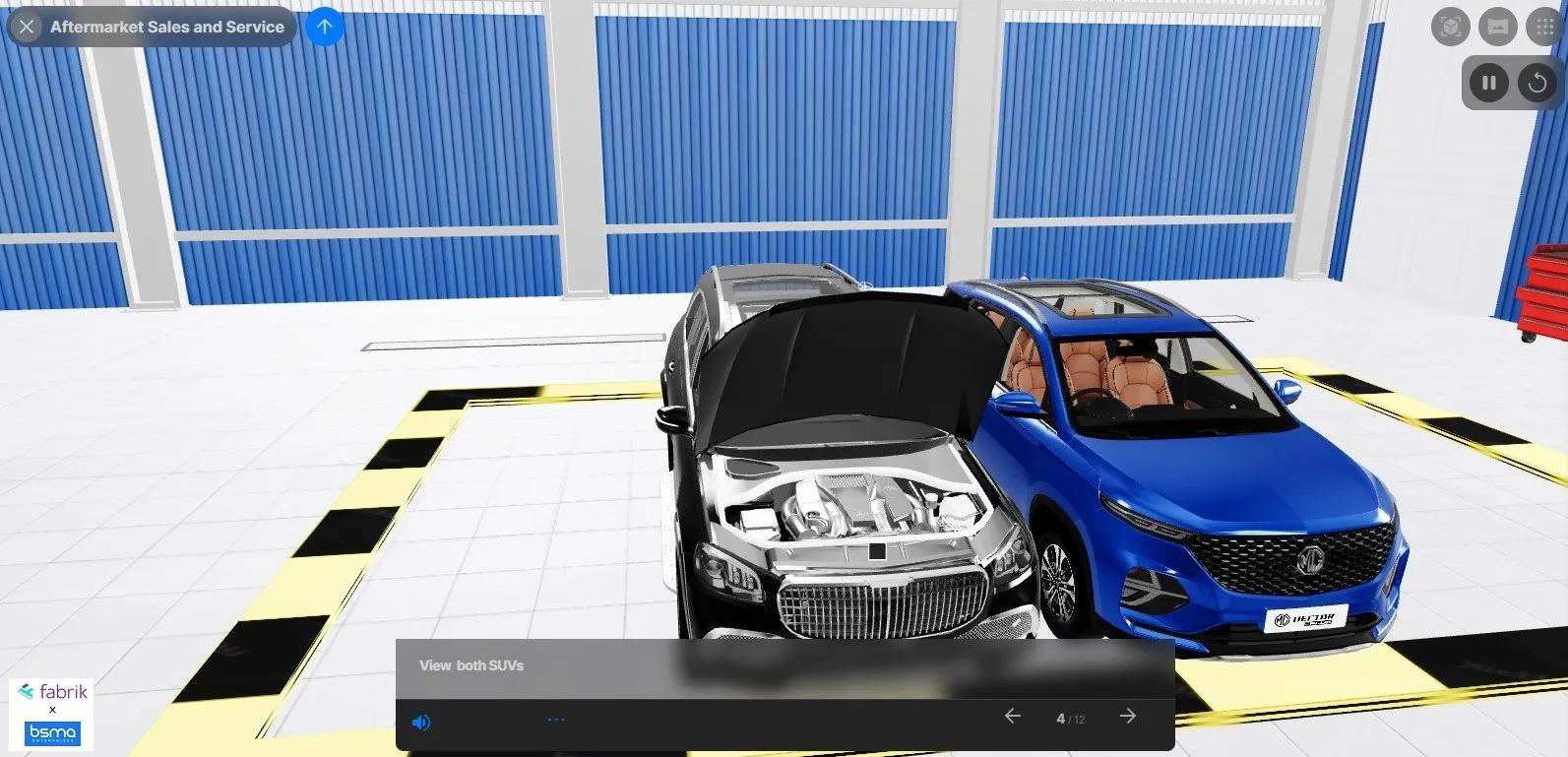
In the highly competitive automotive industry, reducing vehicle off-road time is a critical factor for customer satisfaction and operational efficiency. Downtime not only frustrates customers but also impacts the bottom line of service providers and manufacturers. Digital Work Instructions (DWIs) have emerged as a transformative solution to streamline the repair and maintenance process, significantly cutting down on vehicle off-road time. Fabrik ’s innovative DWIs have been instrumental in this transformation, providing clear, visual guides that enable technicians to perform diagnostics and repairs more quickly and accurately.
The Challenge: Prolonged Vehicle Downtime
Vehicle downtime has long been a challenge in the automotive industry. A significant portion of this downtime stems from inefficiencies in the repair and maintenance process. Traditional methods rely heavily on paper-based manuals, which can be cumbersome and prone to misinterpretation. These methods also depend on the tacit knowledge of experienced technicians, which can lead to inconsistencies, especially when less experienced staff are involved.
According to Fabrik ’s data, approximately 20% of complex problems account for 80% of the total time a vehicle remains off-road. This inefficiency is exacerbated by the reliance on outdated manuals and the lack of standardization across repair processes, leading to extended repair times and increased costs.
The Solution: Digital Work Instructions
Fabrik ’s Digital Work Instructions address these challenges by providing a comprehensive, interactive platform that standardizes repair procedures. DWIs leverage 3D models, step-by-step visual guides, and real-time data integration to enhance the accuracy and efficiency of repairs. By digitizing the entire process, DWIs reduce the cognitive load on technicians, allowing them to focus on the task at hand without the need to sift through pages of dense text.
Key Features of Fabrik 's DWIs:
3D Visualizations : Technicians can view detailed 3D models of vehicle components, which can be rotated and zoomed in on to understand complex assemblies better. This feature reduces the risk of errors that can occur when interpreting 2D diagrams.
Interactive Step-by-Step Guides : The DWIs provide a guided workflow that walks technicians through each step of the repair process. These instructions are not static; they include animations, videos, and voice instructions, which make them more intuitive than traditional manuals.
Real-Time Data Integration : The platform integrates with various diagnostic tools and vehicle data systems, allowing technicians to access real-time information about the vehicle's status. This integration helps in quick fault identification and provides corrective actions based on the latest data.
Remote Assistance and Collaboration : In complex cases where technicians might need additional help, the platform allows for remote collaboration. Experts can be brought in virtually to provide guidance, ensuring that even the most challenging repairs are completed efficiently.
Implementation and Impact
The implementation of Fabrik ’s DWIs typically begins with an assessment of the existing data infrastructure and the specific challenges faced by the automotive service teams. Fabrik ’s no-code platform enables the rapid development of customized DWIs that are tailored to the needs of each service center. The DWIs are deployed on handheld devices, ensuring that they are accessible to technicians at any time.
One notable implementation was within a major automotive manufacturer’s service network. By digitizing the work instructions and integrating them with real-time vehicle data, the manufacturer reported a significant reduction in vehicle off-road time. The average time for diagnosing and repairing complex issues decreased by 30%, leading to improved customer satisfaction and reduced operational costs.
Furthermore, the standardization provided by DWIs ensured that technicians, regardless of their experience level, could achieve high accuracy in repairs. The platform’s ability to track and analyze repair data also allowed the manufacturer to identify common issues and further refine their processes.
Case Study: A Global Automotive Manufacturer
A leading global automotive manufacturer faced significant challenges in managing vehicle off-road time, particularly for complex diagnostics and repairs. The reliance on paper-based manuals and the variability in technician experience levels resulted in prolonged repair times and inconsistent service quality.
Objective : To reduce vehicle off-road time by improving the efficiency and accuracy of repair processes.
Implementation :
Assessment : Fabrik ’s team conducted a comprehensive assessment of the manufacturer’s existing repair processes, identifying key areas where inefficiencies were prevalent.
DWI Deployment : Customized DWIs were developed and deployed across the manufacturer’s service centers. These instructions included 3D models of vehicle components, interactive repair guides, and integration with the manufacturer’s diagnostic tools.
Training : Technicians were trained on using the new system, which was designed to be intuitive and require minimal additional training due to its user-friendly interface.
Results :
Reduction in Off-Road Time : The implementation of DWIs led to a 30% reduction in vehicle off-road time, with complex repairs being completed in significantly less time than before.
Consistency and Accuracy : The standardization of repair processes across the service network ensured consistent service quality, with a marked improvement in first-time-right repairs.
Enhanced Technician Efficiency : Technicians reported a decrease in the cognitive load associated with traditional repair methods, allowing them to focus more on the task and less on navigating complex manuals.
Customer Satisfaction : The reduction in repair time and improvement in service consistency directly translated into higher customer satisfaction scores, with many customers noting the quicker turnaround times and the professionalism of the service.
In conclusion, Fabrik ’s Digital Work Instructions represent a significant advancement in automotive maintenance and repair. By digitizing and standardizing the repair process, DWIs not only reduce vehicle off-road time but also enhance the accuracy and consistency of repairs. This case study demonstrates the transformative impact of DWIs in the automotive industry, where efficiency and customer satisfaction are paramount.
As the automotive industry continues to evolve, with increasing complexity in vehicle technology, the role of DWIs will become even more critical. Fabrik ’s commitment to innovation and its ability to deliver customized, scalable solutions position it as a leader in this space, driving the future of automotive maintenance towards greater efficiency and effectiveness.