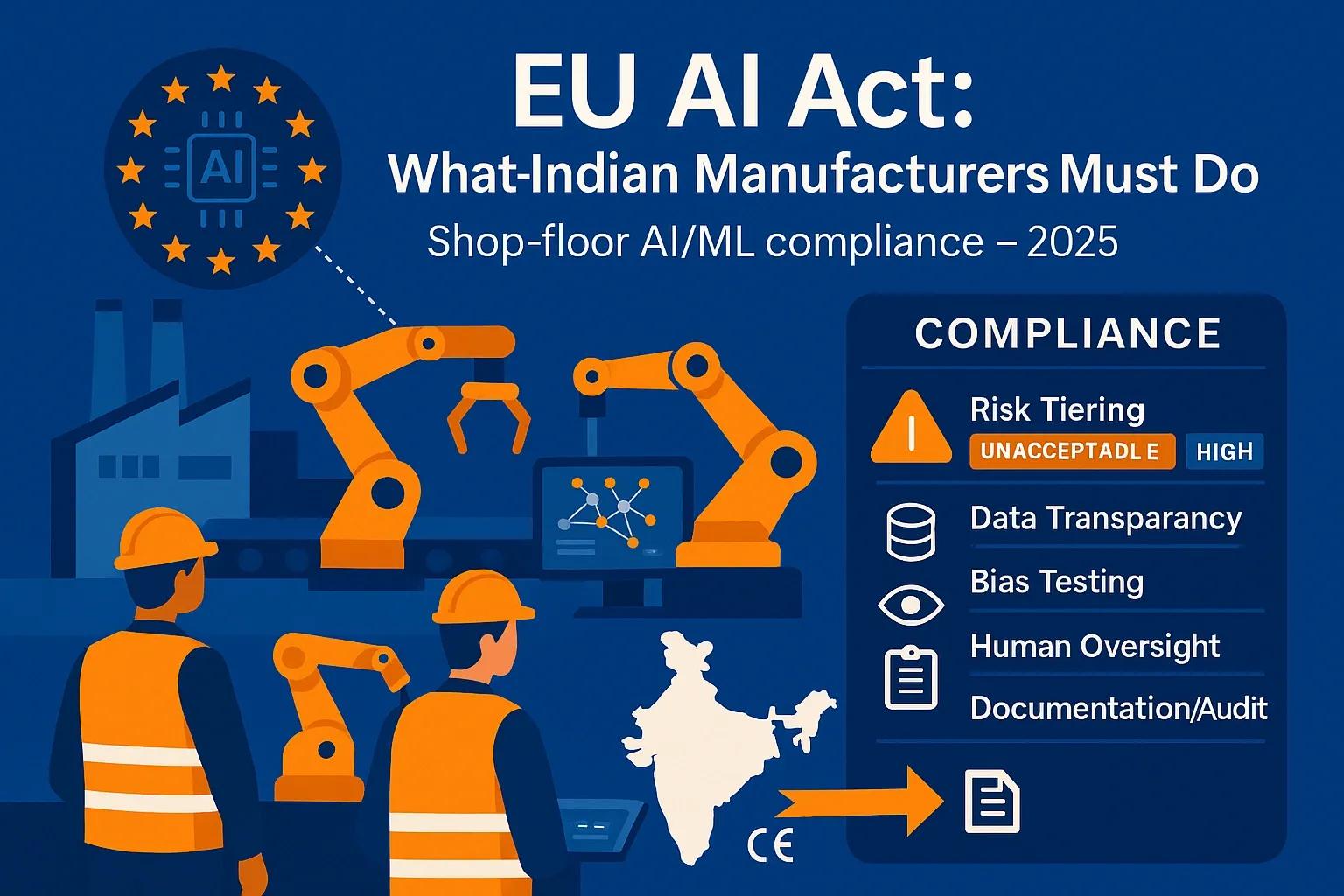
As artificial intelligence (AI) continues to reshape the manufacturing sector globally, the EU AI Act is setting a precedent for AI regulations. With a specific focus on high-risk AI systems, the Act will soon influence AI deployments across multiple industries, including manufacturing. This article outlines what Indian manufacturers need to know to navigate these upcoming regulatory changes, how they can assess their AI systems for compliance, and what steps they should take to avoid potential pitfalls.
1. EU AI Act Overview: What You Need to Know
The EU AI Act , which comes into effect in 2025 , is one of the first comprehensive legal frameworks to regulate AI use across various sectors. It categorizes AI systems into three risk categories: unacceptable risk , high risk , and low risk . High-risk AI systems, which involve areas such as worker safety, predictive maintenance, and autonomous decision-making, will face the most stringent regulations.
Key Provisions:
High-Risk AI Systems : These systems are critical to human safety and involve high-stakes decision-making, such as predictive maintenance or factory automation.
Data Transparency : AI systems must rely on transparent, high-quality datasets, ensuring that their outputs are explainable and free from bias.
Compliance Checks : High-risk systems will need to undergo regular assessments, including auditing and documentation of data and decision-making processes.
Actionable Step : Identify which of your AI systems might fall into the high-risk category and prepare for these compliance checks. If you're working with European clients or technologies, start reviewing your AI deployment plans.
2. Risk Assessment for Manufacturers: Classifying Your AI Systems
For Indian manufacturers, it is crucial to evaluate the risk level of the AI systems they use. This will not only determine the scope of compliance requirements but also provide an opportunity to enhance AI system transparency and accountability.
How to Assess Your AI Systems:
Evaluate Functionality : Does your AI system impact employee safety or operational outcomes? If it does, it could be classified as high-risk.
Document AI Models : Keep records of how your AI models make decisions and the data used in training them. This documentation is crucial for compliance and future audits.
Actionable Step : Conduct an internal audit of all AI/ML systems used in your operations, especially those that may affect worker safety or critical production processes. Classifying these systems early will allow you to begin implementing necessary compliance measures.
3. Steps to Comply with the EU AI Act: A Practical Framework
Compliance with the EU AI Act requires more than just meeting regulatory deadlines, it involves fostering a culture of transparency and accountability in AI development and deployment.
Here’s a framework to get started:
Transparency and Documentation : Maintain detailed documentation about the design, testing, and implementation of AI systems, including the data used for training and any steps taken to mitigate biases.
Bias Mitigation : Implement practices to regularly test for biases in AI models. A study from the European Commission highlights that AI systems trained on biased data can result in discriminatory outcomes.
Human Oversight : Ensure that critical decisions made by AI systems, especially those impacting human workers, are subject to human review and control.
Actionable Step : Implement a regular audit schedule to assess the performance and transparency of your AI systems. Keep track of all compliance-related documentation and update your processes based on evolving legal requirements.
4. Challenges and Opportunities: Turning Compliance into a Competitive Advantage
While compliance with the EU AI Act presents certain challenges, it also opens up new opportunities for Indian manufacturers to lead in ethical AI adoption.
Challenges:
Compliance Costs : Meeting the EU AI Act’s requirements may require investment in new tools, training, and documentation practices.
Integration Complexity : Updating legacy systems to meet new regulatory standards could be a resource-intensive process.
Opportunities:
Access to European Markets : Indian manufacturers adhering to the EU AI Act will have a competitive advantage in European markets, where trust in AI transparency is a critical factor for clients.
Enhanced Trust : Proactive AI compliance can strengthen relationships with customers by demonstrating a commitment to ethical AI use and data security.
Actionable Step : Position AI compliance as a value proposition . By adopting transparent and responsible AI practices, you can gain the trust of clients, especially those in highly regulated markets like Europe.
5. The Business Case for Compliance: Why It’s Worth the Investment
According to the European Commission , businesses that comply with the EU AI Act will experience reduced operational risks and enhanced market opportunities. Non-compliance, however, could result in significant penalties and loss of access to key markets. For Indian manufacturers, aligning with the EU AI Act now can position them as leaders in AI-driven manufacturing.
Key Benefits of Compliance:
Market Access : Adherence to the EU AI Act ensures continued access to European markets, where AI regulation is becoming increasingly strict.
Reputation : Transparency and ethical AI practices are a powerful differentiator, particularly for customers in sectors like aerospace, automotive, and healthcare.
Reduced Risk : Proactively addressing compliance minimizes the chances of costly fines and operational disruptions due to non-compliance.
Conclusion: Stay Ahead of the EU AI Act
The EU AI Act is not just a regulatory requirement, it is an opportunity for Indian manufacturers to adopt a more transparent, ethical, and competitive approach to AI. By assessing AI systems early, implementing transparency frameworks, and leveraging these regulations to your advantage, you’ll be better positioned to lead in a rapidly evolving market.