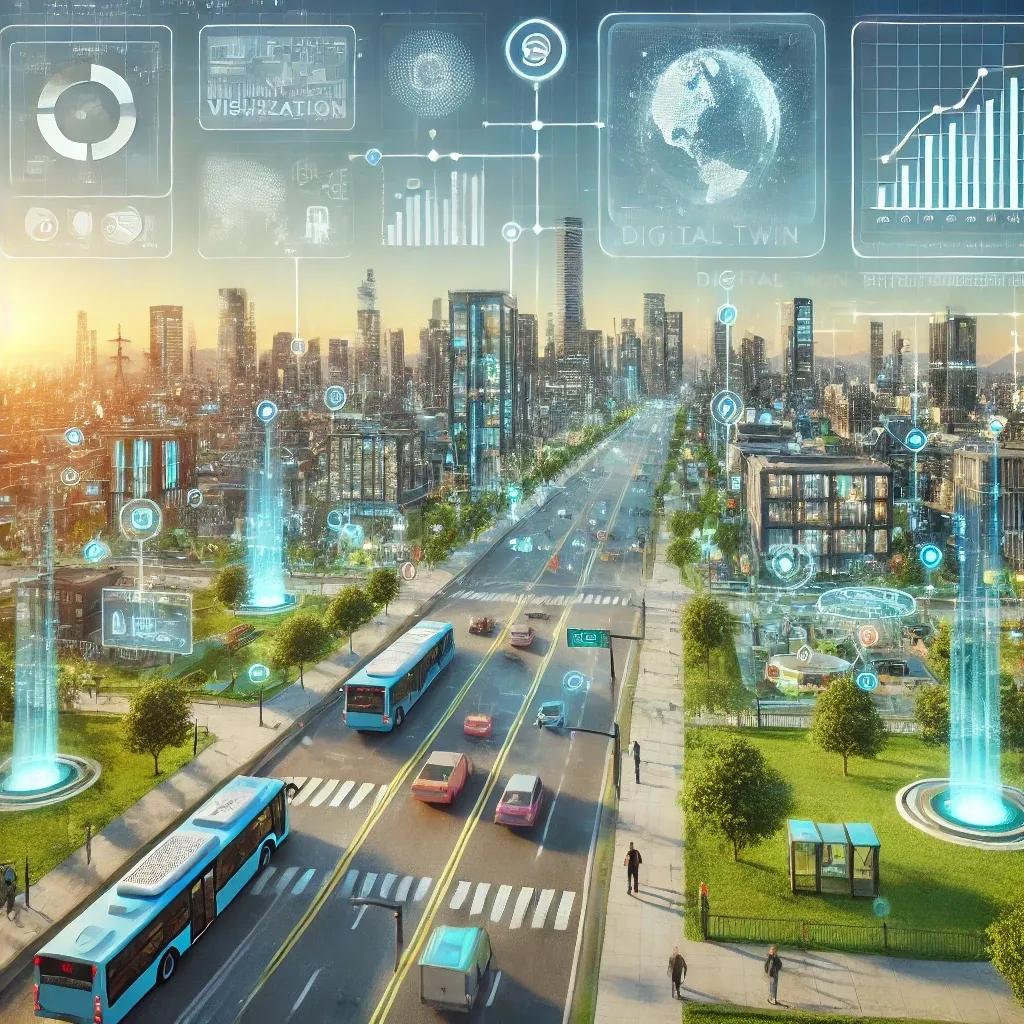
In the contemporary landscape of urban development, sustainability is no longer a mere option but a critical imperative. As cities grapple with the challenges of climate change, resource depletion, and population growth, the need for innovative solutions has never been more pressing. Enter digital twins—a technological marvel that is revolutionizing the way cities plan, monitor, and achieve their sustainability goals. This article delves into the intricacies of digital twins and how they are paving the way for sustainable urban futures.
Understanding Digital Twins
A digital twin is a virtual replica of a physical entity, encompassing buildings, infrastructure, and even entire cities. It integrates real-time data and sophisticated simulation models to mirror the physical counterpart's behavior, performance, and interactions. The core components of digital twins include:
Data Acquisition : Sensors, IoT devices, and other data sources continuously feed information into the digital twin.
Data Processing and Analytics : Advanced algorithms and machine learning models process the data to generate insights.
Visualization : 3D models and other visualization tools provide an intuitive representation of the physical entity.
Simulation : Predictive models simulate various scenarios to aid in decision-making and optimization.
Enhancing Urban Planning and Development
Digital twins significantly enhance urban planning and development by providing a comprehensive, data-driven approach. They allow city planners to create detailed simulations of urban environments, facilitating more informed decision-making.
Optimizing Land Use : Digital twins enable planners to analyze land use patterns and identify optimal areas for development, green spaces, and infrastructure projects. This ensures that land is utilized efficiently, reducing urban sprawl and preserving natural habitats.
Improving Transportation Systems : By simulating traffic flows and public transportation networks, digital twins help in designing efficient and sustainable transportation systems. This reduces congestion, lowers emissions, and promotes the use of public transit.
Enhancing Building Design : Architects and engineers use digital twins to model energy-efficient buildings, optimizing heating, cooling, and lighting systems. This not only reduces energy consumption but also minimizes the carbon footprint of new constructions.
Real-Time Monitoring and Management
One of the most powerful features of digital twins is their ability to provide real-time monitoring and management of urban systems. This capability is crucial for maintaining the sustainability of city operations.
Energy Management : Digital twins of power grids and energy systems enable cities to monitor energy consumption and production in real time. This allows for the optimization of energy distribution, the integration of renewable energy sources, and the reduction of energy waste.
Water Management : Digital twins of water supply and drainage systems help cities manage water resources more efficiently. They provide insights into water usage patterns, detect leaks, and optimize water distribution, ensuring a sustainable water supply.
Waste Management : By monitoring waste generation and collection processes, digital twins assist in optimizing waste management systems. This leads to improved recycling rates, reduced landfill usage, and lower greenhouse gas emissions.
Enhancing Resilience and Adaptability
In the face of climate change and other environmental challenges, cities need to be resilient and adaptable. Digital twins play a vital role in enhancing these attributes.
Disaster Management : Digital twins can simulate various disaster scenarios, such as floods, earthquakes, and hurricanes. This allows city officials to develop effective emergency response plans, allocate resources efficiently, and minimize the impact of disasters on urban populations.
Infrastructure Resilience : By continuously monitoring the condition of critical infrastructure, digital twins help in identifying vulnerabilities and planning maintenance activities. This ensures that infrastructure remains robust and resilient to environmental stresses.
Climate Adaptation : Digital twins enable cities to model the impacts of climate change and develop adaptation strategies. For instance, they can simulate the effects of rising sea levels, extreme weather events, and temperature changes, helping cities to implement proactive measures.
Facilitating Stakeholder Collaboration
Achieving sustainability goals requires the collaboration of various stakeholders, including government agencies, businesses, and citizens. Digital twins facilitate this collaboration by providing a shared platform for data and insights.
Public Participation : Digital twins can be used to engage citizens in urban planning processes. By providing access to visualizations and simulations, they enable citizens to understand the implications of proposed projects and contribute their inputs.
Business Collaboration : Businesses can leverage digital twins to align their operations with city sustainability goals. For instance, utility companies can use digital twins to optimize their services, while real estate developers can design eco-friendly buildings.
Policy Making : Government agencies can use the insights generated by digital twins to develop and implement effective sustainability policies. This includes regulations for energy efficiency, waste management, and environmental protection.
Case Studies and Success Stories
Several cities around the world have successfully implemented digital twins to achieve their sustainability goals. These case studies highlight the transformative potential of this technology.
1. Jaipur , the Indian capital city of Rajasthan, has leveraged digital twin technology to advance its sustainability and smart city initiatives. The Jaipur Development Authority (JDA) has implemented a comprehensive digital twin model that integrates real-time data from traffic systems, public utilities, and environmental sensors. This integration allows for efficient traffic management, reducing congestion and vehicular emissions. The digital twin also aids in water resource management by monitoring usage patterns, detecting leaks, and optimizing distribution networks. Additionally, Jaipur's digital twin facilitates predictive maintenance of infrastructure, enhancing resilience against natural disasters and extreme weather conditions. By engaging citizens through interactive platforms, the city has improved public participation in urban planning processes, ensuring that development projects align with sustainability goals. The success of Jaipur's digital twin initiative underscores its potential to create smarter, more sustainable urban environments in India.
Singapore : Known for its Smart Nation initiative, Singapore has developed a comprehensive digital twin of the city. This digital twin integrates data from various sources to optimize urban planning, transportation, and energy management. As a result, Singapore has seen significant improvements in energy efficiency and reduced carbon emissions.
Helsinki : The Finnish capital has created a digital twin to enhance urban sustainability. Helsinki's digital twin is used for energy management, building design, and public participation. The city has achieved substantial energy savings and increased citizen engagement in urban planning.
Shanghai : Shanghai has developed a digital twin to manage its complex urban systems. This digital twin is used for traffic management, infrastructure monitoring, and disaster response. The city has witnessed improved traffic flow, enhanced infrastructure resilience, and better disaster preparedness.
Future Prospects and Challenges
While digital twins hold immense promise for urban sustainability, there are challenges to be addressed. These include data privacy concerns, the need for standardized protocols, and the high costs of implementation. However, with ongoing advancements in technology and increased collaboration among stakeholders, these challenges can be overcome.
The future of digital twins in urban sustainability looks promising. As more cities adopt this technology, we can expect to see smarter, greener, and more resilient urban environments. Digital twins will play a pivotal role in achieving the global sustainability goals outlined in the United Nations' Agenda 2030, ensuring a better quality of life for future generations.
In conclusion, digital twins are transforming the way cities approach sustainability, offering powerful tools for urban planning, real-time management, resilience, and stakeholder collaboration. By leveraging the capabilities of digital twins, cities can achieve their sustainability goals more effectively, creating a more sustainable and resilient future for all.