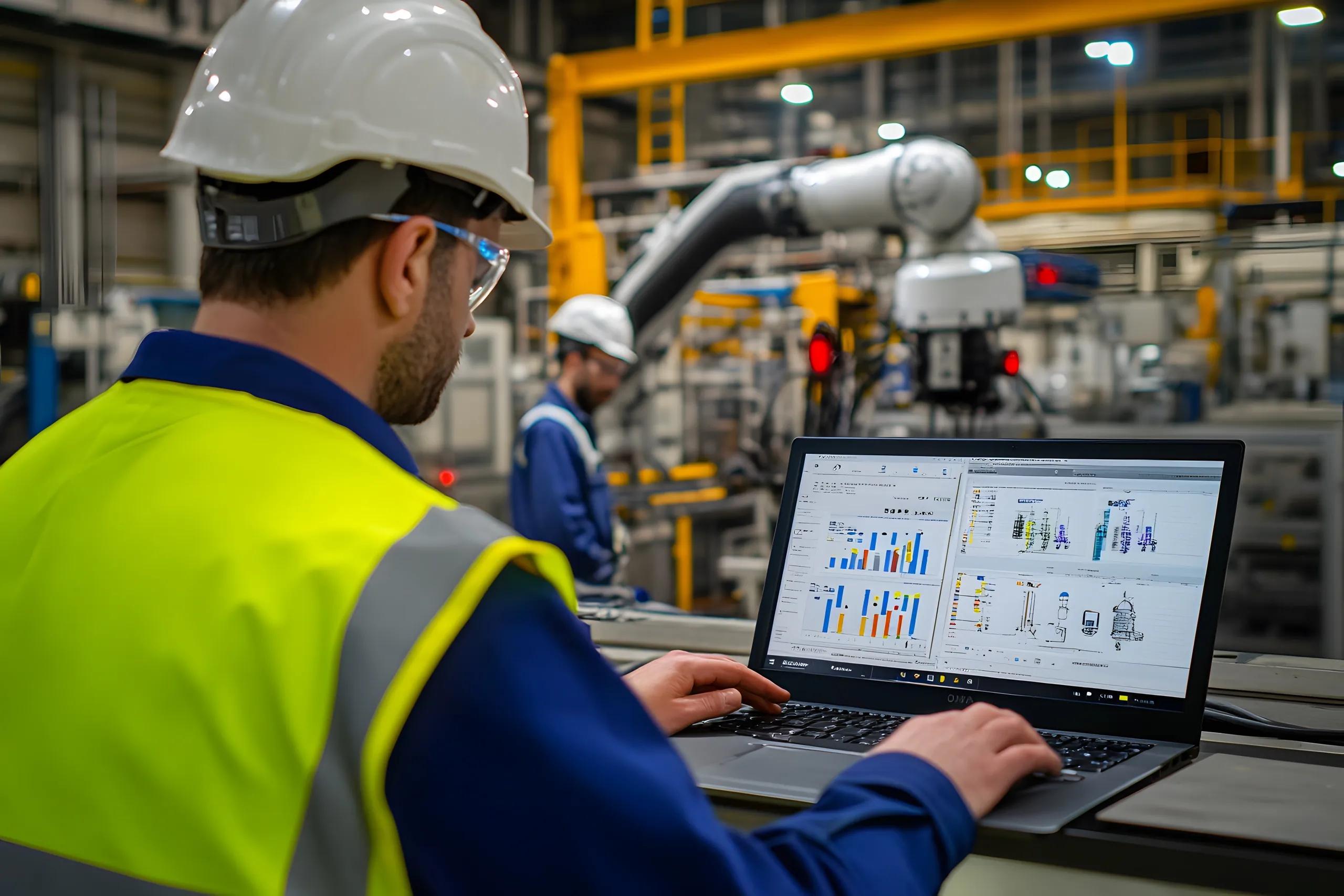
Predictive maintenance has emerged as a strategic priority for industries aiming to reduce operational downtime and extend asset life. At the heart of this evolution is the digital twin, a real-time, data-driven virtual representation of physical systems. By integrating IoT sensor data, simulation models, and AI analytics, digital twins enable predictive maintenance that is proactive, not reactive.
This article explores how digital twins are transforming maintenance workflows across sectors like manufacturing, logistics, automotive, and infrastructure by preventing failures before they occur.
What Is a Digital Twin?
A digital twin is a dynamic, continuously updated digital replica of a physical asset or system. It combines geometric models (from BIM or CAD), sensor data (from IoT devices), and operational data (from ERP or SCADA systems) to mirror real-world behavior in a virtual environment.
These replicas are not static, they are connected through real-time data streams. This connectivity allows engineers to run simulations, detect anomalies, predict failures, and optimize performance without physically interacting with the asset.
Predictive Maintenance vs. Traditional Approaches
Traditional maintenance falls into two categories:
Reactive : Fix after failure.
Preventive : Scheduled based on time or usage, regardless of asset condition.
Predictive maintenance , on the other hand, uses real-time data to assess actual wear and tear. Digital twins enhance this by enabling virtual testing and failure forecasting under real-world conditions.
For instance, in a factory setting, instead of servicing a machine every six months regardless of its condition, a digital twin can identify that a specific component will degrade within the next 10 days, prompting just-in-time maintenance.
Key Technologies Behind Predictive Maintenance with Digital Twins
IoT Sensors Devices measure temperature, vibration, pressure, current, and more. These readings are streamed to the digital twin platform in real time.
Edge and Cloud Computing Edge devices process time-sensitive data locally, while the cloud handles large-scale simulations and analytics.
AI and Machine Learning Algorithms analyze historical and live data to recognize patterns that precede failure. These models become more accurate over time.
Simulation Engines Physics-based or data-driven models simulate performance under various conditions, predicting how systems will behave over time.
Visualization Tools Dashboards, 3D models, and AR/VR interfaces help maintenance teams visualize asset health, hotspots, and predicted issues.
How It Works: Workflow of Predictive Maintenance Using Digital Twins
Data Acquisition Sensors attached to critical equipment collect real-time parameters (e.g., vibration, oil quality).
Data Integration The data is ingested into a central digital twin platform that aligns it with 3D models and historical records.
Condition Monitoring The digital twin monitors thresholds and trends. Any deviation from baseline behavior triggers alerts.
Anomaly Detection and Diagnosis AI models analyze patterns that signal early-stage faults, like bearing misalignment or motor overheating.
Failure Prediction Based on simulations and historical failure data, the system forecasts the remaining useful life (RUL) of components.
Maintenance Recommendation The platform generates maintenance schedules, prioritizing assets based on risk and criticality.
Execution and Feedback Maintenance is performed, and results are fed back into the model, improving future predictions.
Real-World Applications
1. Manufacturing
Use Case: CNC machine maintenance in automotive parts production.
Impact: Reduced unplanned downtime by 30%, extended component life, and improved OEE (Overall Equipment Effectiveness).
2. Oil and Gas
Use Case: Monitoring pipelines for corrosion and pressure anomalies.
Impact: Early leak detection avoids environmental damage and regulatory fines.
3. Energy Utilities
Use Case: Predictive maintenance of wind turbines using digital twins and drone imagery.
Impact: Enabled condition-based servicing, cutting maintenance trips by 25%.
4. Logistics & Warehousing
Use Case: Tracking and managing conveyor belts and sorting systems.
Impact: Improved reliability and scheduling of maintenance around peak logistics hours.
Advantages Over Conventional Approaches
Downtime Reduction: Early fault detection avoids sudden breakdowns.
Cost Savings: Avoids over-maintenance and emergency repair costs.
Resource Optimization: Aligns workforce and spares based on asset priority.
Asset Life Extension: Components are serviced only when needed, reducing wear from over-handling.
Safety Improvements: Detects risks early in high-risk environments like power plants or offshore rigs.
Challenges in Adoption
Data Quality and Availability: Inconsistent or incomplete sensor data can reduce prediction accuracy.
Integration Complexity: Bringing together CAD/BIM, ERP, sensor, and operational data requires robust middleware and APIs.
Skill Gap: Interpreting digital twin outputs demands expertise in AI, engineering, and systems thinking.
High Initial Investment: Though ROI is strong, upfront costs for sensors, modeling, and infrastructure can be a barrier.
Future Trends
Edge AI Integration: More predictive processing will happen on-site, reducing latency and cloud dependency.
Self-Healing Systems: Combining digital twins with robotic process automation (RPA) may trigger automatic corrective actions.
Cross-Asset Simulation: Simulations will include systems of systems, e.g., full factory lines or grid-scale power networks.
Sustainability Metrics: Digital twins will also track emissions, energy use, and lifecycle carbon footprints.
According to recent industry analyses, the predictive maintenance market, powered heavily by digital twin adoption, is projected to reach over USD 26 billion by 2030, with manufacturing and transportation sectors being the primary contributors.
Conclusion
Digital twins are reshaping predictive maintenance by making it smarter, more accurate, and more cost-effective. By leveraging real-time sensor data and advanced simulation, businesses can shift from reactive firefighting to strategic maintenance planning. This not only minimizes downtime and cost but also enhances asset reliability and sustainability.
As industries move toward Industry 4.0 and circular economy models, the digital twin will become the foundation for intelligent maintenance ecosystems, fueling better decisions, improved productivity, and competitive advantage.