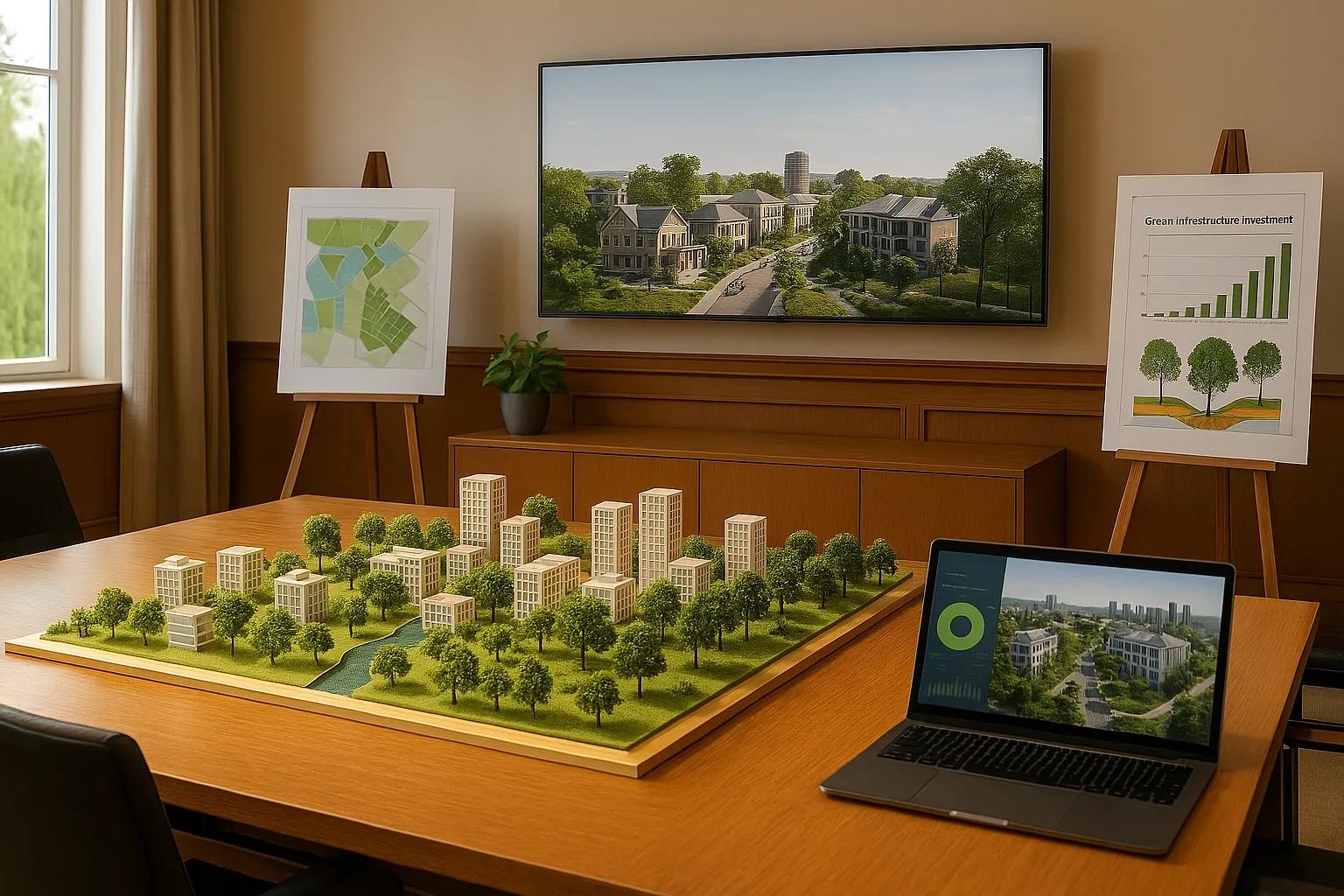
Cities globally recognize the need for nature-positive development.
Yet, despite strong environmental commitments, urban nature projects often struggle to move from planning to execution, mainly because of funding barriers.
From insufficient public budgets to private sector risk aversion, financing urban nature remains one of the largest obstacles to building resilient, livable cities.
Fortunately, these barriers are not insurmountable. With strategic approaches and the right technology, cities can create the financial case needed to unlock funding and accelerate nature-positive transitions.
Why It Matters
Without adequate financing:
Critical green infrastructure projects stall.
Urban biodiversity continues to decline.
Cities become more vulnerable to climate risks, public health crises, and social inequalities.
Bridging the funding gap is not just about securing money, it's about building better, more future-ready cities.
Key Challenges Cities Face
1. Weak Investment Cases
Urban nature projects often lack clear, quantified financial returns compared to grey infrastructure.
2. Siloed Budgeting
Public budgets for nature initiatives are fragmented across multiple departments without unified planning.
3. Perceived Risk by Private Investors
Nature projects are seen as higher risk due to uncertain returns, maintenance concerns, or lack of historical data.
4. Limited Capacity to Structure Deals
Cities often lack the financial expertise to build complex, blended finance structures that can attract diverse investors.
How It Can Be Addressed
Cities can adopt specific strategies to bridge these gaps:
1. Build a Strong Business Case
Use Geospatial and UAV-based data to quantify ecosystem services such as flood control, air purification, or cooling effects.
Model economic returns with AI and Digital Twin platforms.
2. Pool and Align Budgets
Create cross-departmental green infrastructure funds to consolidate environmental, health, and infrastructure budgets.
BIM models integrated with environmental data help visualize benefits across sectors.
3. De-risk Investments
Provide guarantees, insurance, or first-loss capital using public funds to encourage private participation.
Real-time IoT environmental monitoring enhances project credibility for investors.
4. Leverage Blended Finance
Combine grants, concessional loans, and private equity into single investment vehicles.
Digital simulations help structure performance-based repayments tied to ecosystem outcomes.
Role of Digital Technologies
Technology strengthens every step of the financing process:
Geospatial Mapping : Baseline natural assets, climate risks, and opportunity zones.
UAV Surveys : Real-time visualizations for project validation and investor reporting.
BIM and Digital Twins : Simulate financial, social, and environmental returns on investment.
AI and IoT : Enable predictive analytics and continuous project performance tracking.
By making nature projects quantifiable, transparent, and measurable, these tools shift nature investment from a perceived charity to a clear economic opportunity.
Conclusion
The financing gap for urban nature can, and must, be bridged.
Cities that proactively build stronger investment cases, leverage blended finance, and deploy enabling technologies will lead the global transition to sustainable, resilient urban futures.
Nature is no longer a soft ambition; it is a hard economic strategy for 21st-century cities.