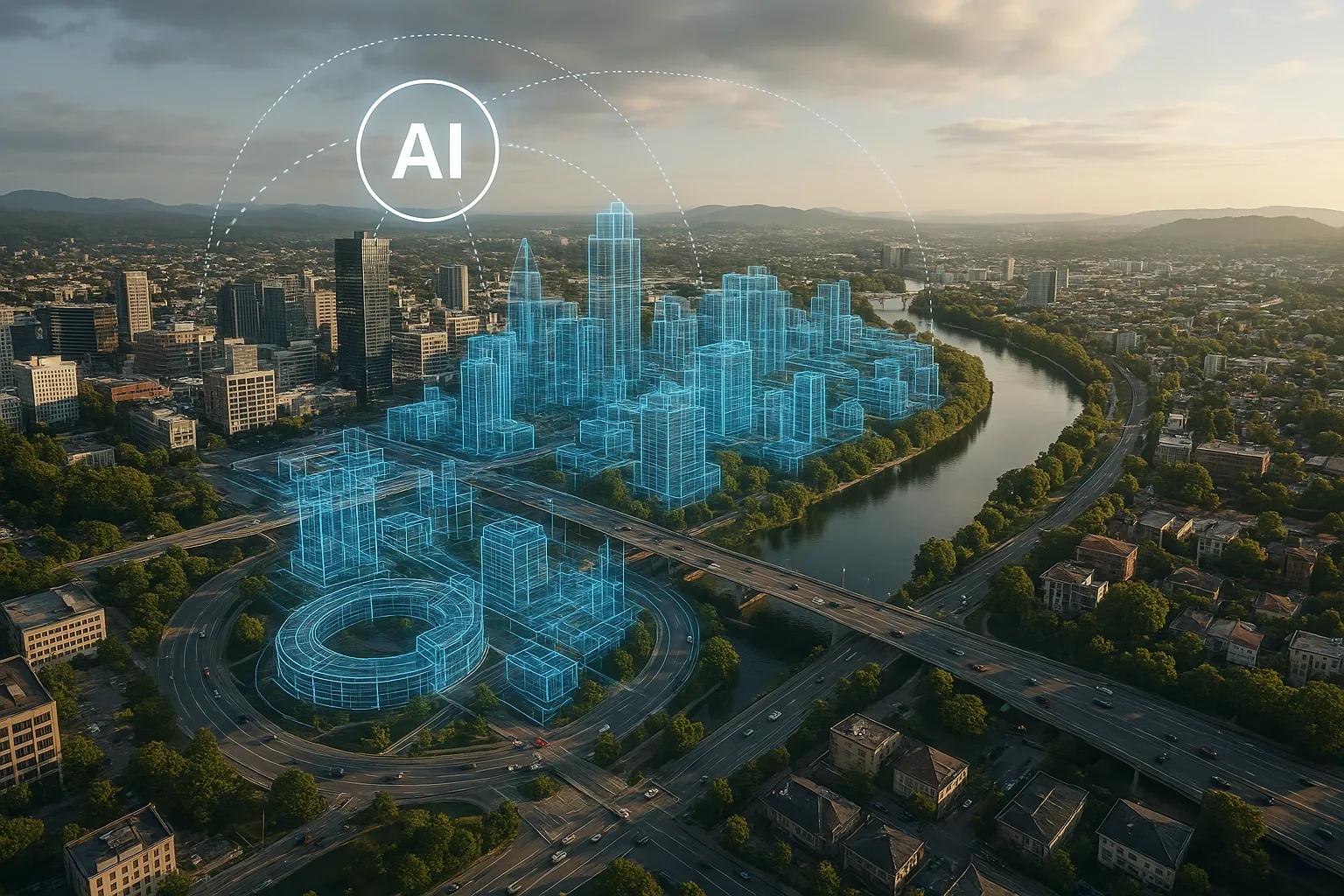
Urban planning today faces growing challenges: rapid population growth, climate change, aging infrastructure, and evolving citizen needs. Traditional planning methods are no longer sufficient to address these complex demands.
Technologies like Artificial Intelligence (AI) and Digital Twins are now stepping in, offering new, data-driven ways to visualize, simulate, and optimize urban environments. Together, they enable a more dynamic, predictive, and resilient approach to designing and managing cities.
This article explores how the convergence of AI and digital twins is transforming urban planning processes, the technologies behind this shift, real-world applications, and key challenges.
What Are Digital Twins in Urban Planning?
A Digital Twin is a real-time virtual representation of a physical asset, system, or city. In urban planning, it mirrors buildings, roads, utilities, public spaces, and even environmental conditions like air quality and noise levels.
It is dynamic, constantly updated with data from IoT sensors, satellite imagery, drones, traffic systems, and more.
Unlike static 3D models, digital twins can simulate how infrastructure responds to various scenarios, from increased population density to extreme weather events.
They serve as powerful decision-making tools for planners, policymakers, and engineers.
Role of AI in Enhancing Digital Twins
While digital twins offer visualization and simulation, AI brings intelligence, automation, and predictive analytics to the table. Here’s how:
Data Processing : Cities generate massive amounts of data. AI algorithms can process this data at scale, identify patterns, and highlight actionable insights.
Predictive Modeling : Machine learning models can forecast how urban areas will evolve under different variables, such as demographic changes, economic policies, or climate impacts.
Optimization : AI optimizes infrastructure design by evaluating thousands of possible configurations and selecting the most efficient ones.
Autonomous Updates : With AI, digital twins can self-update and learn from new data without manual intervention.
Scenario Simulation : AI can create and simulate multiple urban development scenarios, assessing their outcomes based on key performance indicators (KPIs) like sustainability, cost, and resilience.
Key Components and Technologies
The integration of AI and digital twins for urban planning involves several technical layers:
Component — Role
IoT Devices — Real-time data collection (e.g., traffic, weather, energy consumption)
Cloud Computing — Storing and managing vast datasets for digital twins
Big Data Analytics — Processing historical and real-time urban data
AI/ML Algorithms — Pattern recognition, prediction, optimization
GIS Platforms — Spatial data management and visualization
3D Modeling Tools — High-fidelity representations of city infrastructure
Together, these systems create a feedback loop where data informs simulations, which then guide real-world interventions.
Real-World Applications
1. Smart Traffic Management
Cities across the world use AI-driven digital twins to optimize traffic flow, predict congestion hotspots, and adjust signals dynamically. Simulations based on real-time vehicle movement data help reduce travel times and emissions.
2. Climate Resilience Planning
In coastal cities, digital twins simulate sea-level rise scenarios. AI models evaluate the effectiveness of flood defense mechanisms, helping planners prioritize investments in vulnerable areas.
3. Infrastructure Maintenance
Predictive maintenance models use digital twins to monitor the structural health of bridges, tunnels, and utilities. AI forecasts potential failures based on sensor data, preventing costly repairs and improving public safety.
4. Urban Growth Management
Digital twins simulate how different zoning laws and housing developments impact community growth, resource consumption, and social equity.
AI helps optimize land use planning for better urban sustainability.
Advantages Over Traditional Planning
Traditional Urban Planning — AI + Digital Twin-Enabled Planning
Static blueprints — Dynamic, real-time models
Manual, reactive decision-making — Predictive, proactive planning
Limited scenario analysis — Rapid simulation of multiple futures
High costs of trial and error — Lower risks through virtual testing
This shift allows cities to make evidence-based decisions faster, reducing both financial and social costs.
Challenges and Limitations
Despite its potential, integrating AI and digital twins into urban planning is not without challenges:
Data Privacy : Real-time city monitoring raises concerns about surveillance and individual privacy.
Data Quality and Integration : Inconsistent, outdated, or incomplete data can compromise simulation accuracy.
Interoperability : Different urban systems often use incompatible data standards, complicating integration.
High Costs : Developing high-fidelity digital twins and maintaining AI models require substantial investment.
Skill Gaps : Urban planners and municipal leaders need training to effectively use these new tools.
Ethical Considerations : AI biases can influence planning decisions if algorithms are trained on biased historical data.
Addressing these issues requires clear governance frameworks, public transparency, and multidisciplinary collaboration.
Future Outlook
The combination of AI and digital twins will likely become standard practice in city planning over the next decade. Here are some emerging trends:
Citizen-Centric Twins : Incorporating citizen feedback into simulations to better reflect real needs.
Automated Permitting : AI-driven assessments could speed up building permit approvals.
Carbon Footprint Optimization : Simulations aimed at achieving Net Zero urban development targets.
Cross-City Collaboration : Sharing interoperable digital twins between regions to support regional planning and crisis management.
AI-Driven Urban Design : Future cities may partially "design themselves" through AI optimization engines based on human-set goals.
Governments and private sectors investing early in these technologies will gain significant competitive advantages in sustainability, livability, and resilience.
Conclusion
The convergence of AI and digital twins represents a major leap forward for urban planning. By creating a living, learning models of cities, planners can test ideas, forecast impacts, and optimize outcomes, all before laying a single brick.
However, technology alone is not a silver bullet. Successful adoption will require addressing data privacy, ethical governance, and capacity building.
Urban planning is no longer about predicting the future, it’s about preparing for many possible futures.
AI and digital twins are the tools that can make this preparation smarter, faster, and more inclusive.