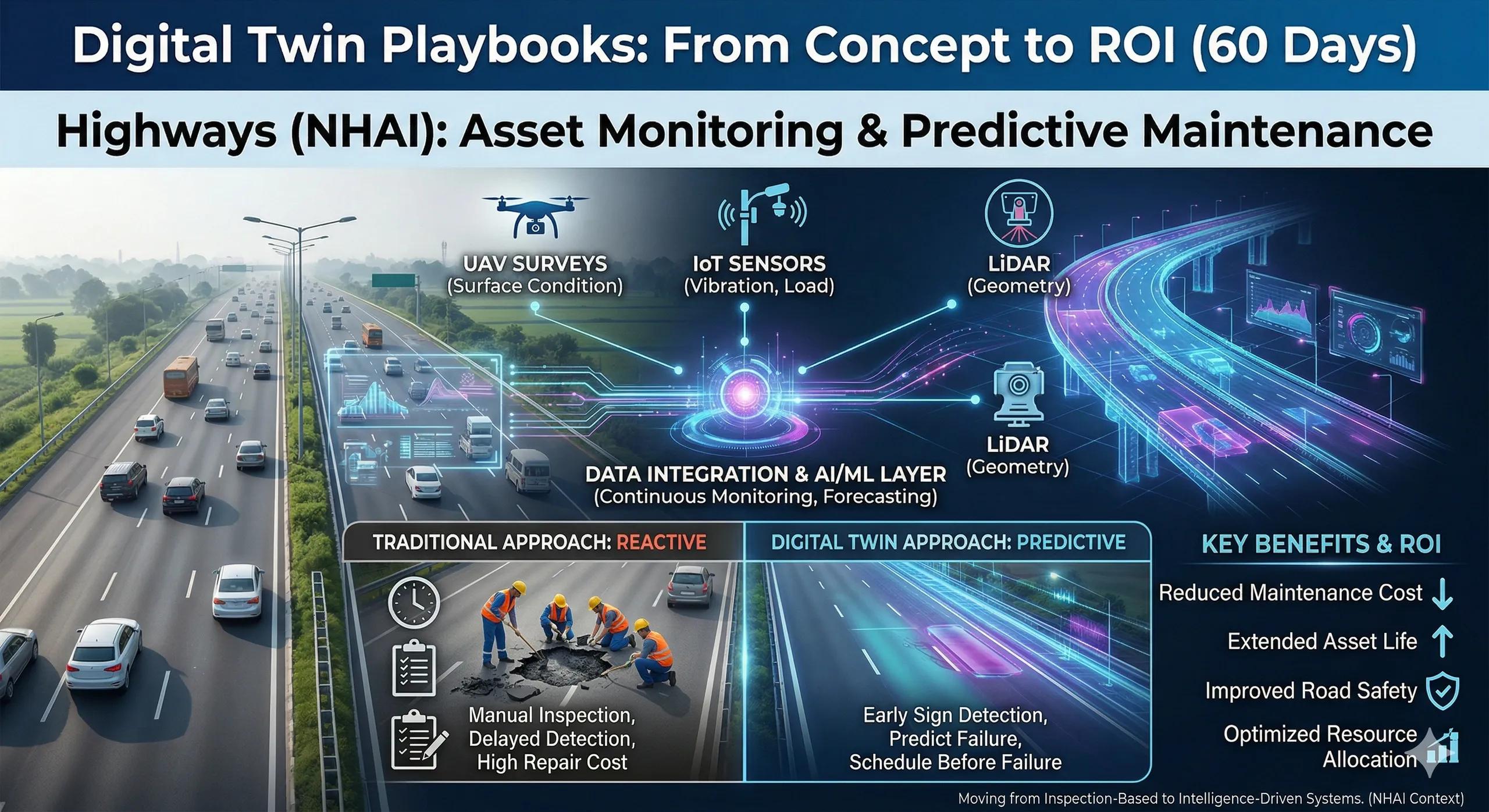
Highways are not just built once.
They need to be continuously understood, monitored, and maintained.
Introduction (Phase Transition)
Over the last 10 days in Phase 2: Architecture & Technology Stack , we focused on one objective:
👉 understanding how Digital Twin systems are actually built
We explored:
sensor layers (IoT, UAVs, LiDAR)
data pipelines and integration
BIM + GIS + IoT convergence
cloud vs edge decisions
AI/ML intelligence
interoperability, visualization, and governance
build vs buy strategies
That phase answered:
👉 What does it take to create a Digital Twin system?
Now we move into Phase 3: Real-World Implementation & ROI
The focus shifts from:
👉 How systems are built
To
👉 How they solve real problems and deliver measurable value
Why Highways?
Highways, especially under organizations like National Highways Authority of India, represent:
large-scale distributed assets
continuous wear and tear
high maintenance cost
critical public infrastructure
Managing them efficiently is not just an engineering problem, it is a data and decision problem .
The Core Problem: Reactive Maintenance
Most highway systems operate on:
scheduled inspections
manual reporting
delayed issue detection
This leads to:
late identification of damage
higher repair costs
safety risks
inefficient resource allocation
👉 The system reacts after the problem appears.
Where Digital Twins Change the Approach
A Digital Twin enables:
👉 continuous monitoring of highway assets
Instead of:
periodic inspection
It moves to:
real-time and predictive understanding
Key Components of a Highway Digital Twin
1. Sensor Layer
IoT sensors for: structural health traffic load vibration
UAV surveys for: surface condition visual inspection
LiDAR for: road geometry terrain mapping
2. Data Integration
combining: traffic data weather data asset condition
👉 creates a unified view of the highway system
3. AI/ML Layer
detecting anomalies in road conditions
predicting wear and tear
forecasting maintenance needs
4. Visualization Layer
dashboards for operations
GIS mapping for spatial context
3D models for asset-level understanding
Practical Use Case: Predictive Maintenance
Traditional Approach
inspect → identify damage → repair
👉 reactive, slow, and costly
Digital Twin Approach
monitor continuously
detect early signs of degradation
predict failure points
👉 schedule maintenance before failure
Example Scenario
A highway stretch shows:
increasing vibration levels
rising traffic load
AI model detects:
👉 abnormal pattern compared to baseline
System triggers:
inspection alert
targeted maintenance plan
👉 Outcome:
issue resolved before visible damage
cost and downtime reduced
Where Most Implementations Fail
1. Data Without Action
monitoring exists
no decision workflows
2. Siloed Systems
traffic data separate
asset data separate
3. No Predictive Capability
only visualization
no forecasting
4. Lack of Field Integration
insights not reaching execution teams
Ask Yourself
Are your infrastructure systems:
👉 reacting to failures
Or
👉 anticipating them?
Indian Context
India has:
one of the largest highway networks
increasing infrastructure investments
Organizations like National Highways Authority of India can benefit from:
reduced maintenance costs
improved safety
optimized asset lifecycle management
👉 Digital Twins can play a critical role in scaling this efficiency.
Benefits & ROI
reduced maintenance cost
extended asset life
improved road safety
optimized resource allocation
faster decision-making
Conclusion
Highway management is moving from:
👉 inspection-based systems
To
👉 intelligence-driven systems
Digital Twins enable this shift by:
connecting data
predicting outcomes
guiding actions
This is where infrastructure becomes:
👉 not just built
👉 but continuously understood and optimized