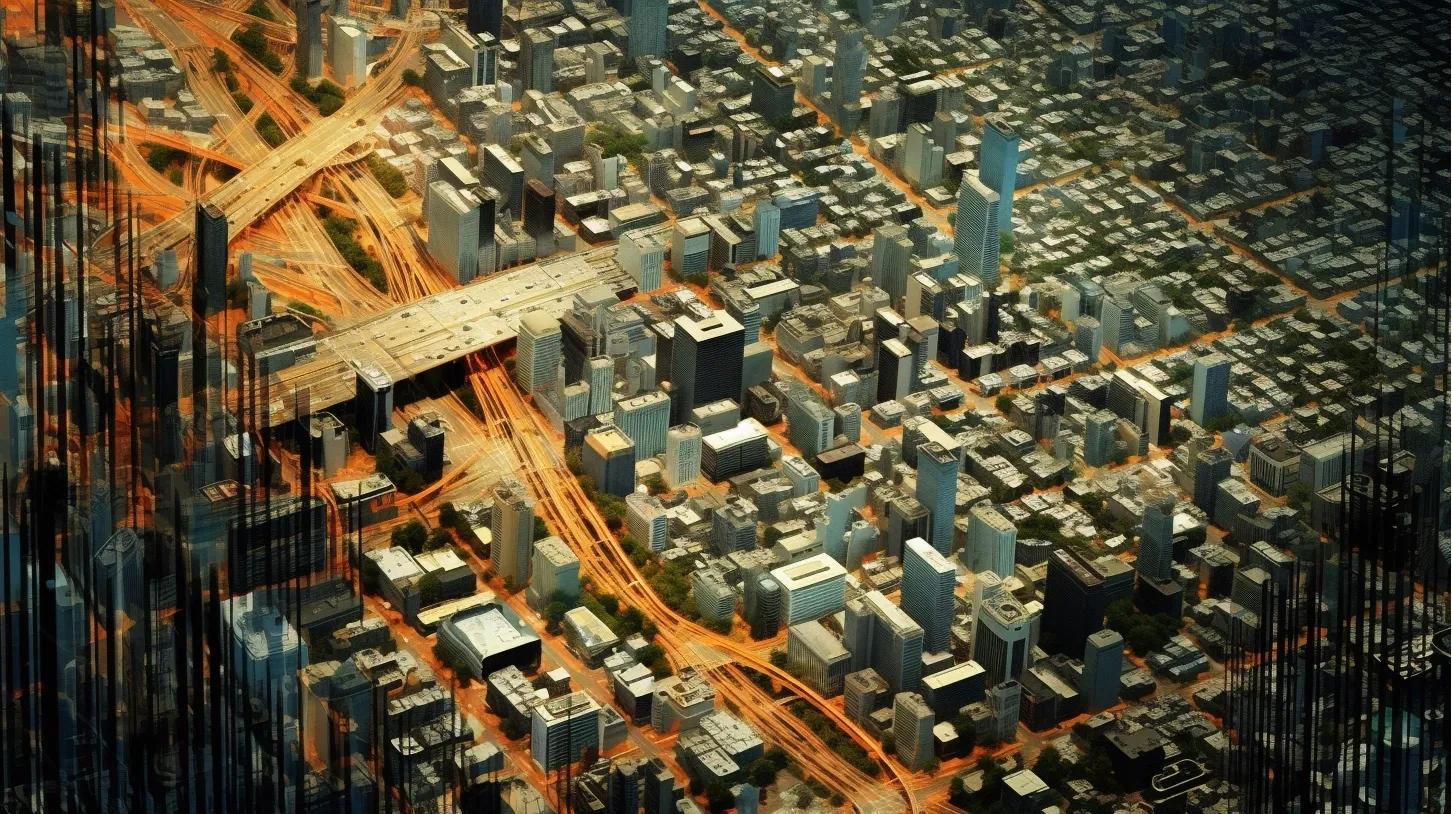
Urban population surges are more than just statistical increases in numbers. They represent the dynamic ebb and flow of human ambition, creativity, and perseverance. Every individual added to an urban environment carries dreams and aspirations, but also contributes to the density, resource demands, and potential stress on the city’s infrastructure. As cities worldwide face unprecedented growth, the sequence of urbanization, city planning, utilities, and telecom networks gains paramount importance. For sustainable urban renewal, we can no longer rely on historical data and conventional planning methods alone. It's the era of leveraging geospatial data and advanced technologies like AI, IoT, and Big Data. Here’s why.
The Unignorable Need for Urban Renewal
Cities are the beating heart of a nation’s economy, culture, and innovation. They promise opportunities and prosperity. But this allure often leads to rapid urbanization, resulting in congested streets, overburdened utilities, inadequate housing, and a stressed environment. The strain on water, power, transport, and telecommunication systems can be overwhelming. To ensure our cities don’t just grow, but thrive, a strategic, data-driven approach to urban renewal is imperative.
Geospatial Data: Mapping the Future
Geospatial data, which refers to information about a physical object that can be represented by numerical values in a geographic coordinate system, plays a pivotal role in city planning. By using geospatial analytics, planners can visualize the entire city's infrastructure, including roads, buildings, utility lines, and public spaces. This enables them to identify choke points, optimize routes, anticipate problem areas, and design more efficient city layouts. For instance, using geospatial data, a city might identify areas that are prone to flooding and then prioritize them for infrastructure investments.
AI, IoT, and Big Data: The Trio Changing the Urban Landscape
Artificial Intelligence (AI) : AI can predict trends based on vast datasets much more accurately than human analysis. For urban planning, AI can forecast which areas of the city will see the most growth, where traffic congestion might become a problem, or which neighborhoods are most in need of public services. Such predictions enable proactive planning, ensuring cities are always a step ahead.
Internet of Things (IoT) : IoT devices, embedded within the urban fabric, collect real-time data about everything from energy consumption in buildings to the flow of traffic on city streets. This continuous stream of data can help in responsive and real-time decision-making. Imagine street lights that dim when there’s no activity, or trash bins that alert collection trucks when they’re full. Such small efficiencies, when scaled city-wide, can lead to significant resource conservation.
Big Data : Big Data takes the massive amounts of information generated by cities and turns it into actionable insights. From identifying patterns in water usage to tracking the spread of diseases in real-time, Big Data can be the compass guiding urban planners.
Green, Inclusive Urban Development
Sustainable urban renewal isn't just about efficiency. It's about inclusivity and environmental responsibility. With the tools mentioned, cities can ensure that as they grow, they do so in a way that is green and inclusive. For instance, by analyzing data, a city could identify areas where green spaces are lacking and then prioritize those areas for park development. Such measures not only enhance the environment but also ensure all city residents have access to recreational areas.
In Conclusion
As urban centers continue to magnetize global populations, the need for more intelligent, sustainable, and inclusive urban planning has never been clearer. With the power of geospatial data, AI, IoT, and Big Data, we have the tools at our fingertips to craft cities that aren't just bustling hubs of activity, but also sanctuaries of sustainability, inclusivity, and well-being. Let's embrace these tools to chart a course towards a brighter, greener urban future for all.
Unlock the Potential of Geospatial Innovation: Ready to elevate your business with the precision of geospatial technology? We're your dedicated partner in this journey. Drop me a message and let's explore the future together!