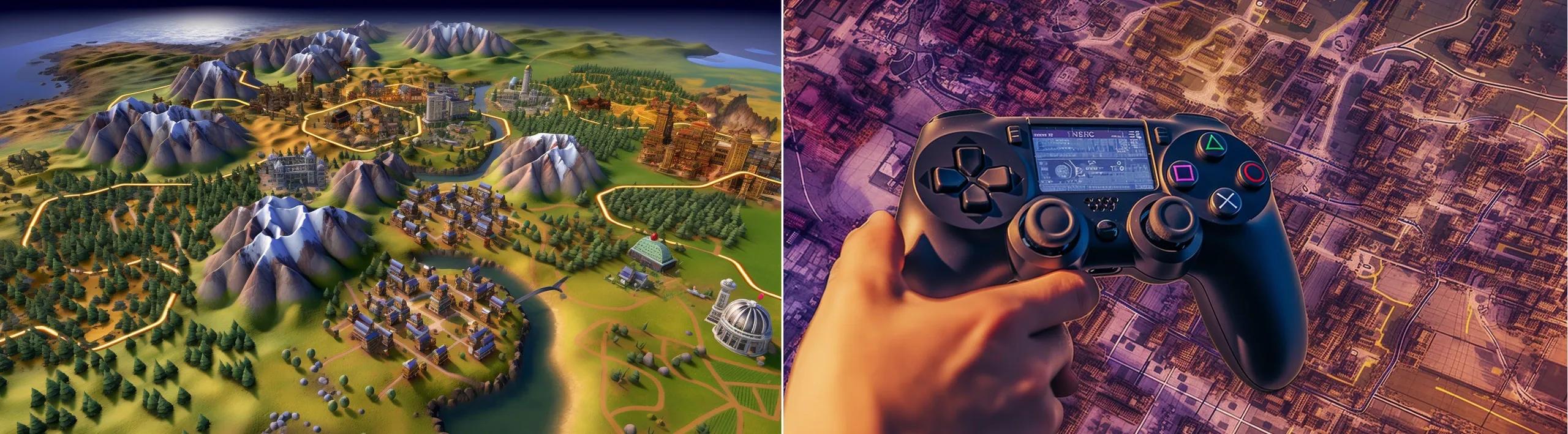
In the vast expanse of the digital realm, two seemingly disparate worlds are converging in unexpected ways: the intricate domain of geospatial services and the dynamic universe of the gaming industry. As the boundaries of technology and imagination continue to blur, this convergence is reshaping the way we perceive and interact with both virtual and physical worlds. Let's embark on a journey to explore how geospatial services are not only intersecting with but also reaping substantial benefits from the gaming industry.
The Augmented Reality Revolution
The dawn of augmented reality (AR) gaming marked a pivotal moment in this convergence. Games like "Pokémon GO" became global phenomena, not just for their nostalgic allure but for their innovative use of geospatial data. Players roamed real-world streets, parks, and landmarks, their smartphones acting as windows into a virtual world overlaid on our own. This wasn't just gaming; it was an experience, and at its heart lay the precision and capabilities of geospatial services.
For geospatial companies, AR games opened a lucrative avenue. They could provide the intricate mapping solutions and data that these games required, ensuring that a PokéStop was indeed at the local museum and not in the middle of a busy highway. The accuracy and reliability of geospatial data became paramount, elevating its importance in the gaming ecosystem.
Location, Location, Location
Beyond AR, the gaming industry saw the potential of location-based experiences. Imagine a game where local businesses could turn their establishments into in-game hubs or quest locations, driving real-world foot traffic through virtual incentives. Such collaborations would require pinpoint geospatial accuracy, ensuring that players' virtual experiences seamlessly melded with their physical surroundings. The implications for local commerce are profound, with geospatial services acting as the bridge between businesses and gamers.
Simulating Reality
The gaming industry's pursuit of realism has led to titles that meticulously recreate real-world environments. Flight simulation games that allow players to traverse the globe, city-building games that mirror actual topographies, and racing games that take players through real-world tracks—all lean heavily on geospatial data. The more accurate the data, the more immersive the gaming experience. For geospatial firms, this presents an opportunity to cater to a market that values precision and detail.
Optimizing the Multiplayer Arena
As multiplayer online games surge in popularity, the need for optimized server locations becomes crucial. Geospatial services can analyze player demographics and densities, guiding gaming companies in strategically placing their servers. The result? Faster, smoother, and more enjoyable gaming experiences for players spread across continents.
A Cultural Odyssey
In an increasingly globalized world, games are no longer confined to regional audiences. This global reach necessitates cultural localization. Geospatial data can assist game developers in tailoring content to specific regions, ensuring cultural relevance and enhancing player engagement. Whether it's incorporating local festivals, landmarks, or historical events, geospatial insights can enrich a game's narrative.
Training, Awareness, and Beyond
The potential applications of geospatial data in gaming extend beyond entertainment. Games designed for disaster response training can simulate real-world scenarios, allowing first responders to strategize in virtual yet accurate representations of specific locations. Similarly, games focusing on environmental conservation can utilize geospatial data to highlight real-world areas of concern, educating players about pressing global issues.
Conclusion
The symbiotic relationship between geospatial services and the gaming industry is a testament to the boundless possibilities that arise when technology meets creativity. As games continue to evolve, becoming more intertwined with our daily lives and the world around us, the role of geospatial services will only grow in significance. For geospatial companies, the gaming industry offers a vast, dynamic, and lucrative frontier, ripe with opportunities for collaboration, innovation, and growth. The game, as they say, is just getting started.