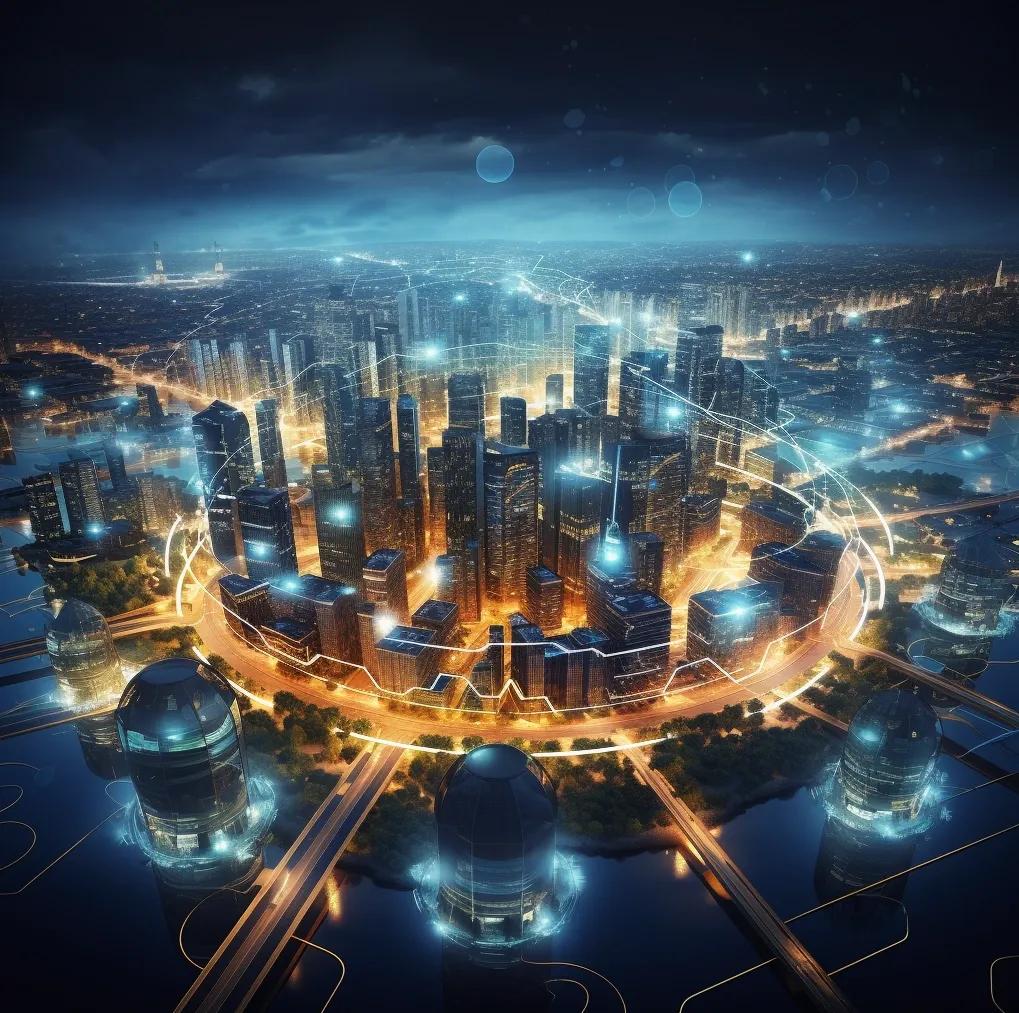
In the ever-evolving landscape of technology, geospatial intelligence (GI) stands as a beacon of innovation, integration, and future possibilities. But what exactly is geospatial intelligence, and how is it shaping the future? Let's dive into the world of GI and critically analyze its potential, challenges, and the path it's carving for the future.
Integration Across the Industrial Chain
Geospatial intelligence is not an isolated entity; it's a complex ecosystem that thrives on integration. Imagine a river flowing from its source to the sea, nourishing the land along its course. Similarly, GI flows from the upstream, where spatial data is generated, through the midstream, where it's processed and analyzed, to the downstream, where it finds its applications.
Upstream : Here's where the journey begins. Spatial data is like raw gold, valuable but unrefined. The upstream is all about mining this gold, extracting information based on production data.
Midstream : This is the heart of the GI system. It's where the raw data is refined, analyzed, and transformed into actionable intelligence. It's a bridge that connects the upstream and downstream, ensuring a smooth flow of data.
Downstream : The destination. This is where the spatial data truly shines, finding applications in various industries and creating value.
The integration across this chain is not just a technological feat; it's an art. It requires seamless connectivity, compatibility, and a vision to see the data not just as numbers but as a living entity that can breathe life into applications.
Embracing Innovation: AI and Beyond
The world of GI is not stagnant; it's constantly evolving, embracing new technologies, and pushing the boundaries. Five years ago, who would have thought that artificial intelligence (AI) would find its way into GIS data production? But here we are, applying AI to data management, analysis, and even enhancing intelligence.
AI has opened doors that were previously locked. Things that traditional algorithms couldn't achieve or were too slow to perform are now possible. It's like giving wings to GI, allowing it to soar higher and explore new horizons.
But it's not just about AI. The integration of distributed computing technologies, the adoption of large pre-training models, and the continuous pursuit of innovation are all part of this exciting journey. The purpose? To provide stronger capabilities, to innovate, and to enhance the power of geospatial intelligence.
Breakthroughs: Geo-perception and Integration
Innovation leads to breakthroughs, and in the world of GI, these breakthroughs are redefining the way we perceive and interact with spatial data.
Geo-perception : This is not just a term; it's a revolution. It enables object detection, land use identification, real-time geospatial perception, and so much more. Imagine being able to monitor traffic in real-time or detect land surface changes with a click. That's the power of Geo-perception.
Integration of Remote Sensing and GIS : This is another milestone. The seamless integration of remote sensing and GIS has removed the barriers that hindered the value release of remote sensing data. It's like building a highway where there were once only trails, facilitating faster and more efficient data processing and application.
Contribution to a Digital World
Geospatial intelligence is not just about technology; it's about empowerment. It's about building a digital world where information is not confined to silos but flows freely, integrating across different departments, and uncovering insights.
By managing time, location, and other attributes, GI is upgrading the value of IT, contributing to digital governance, and laying the foundation for a digital future. It's not just about managing data; it's about understanding the spatial relationships, the connections, the patterns, and the stories that data tells.
Challenges and the Road Ahead
While the future of geospatial intelligence looks promising, it's not without challenges. Integration, innovation, and application are complex processes that require expertise, vision, and continuous effort. The compatibility of different data types, the performance of data applications, and the ever-increasing demands of users are all hurdles that need to be overcome.
But these challenges are not roadblocks; they are stepping stones. They push the boundaries, inspire innovation, and drive the continuous evolution of GI.
Conclusion: A Future Unfolding
Geospatial intelligence is not just a technology; it's a philosophy. It's a way of seeing the world, understanding it, and interacting with it. From integration across the industrial chain to embracing AI, from breakthroughs like Geo-perception to contributions to a digital world, GI is shaping a future that's exciting, promising, and full of possibilities.
As we stand at the cusp of this future, we must not only celebrate the achievements but also critically analyze the challenges, the potentials, and the responsibilities that come with it. The future of geospatial intelligence is not a destination; it's a journey, a continuous unfolding of possibilities, innovations, and a vision that sees beyond the data, into the very fabric of our world.
So, are we ready to embark on this journey? The future of geospatial intelligence awaits, and it's a future worth exploring.