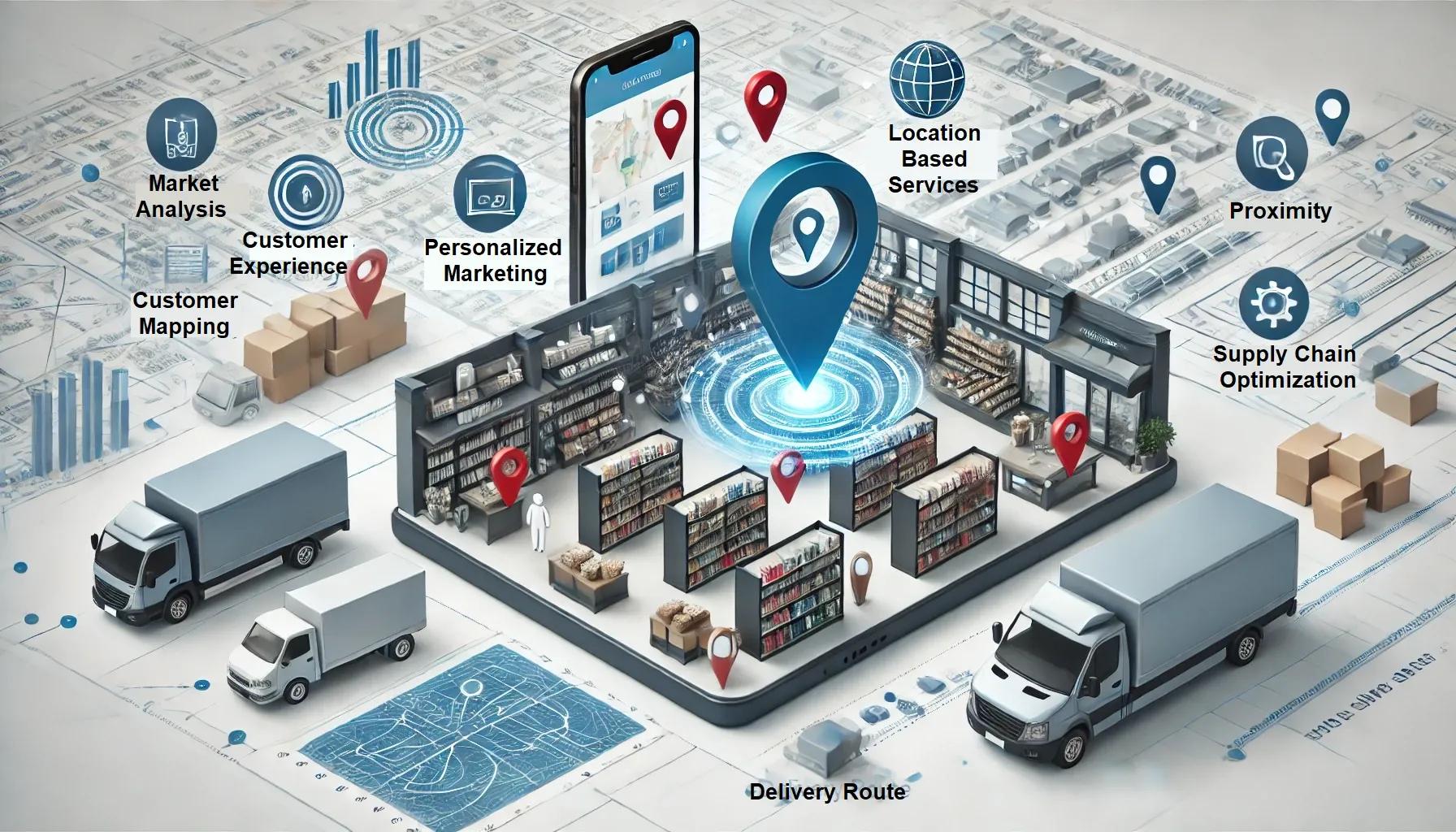
Geospatial technology has become a cornerstone in the transformation of various industries, and the retail sector is no exception. By leveraging the capabilities of geospatial technology, retailers can significantly enhance customer experience and operational efficiency. This article explores the various applications of geospatial technology in retail, focusing on its benefits and the potential it holds for the future.
Understanding Geospatial Technology
Geospatial technology encompasses a suite of tools and techniques used to collect, analyze, and visualize spatial data. This includes Geographic Information Systems (GIS), remote sensing, Global Positioning Systems (GPS), and other location-based services. In the retail context, these technologies are employed to gather insights into customer behavior, optimize supply chain management, and improve in-store experiences.
Enhancing Customer Experience
Personalized Marketing
One of the most significant advantages of geospatial technology in retail is its ability to enable personalized marketing. By analyzing location data, retailers can gain insights into the shopping habits and preferences of their customers. For instance, GPS data from mobile devices can reveal the most frequented locations by customers, allowing retailers to tailor their marketing strategies accordingly. Personalized promotions and advertisements can be delivered to customers based on their location, increasing the likelihood of engagement and conversion.
Improved Store Layout and Design
Geospatial technology can also assist in optimizing store layouts and designs. By mapping customer movement within the store, retailers can identify high-traffic areas and strategically place products to maximize visibility and sales. Heat maps generated from spatial data can reveal patterns in customer behavior, such as the most popular sections of the store or the areas where customers tend to spend the most time. This information can be used to design store layouts that enhance the overall shopping experience.
Location-Based Services
Location-based services (LBS) powered by geospatial technology offer a plethora of benefits to retail customers. For example, indoor navigation systems can guide customers to specific products within large stores or shopping malls. Additionally, geofencing can be employed to send push notifications to customers when they are in proximity to a store, informing them of ongoing sales or special offers. These services not only improve the convenience of shopping but also drive foot traffic to physical stores.
Operational Efficiency
Supply Chain Optimization
Efficient supply chain management is crucial for the success of any retail business. Geospatial technology plays a vital role in optimizing various aspects of the supply chain, from inventory management to transportation logistics. GIS can be used to monitor and manage inventory levels across multiple locations, ensuring that products are available where and when they are needed. Furthermore, route optimization algorithms can analyze spatial data to determine the most efficient delivery routes, reducing transportation costs and improving delivery times.
Site Selection and Market Analysis
Selecting the right location for new stores is a critical decision for retailers. Geospatial technology provides valuable insights that can aid in this process. By analyzing demographic data, consumer behavior, and competitor locations, retailers can identify the most promising sites for new stores. Spatial analysis can also help in understanding market potential and identifying underserved areas, enabling retailers to make informed decisions about expansion and investment.
Disaster Management and Recovery
Natural disasters and unforeseen events can disrupt retail operations, leading to significant losses. Geospatial technology can assist in disaster management and recovery by providing real-time data and predictive analytics. For instance, during a natural disaster, GIS can be used to monitor affected areas, assess damage, and coordinate response efforts. Retailers can use this information to ensure the safety of their employees and customers, manage inventory, and plan for business continuity.
Case Studies
Walmart
Walmart, one of the largest retailers in the world, has successfully implemented geospatial technology to enhance its operations. By using GIS, Walmart can analyze customer demographics and purchasing patterns to optimize store locations and product assortments. Additionally, the company uses geospatial data to monitor and manage its supply chain, ensuring efficient inventory management and timely deliveries.
Starbucks
Starbucks leverages geospatial technology to improve customer experience and drive business growth. The coffee giant uses spatial data to analyze customer preferences and tailor its marketing campaigns. Moreover, Starbucks employs GIS for site selection, ensuring that new stores are located in areas with high demand and minimal competition.
Amazon
Amazon utilizes geospatial technology in various aspects of its operations, from warehouse management to delivery logistics. The e-commerce giant uses GIS to optimize its fulfillment network, ensuring that products are stored and shipped from the most efficient locations. Additionally, Amazon's delivery services benefit from route optimization algorithms that minimize transportation costs and delivery times.
Future Trends and Opportunities
As geospatial technology continues to evolve, its applications in the retail sector are expected to expand further. The integration of artificial intelligence (AI) and machine learning with geospatial technology will enable more sophisticated data analysis and predictive modeling. For instance, AI-powered geospatial analytics can provide deeper insights into customer behavior and preferences, allowing for even more personalized marketing strategies.
The adoption of augmented reality (AR) and virtual reality (VR) in retail is also expected to grow, with geospatial technology playing a key role. AR applications can enhance the in-store experience by providing customers with interactive and immersive product information. Meanwhile, VR can be used for virtual store tours and online shopping experiences, bridging the gap between physical and digital retail.
In conclusion, geospatial technology is revolutionizing the retail sector by enhancing customer experience and improving operational efficiency. From personalized marketing and optimized store layouts to supply chain management and site selection, the applications of geospatial technology are vast and varied. As the technology continues to advance, retailers that embrace geospatial solutions will be better positioned to meet the evolving needs of their customers and stay ahead of the competition. The future of retail is undoubtedly intertwined with the innovative capabilities of geospatial technology, promising a more efficient and customer-centric industry.