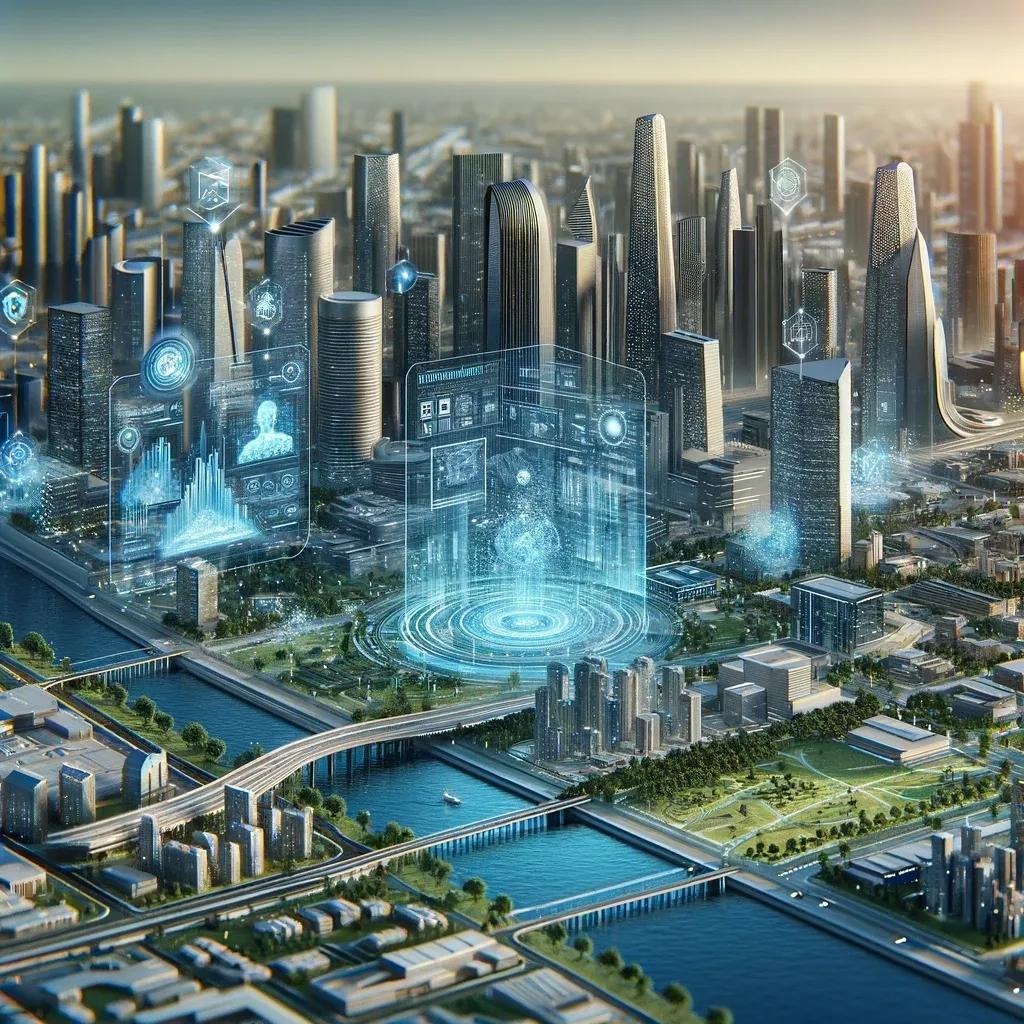
In recent years, the advent of generative artificial intelligence (AI) has marked a revolutionary shift in various technology sectors. Among these, the geospatial and Building Information Modeling (BIM) industries stand out as prime candidates for transformative impacts. Over the next two to five years, generative AI is poised to revolutionize how professionals in these fields work, leading to more efficient, accurate, and innovative outcomes. This article delves into the potential applications and impacts of generative AI in geospatial analysis and BIM, highlighting how these advancements can reshape our approach to spatial data and building design.
Generative AI: A Game-Changer in Geospatial Solutions
Generative AI, with its ability to create realistic 3D models and environments, opens up a new realm of possibilities in geospatial solutions. This technology can simulate various urban development scenarios, offering planners and developers a powerful tool to envision and plan future projects.
Urban Planning and Development : Generative AI can simulate urban growth patterns, traffic flows, and environmental impacts, providing urban planners with a dynamic tool to foresee and mitigate potential issues in urban development.
Environmental Analysis : AI-driven models can predict environmental changes, such as erosion patterns, flooding risks, and climate impacts on specific geographical locations. This predictive capability is crucial for sustainable planning and disaster management.
Resource Management : In agriculture and natural resource management, generative AI can simulate land use changes and help in optimizing resource allocation, thus contributing to more sustainable practices.
Transformative Impacts in Building Information Modeling (BIM)
The integration of generative AI into BIM is set to bring unprecedented changes to the construction and architecture industry. By creating detailed simulations of buildings and environments, BIM professionals can achieve higher accuracy and efficiency in their projects.
Design Optimization : Generative AI algorithms can assist architects in exploring a vast array of design options, analyzing each for the best functional and aesthetic outcomes while adhering to regulatory constraints.
Construction Simulation : AI can simulate the construction process, identifying potential issues before they occur on-site. This foresight can reduce costly mistakes and enhance safety protocols.
Facility Management : In the post-construction phase, generative AI can be used for the simulation of building operations, predicting maintenance needs, and optimizing energy usage.
Predictive Analysis and Scenario Planning
One of the most promising applications of generative AI in both geospatial and BIM contexts is predictive analysis and scenario planning. By analyzing vast datasets, AI can predict outcomes of specific scenarios, aiding in decision-making and risk assessment.
Risk Assessment : Generative AI can forecast potential risks in both urban development and construction projects, allowing for preemptive measures to be taken.
Scenario Simulation : It can simulate multiple scenarios in urban planning or building design, offering stakeholders a comprehensive view of potential outcomes.
Challenges and Ethical Considerations
While the potential of generative AI is immense, it also poses certain challenges and ethical considerations that need to be addressed:
Data Privacy and Security : The reliance on large datasets raises concerns regarding data privacy and security. Ensuring the protection of sensitive information is paramount.
Bias and Accuracy : AI models are only as good as the data they are trained on. Ensuring the accuracy and unbiased nature of this data is crucial for reliable outcomes.
Ethical Use of AI : The ethical implications of AI decision-making in urban development and construction must be carefully considered, ensuring that AI aids, rather than dictates, human decision-making.
In conclusion, the integration of generative AI into geospatial and BIM solutions presents an exciting frontier with the potential to significantly enhance efficiency, accuracy, and creativity in these fields. Over the next two to five years, we can expect these technologies to become more refined and widely adopted, fundamentally changing the way we approach spatial data analysis and building design. However, it is crucial to navigate this journey with a mindful approach towards the challenges and ethical considerations associated with AI. The future is bright for generative AI in geospatial and BIM solutions, promising a more innovative, efficient, and sustainable approach to urban development and construction.