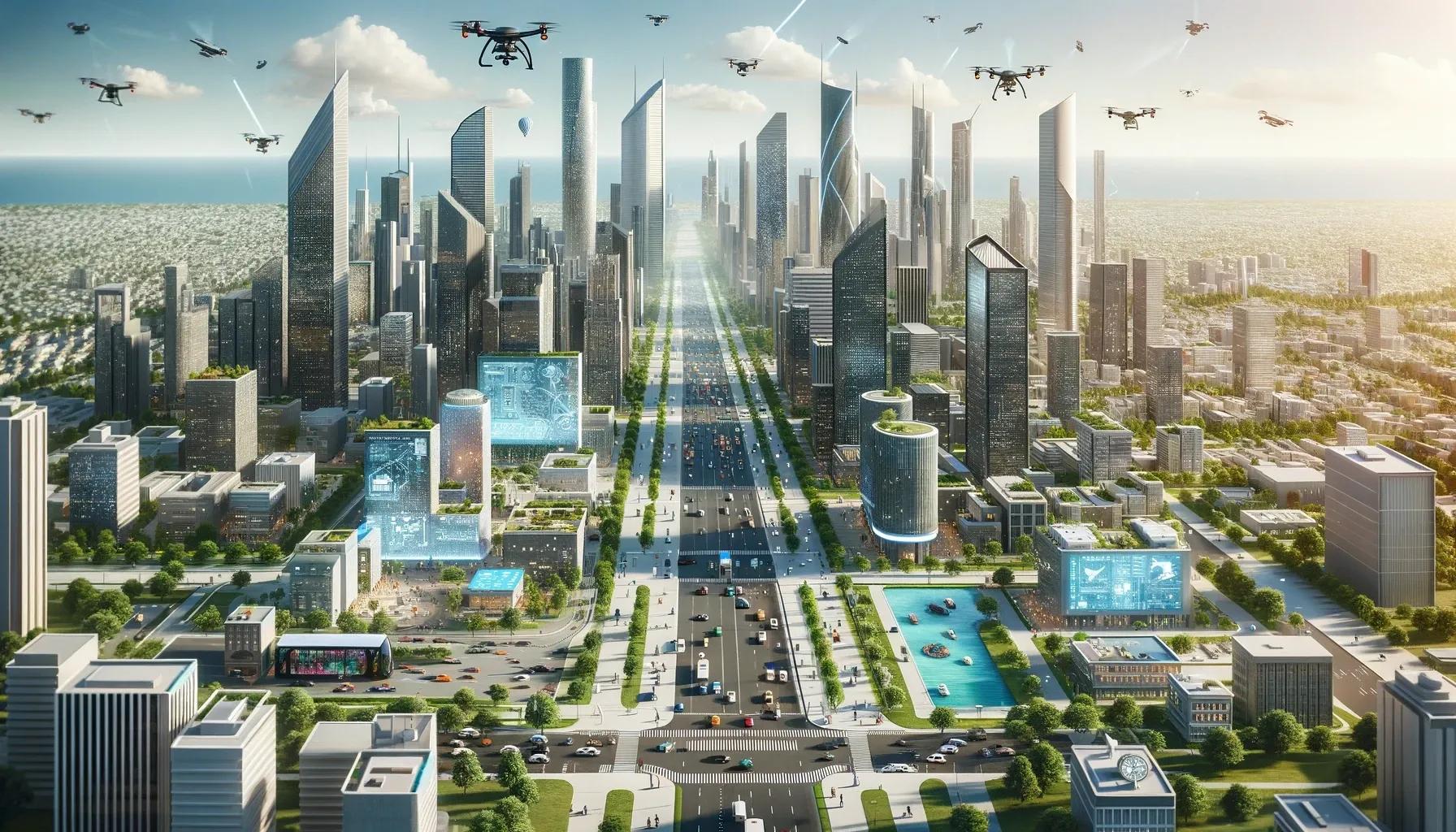
In the ever-evolving landscape of urban development, City Information Modeling (CIM) stands at the forefront of technological advancement. As we gaze into the future, it’s clear that CIM is poised to revolutionize the way we conceptualize, design, and manage urban environments. This article delves into the upcoming innovations in CIM and how they will shape the urban landscapes of tomorrow.
1. Integration of Advanced Geospatial Technologies
The future of CIM is inextricably linked with advancements in geospatial technologies. High-resolution satellite imagery, sophisticated GIS (Geographic Information Systems), and UAV (Unmanned Aerial Vehicle) based surveys will become integral components of CIM. These technologies will enable city planners to capture real-time, detailed data of urban areas, facilitating more accurate and efficient planning. The integration of these technologies will lead to the development of more comprehensive and dynamic city models, offering a deeper understanding of urban landscapes.
2. AI and Machine Learning Enhancements
Artificial Intelligence (AI) and Machine Learning (ML) are set to play a pivotal role in the evolution of CIM. These technologies will empower city models with predictive analytics, enabling urban planners to foresee and mitigate potential challenges in city development. AI algorithms can analyze vast amounts of data from various sources, including traffic patterns, energy consumption, and demographic shifts, providing valuable insights for sustainable urban planning. Moreover, ML can streamline the design process by automatically generating optimal city layouts based on specific criteria such as sunlight exposure, wind flow, and accessibility.
3. Augmented and Virtual Reality Applications
Augmented Reality (AR) and Virtual Reality (VR) will transform CIM by providing immersive and interactive experiences. Planners and stakeholders will be able to explore virtual models of urban areas, gaining a better understanding of the proposed developments and their impacts. AR can bring CIM data to life by overlaying digital information onto the physical world, offering a new dimension to city planning and public engagement. VR, on the other hand, will enable stakeholders to experience future cityscapes before they are built, fostering more informed decision-making.
4. Enhanced Collaboration and Communication
CIM’s future will be marked by enhanced collaboration and communication among various stakeholders. Cloud-based platforms will enable real-time sharing and editing of city models, breaking down silos between different departments and disciplines. This collaborative approach will ensure that all voices are heard in the planning process, leading to more inclusive and well-rounded urban development projects.
5. Sustainability and Resilience Modeling
Sustainability and resilience will become central themes in CIM. Future city models will integrate environmental data, such as air quality, water resources, and green spaces, to promote sustainable urban development. CIM will also play a crucial role in modeling resilience strategies against climate change impacts, such as sea-level rise, extreme weather events, and urban heat islands. By simulating different scenarios, planners can devise strategies that enhance the city’s resilience, ensuring long-term sustainability.
6. Smart City Integration
CIM will evolve in tandem with the smart city concept, incorporating IoT (Internet of Things) devices and sensors into city models. This integration will provide continuous feedback from the urban environment, enabling a more adaptive and responsive approach to city management. Data from IoT devices can be used to optimize traffic flow, energy consumption, and public services, leading to more efficient and livable cities.
7. Citizen Engagement and Participatory Planning
The future of CIM will see increased citizen engagement and participatory planning. Interactive city models accessible through web platforms and mobile applications will encourage public involvement in the urban planning process. By soliciting feedback and ideas from residents, city planners can ensure that developments align with the needs and aspirations of the community.
8. Customized and Scalable Solutions
As CIM technology matures, it will offer more customized and scalable solutions to cater to the unique needs of different cities. Modular and flexible city models will allow for scalability, adapting to cities of varying sizes and complexities. This tailored approach will enable small towns and megacities alike to benefit from CIM’s capabilities.
In summary, the future of City Information Modeling is bright and brimming with potential. The integration of advanced technologies, enhanced collaboration, and a focus on sustainability and citizen engagement will lead to more efficient, resilient, and livable urban environments. As these innovations unfold, CIM will not only shape the physical landscape of cities but also the way we interact with and understand our urban spaces. The era of dynamic, intelligent, and inclusive city planning is upon us, heralding a new chapter in urban development.