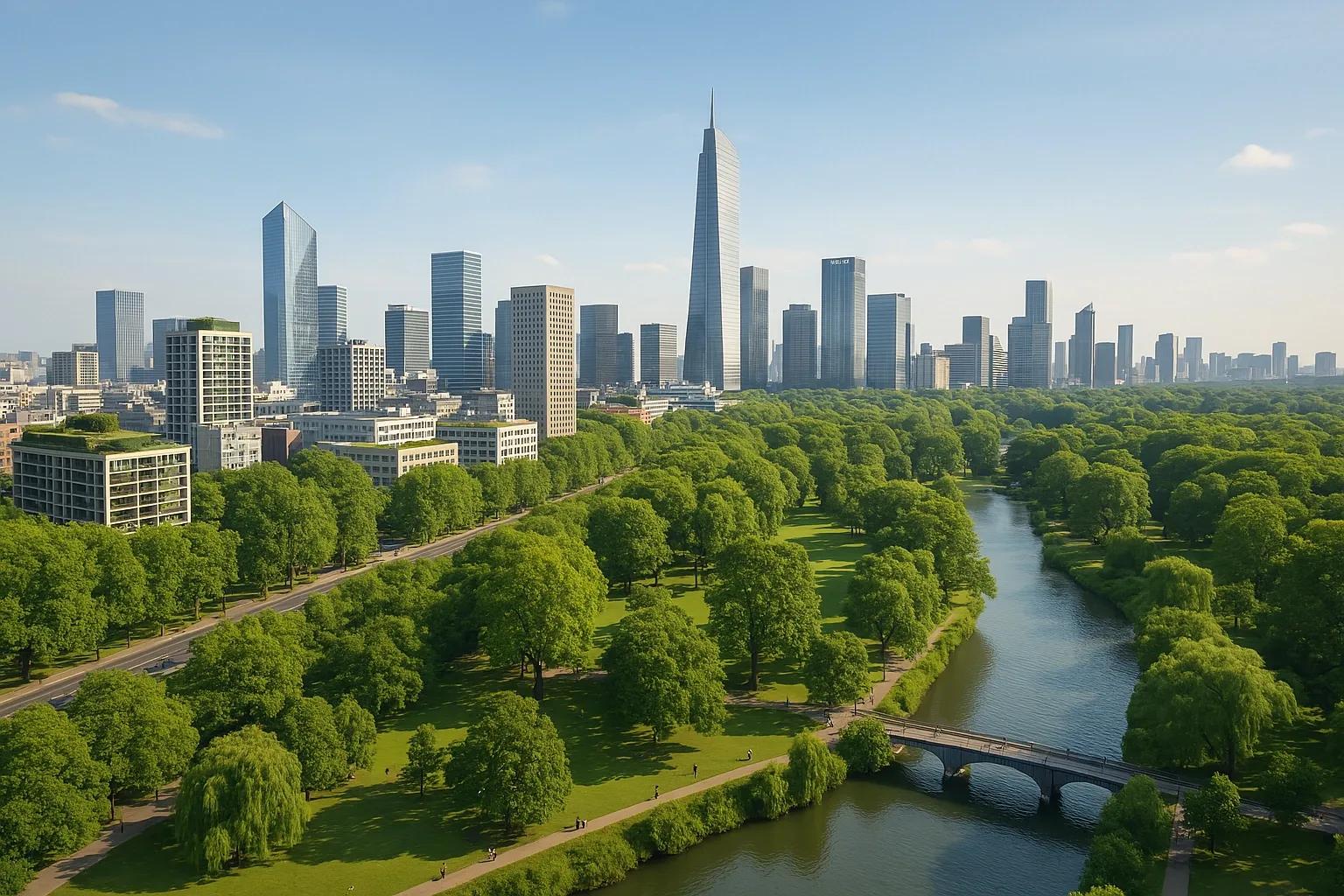
As cities invest trillions into new infrastructure over the next two decades, there is a once-in-a-lifetime opportunity to shift how urban landscapes are designed.
Rather than treating nature as an afterthought or an optional addition, cities must embed it into the foundation of their urban development plans, financially, spatially, and operationally.
However, mainstream urban financing systems often prioritize traditional grey infrastructure, roads, bridges, and utilities, without accounting for the benefits or integration of natural systems.
This gap must be closed if cities are to build resilience, attract sustainable finance, and thrive in a future defined by climate and environmental challenges.
Why It Matters
Nature provides essential services that grey infrastructure alone cannot deliver:
Trees reduce urban heat islands.
Wetlands manage stormwater naturally.
Green corridors enhance air quality and biodiversity.
Parks and waterfronts boost public health and economic activity.
When cities fail to invest in these systems, the long-term cost is far greater, from rising healthcare expenses to climate disaster recovery.
A nature-positive approach to urban development is not a cost addition; it is a risk mitigation and value creation strategy.
Financially embedding nature in urban projects is critical to future-proofing cities.
How It Can Be Addressed
There are several practical ways cities can start making space, and finance, for nature:
1. Nature-Inclusive Urban Design Standards
Urban development codes should mandate space for green roofs, permeable surfaces, rain gardens, urban forests, and restored waterways.
Using BIM integrated with environmental datasets, planners can simulate compliance and performance during design phases.
2. Green Infrastructure Allocations in Budgets
Cities must earmark specific percentages of infrastructure budgets for nature-based solutions.
Geospatial asset management platforms can help track investments geographically, ensuring equitable distribution across neighborhoods.
3. Valuation of Ecosystem Services
Tools like AI-based predictive models and Digital Twins allow cities to measure the economic value of ecosystem services provided by natural infrastructure, making it easier to justify funding and attract investors.
4. Blended Finance Approaches
Public-private partnerships, green bonds, and multilateral development bank programs can fund large-scale nature-positive projects.
Accurate environmental data from UAV surveys and IoT monitoring networks provide credibility to investment propositions.
Role of Digital Technologies
Integrating nature into urban finance and infrastructure requires reliable, actionable data. This is where modern technologies step in:
Geospatial Mapping : Identify optimal areas for nature-based interventions.
BIM with Nature Data : Model the cost and performance of integrated green infrastructure.
Digital Twins : Simulate nature-positive project outcomes and economic returns.
UAV Monitoring : Ensure project compliance and monitor environmental impacts post-development.
AI and IoT : Real-time tracking of urban ecosystem health to support financial reporting and adaptive management.
These tools bridge the gap between planning intent and measurable outcomes, key to scaling nature-positive urban development.
Conclusion
Nature must no longer be seen as a passive backdrop to urban life, it must be designed, financed, and managed as an essential infrastructure.
Cities that systematically make space for nature in their development and investment frameworks will be healthier, more competitive, and more resilient in the long run.
Financing nature is not about spending more, it’s about investing smarter.