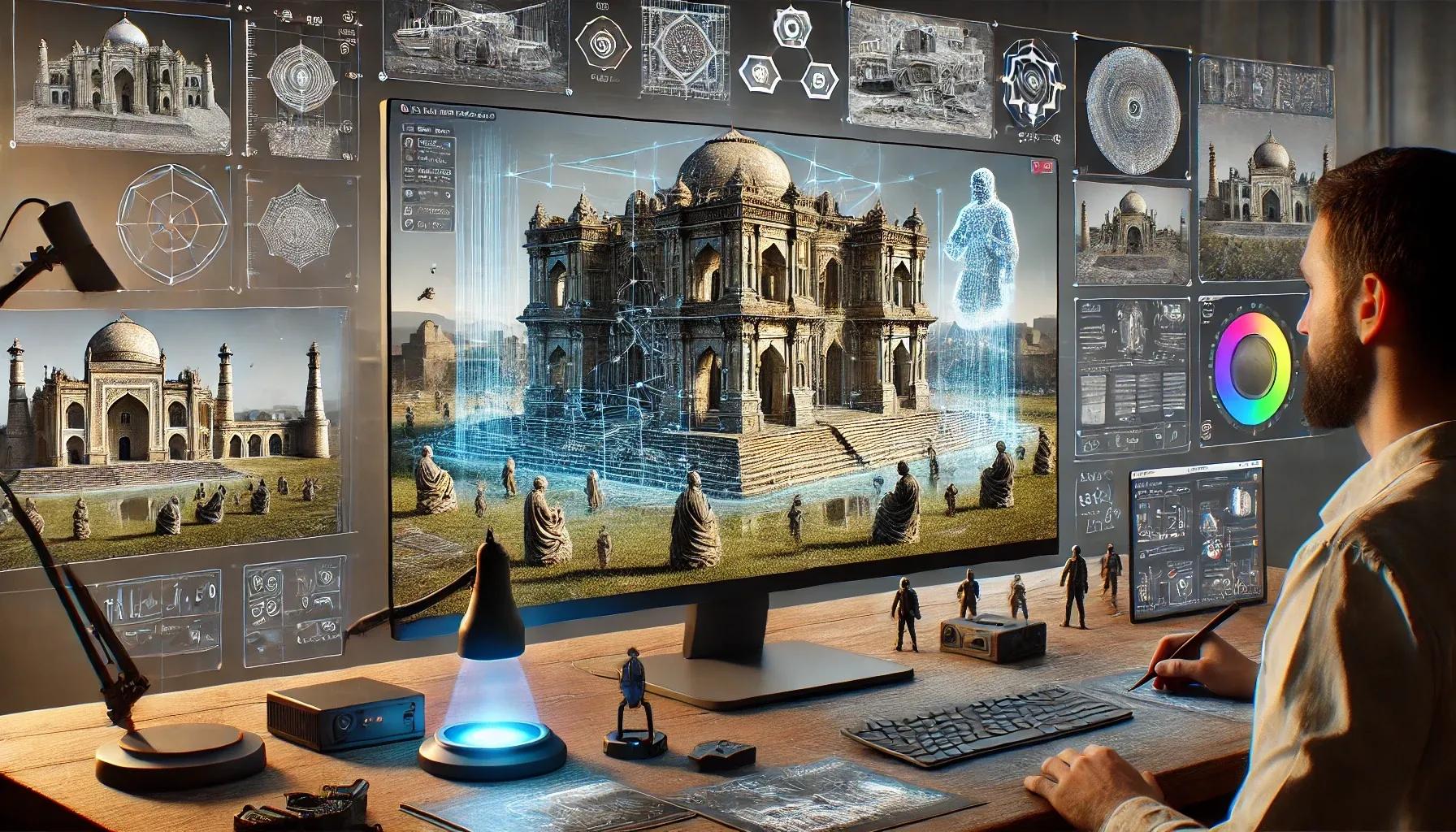
Heritage conservation has always been a challenging field, requiring a delicate balance between preserving the past and accommodating the present. Traditional methods have served well, but with the advent of digital technologies, there is an opportunity to revolutionize how we approach the conservation of cultural heritage. One such technology is the Digital Twin, a sophisticated virtual model that replicates physical assets. This article delves into the use of Digital Twins in heritage conservation, examining their potential, applications, and implications.
Understanding Digital Twins
A Digital Twin is a dynamic, virtual representation of a physical object or system across its lifecycle, using real-time data to enable understanding, learning, and reasoning. This technology integrates several disciplines, including Internet of Things (IoT), Artificial Intelligence (AI), and Big Data Analytics, to create a precise and interactive replica of physical assets. In the context of heritage conservation, Digital Twins can replicate historical buildings, monuments, and sites, providing an invaluable tool for preservation and restoration efforts.
Applications of Digital Twins in Heritage Conservation
1. Detailed Documentation and Analysis
Digital Twins offer a high level of detail and accuracy in documenting heritage sites. Traditional documentation methods, such as photographs and drawings, lack the depth and precision required for comprehensive analysis. By contrast, Digital Twins can capture intricate details through advanced scanning technologies like LiDAR and photogrammetry. This data can then be used to create detailed 3D models, enabling experts to conduct thorough analyses without physically interacting with the site.
2. Monitoring and Maintenance
The preservation of heritage sites requires continuous monitoring to prevent deterioration. Digital Twins can facilitate real-time monitoring of structural health by integrating sensors that track environmental conditions, material stress, and other critical parameters. This continuous data stream allows conservationists to detect and address issues promptly, ensuring the longevity of the heritage asset. For example, temperature and humidity sensors embedded in a historical building can provide data that helps in adjusting climate control systems to prevent mold growth and material degradation.
3. Restoration and Reconstruction
Restoration efforts often face the challenge of limited or degraded original documentation. Digital Twins can overcome this by using existing data to recreate lost or damaged elements of a heritage site. Advanced algorithms can extrapolate missing details from the available data, guiding restoration teams in their efforts. Additionally, simulations within the Digital Twin can predict the impact of various restoration techniques, allowing conservators to choose the most effective and least invasive methods.
4. Public Engagement and Education
Engaging the public in heritage conservation is crucial for its success. Digital Twins provide an interactive platform for education and engagement, making heritage sites accessible to a broader audience. Virtual tours and augmented reality experiences can bring history to life, allowing people to explore sites from anywhere in the world. This not only raises awareness but also generates interest and support for conservation efforts. For instance, a virtual tour of an ancient castle can provide historical context, architectural insights, and stories of its past inhabitants, enriching the visitor experience.
Case Studies
The Taj Mahal
One notable case study in India is the conservation of the Taj Mahal using Digital Twin technology. The Archaeological Survey of India (ASI) partnered with tech firms to create a comprehensive Digital Twin of the iconic monument. Advanced scanning technologies, including LiDAR and photogrammetry, were employed to capture the intricate details of the Taj Mahal's structure. This Digital Twin enabled conservationists to monitor the monument's structural health in real-time, detect early signs of deterioration, and plan restoration activities with greater precision. The virtual model also facilitated public engagement through interactive virtual tours, enhancing global awareness and appreciation of this UNESCO World Heritage site.
The Notre-Dame Cathedral
The devastating fire at Notre-Dame Cathedral in 2019 highlighted the importance of detailed documentation in heritage conservation. Fortunately, detailed 3D scans of the cathedral existed, created by art historian Andrew Tallon using LiDAR technology. These scans served as the foundation for a Digital Twin, which is now instrumental in restoration efforts. The Digital Twin provides a precise model of the cathedral's structure, enabling restorers to plan and execute their work with unparalleled accuracy.
The Sydney Opera House
The Sydney Opera House, a UNESCO World Heritage site, utilizes a Digital Twin for its maintenance and preservation. This model integrates data from various sensors placed throughout the building, monitoring everything from structural stress to environmental conditions. The real-time data allows the management team to address potential issues before they become significant problems, ensuring the opera house remains in excellent condition for future generations.
Challenges and Considerations
While the potential of Digital Twins in heritage conservation is immense, several challenges need to be addressed:
Data Accuracy and Completeness
The effectiveness of a Digital Twin relies heavily on the accuracy and completeness of the data used to create it. Incomplete or inaccurate data can lead to flawed models, undermining the conservation efforts. Ensuring high-quality data collection and validation is essential for creating reliable Digital Twins.
Integration with Existing Systems
Many heritage sites already use various digital tools for documentation and management. Integrating Digital Twins with these existing systems can be complex and requires careful planning to ensure compatibility and interoperability. This includes aligning data formats, ensuring seamless data flow, and training personnel to use the new technology effectively.
Cost and Accessibility
The creation and maintenance of Digital Twins can be costly, potentially limiting their use to well-funded projects. Finding ways to reduce costs and make this technology accessible to a broader range of heritage sites is crucial. This could involve developing more affordable scanning technologies, creating standardized templates for common types of heritage assets, and fostering collaboration between institutions to share resources and expertise.
Ethical Considerations
The use of Digital Twins raises ethical questions regarding data ownership, privacy, and the potential commercialization of cultural heritage. It is important to establish clear guidelines and policies to address these concerns, ensuring that Digital Twins are used responsibly and that the rights of the communities associated with the heritage sites are respected.
Future Prospects
The future of Digital Twins in heritage conservation looks promising, with advancements in technology continuing to expand their capabilities. Emerging trends such as the integration of AI for predictive analytics, the use of blockchain for data security and provenance, and the development of more sophisticated sensors will further enhance the effectiveness of Digital Twins. These innovations will provide conservationists with even more powerful tools to preserve and protect our cultural heritage.
Additionally, the growing emphasis on sustainability and climate resilience in heritage conservation aligns well with the capabilities of Digital Twins. By providing detailed insights into the environmental conditions and structural health of heritage sites, Digital Twins can help develop strategies to mitigate the impact of climate change and ensure the long-term sustainability of these precious assets.
In conclusion, Digital Twins represents a transformative approach to heritage conservation, offering unprecedented levels of detail, accuracy, and interactivity. From detailed documentation and real-time monitoring to restoration and public engagement, the applications of Digital Twins are vast and varied. While challenges remain, the continued advancement of this technology holds great promise for the future of heritage conservation. By embracing Digital Twins, we can ensure that our cultural heritage is preserved and celebrated for generations to come.