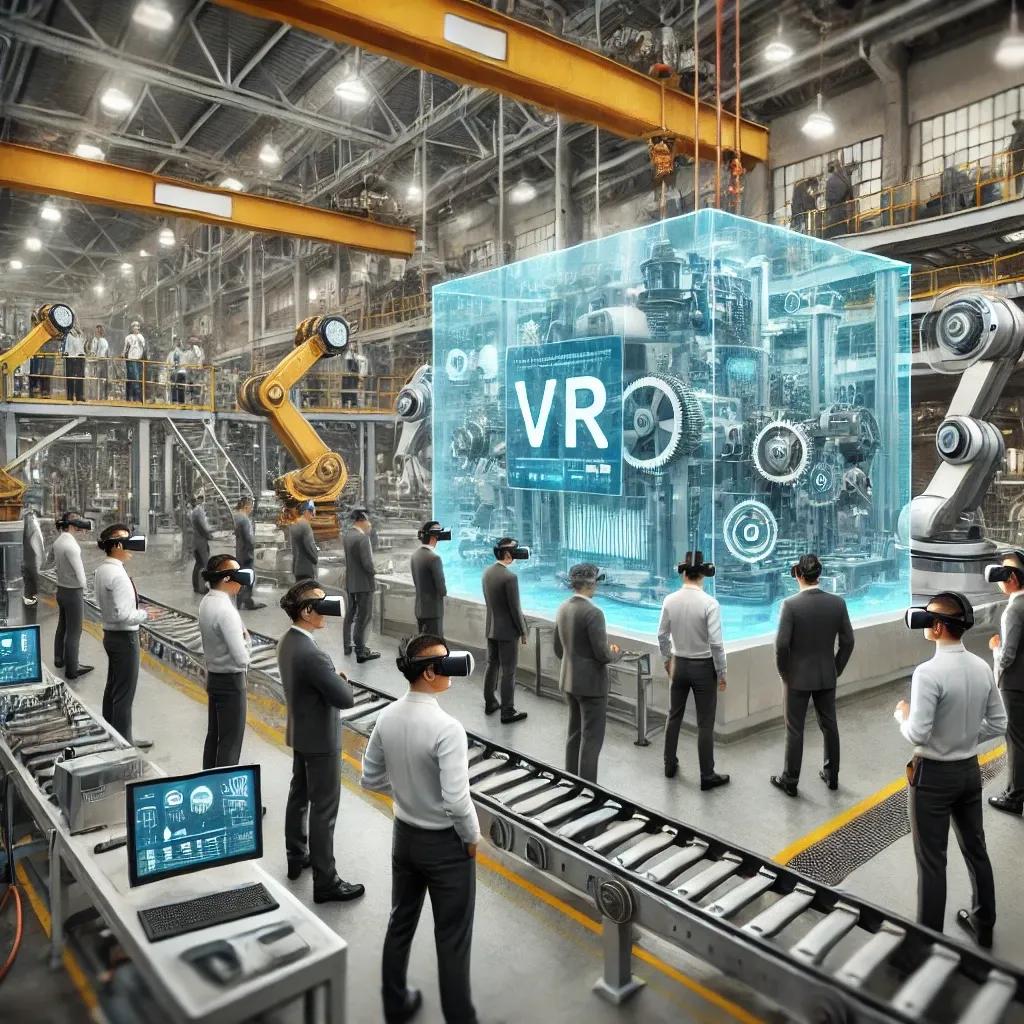
Virtual Reality (VR) technology has rapidly advanced over the past decade, transforming from a tool primarily used for gaming into a powerful instrument for industrial training. Specifically, on factory floors, VR training modules offer a significant improvement in the learning curve and operational efficiency of employees. We are a leader in digital twin and immersive technology, provide state-of-the-art VR training solutions that simulate real-world factory environments, ensuring workers are well-prepared for the challenges they will face in their roles. This article explores how our VR training modules enhance factory floor operations by focusing on practical applications, benefits, and the future potential of this technology.
The Role of VR Training in Factory Environments
Simulating Real-World Scenarios
Our VR training modules are designed to replicate the exact conditions of a factory floor, allowing employees to engage in realistic, hands-on training without the risks associated with on-the-job learning. These modules simulate various aspects of factory operations, from the operation of complex machinery to safety protocols in hazardous environments. By immersing workers in these scenarios, VR training ensures that they gain a thorough understanding of the tasks they will perform, reducing the likelihood of mistakes when they transition to the actual factory floor.
Integration with Existing Systems
One of the key advantages of our VR training modules is their ability to integrate seamlessly with existing factory systems. Through API integrations, VR modules can access data from hard simulators and other factory systems, providing a more comprehensive training experience. This integration not only enhances the realism of the VR environment but also allows for real-time feedback and adjustments based on the trainee’s performance.
No-Code Authoring and Customization
Our platform is built with a no-code authoring tool, which enables quick and easy customization of VR training modules. This feature is particularly valuable in industrial settings where training needs may vary significantly across different roles or machinery. Managers can rapidly develop and deploy VR training scenarios tailored to specific needs without the need for extensive programming knowledge. This flexibility ensures that the training is always relevant and up-to-date, reflecting any changes in factory operations or protocols.
Benefits of VR Training for Factory Floors
Enhanced Learning Outcomes
The immersive nature of VR training significantly enhances learning outcomes compared to traditional training methods. Studies have shown that VR training can improve retention rates and accelerate the learning process, making it an ideal solution for onboarding new employees or upskilling current staff. In a factory setting, where precision and safety are paramount, these improved learning outcomes can translate directly into higher operational efficiency and reduced error rates.
Safety and Risk Mitigation
Training on the actual factory floor can be risky, especially when dealing with hazardous machinery or materials. VR training mitigates these risks by allowing employees to practice in a virtual environment where mistakes do not have real-world consequences. This not only protects the trainees but also prevents costly damage to equipment and disruptions to production. For example, VR simulations can include emergency response scenarios, enabling workers to rehearse their reactions to dangerous situations in a controlled, safe environment.
Cost Efficiency
While VR technology can often require a significant initial investment, our platform offers a cost-effective solution that mitigates these upfront costs while still delivering substantial long-term benefits. Traditional training methods often require shutting down production lines, which can lead to significant downtime and lost revenue. In contrast, VR training can be conducted without interrupting ongoing operations, allowing for continuous production. Additionally, VR modules can be reused and updated as needed, reducing the need for repeated training sessions and associated costs.
Real-Time Performance Tracking
Our VR training modules are equipped with analytics tools that track the performance of trainees in real-time. These tools provide detailed insights into how well employees are absorbing the material, identifying areas where additional training may be required. This data-driven approach ensures that the training is both effective and efficient, with continuous improvement built into the process.
Applications of VR Training in Industrial Settings
Assembly Line Operations
One of the primary applications of VR training in factories is for assembly line operations. Workers can be trained in the specific tasks they will perform on the line, with the VR environment mimicking the exact setup of the factory. This type of training is particularly useful for complex assembly processes where precision is critical. By practicing in a virtual environment, workers can hone their skills and increase their efficiency before they ever step foot on the actual assembly line.
Equipment Maintenance and Repair
VR training modules can also be used to teach employees how to maintain and repair factory equipment. These modules can simulate a wide range of potential issues, allowing workers to practice troubleshooting and repair procedures in a safe, controlled environment. This type of training ensures that when equipment does break down, the workers are well-prepared to fix the problem quickly, minimizing downtime.
Safety Protocols and Emergency Response
In addition to operational training, VR modules can be used to drill safety protocols and emergency response procedures. For example, workers can be trained in how to respond to a fire, chemical spill, or other emergency scenarios without the need for potentially dangerous live drills. These simulations help ensure that employees are prepared to act quickly and correctly in the event of an actual emergency, reducing the risk of injury and damage.
The Future of VR Training in Factories
As VR technology continues to advance, its applications in factory settings are likely to expand. Future developments may include more sophisticated simulations that incorporate AI and machine learning to adapt the training experience to the individual needs of each worker. Additionally, as technology becomes more affordable, we can expect to see wider adoption across various industries, from automotive manufacturing to aerospace and beyond.
Moreover, the integration of VR with other digital twin technologies could further enhance factory floor operations. Digital twins provide a virtual replica of physical assets and processes, allowing for real-time monitoring and optimization. When combined with VR, these technologies could enable even more advanced training scenarios that simulate the entire factory ecosystem, providing workers with a comprehensive understanding of how their role fits into the larger production process.
In conclusion, VR training is rapidly becoming an essential tool for enhancing factory floor operations. By simulating real-world scenarios, reducing training costs, and improving safety, VR modules offer a powerful solution for training employees in complex industrial environments. Our VR training modules, with their integration capabilities, no-code authoring, and real-time analytics, are at the forefront of this technological shift. As VR technology continues to evolve, its role in factory operations will only grow, offering new opportunities for efficiency, safety, and innovation in the industrial sector.