Disasters don’t cause the most damage.
Delayed decisions do.
Introduction
In the previous articles, we explored how Digital Twins enable:
infrastructure monitoring
environmental intelligence
water management and flood prediction
facility operations
renewable energy optimization
telecom and port coordination
Now we move to a domain where:
👉 time, coordination, and decision-making directly impact lives
👉 Disaster Management & Resilience
This includes:
floods
earthquakes
cyclones
industrial incidents
In Phase 3, the focus remains:
👉 how Digital Twins enable prediction, real-time response, and coordinated recovery
The Core Problem: Fragmented and Delayed Response
Most disaster management systems today:
monitor environmental conditions
issue alerts
respond after events escalate
But:
👉 systems remain fragmented
This leads to:
delayed response
poor coordination
increased damage
Where Digital Twins Change the Approach
A Disaster Management Digital Twin enables:
👉 continuous monitoring and coordinated decision-making
Instead of:
reactive response
It creates:
a system that anticipates, prepares, and responds in real time
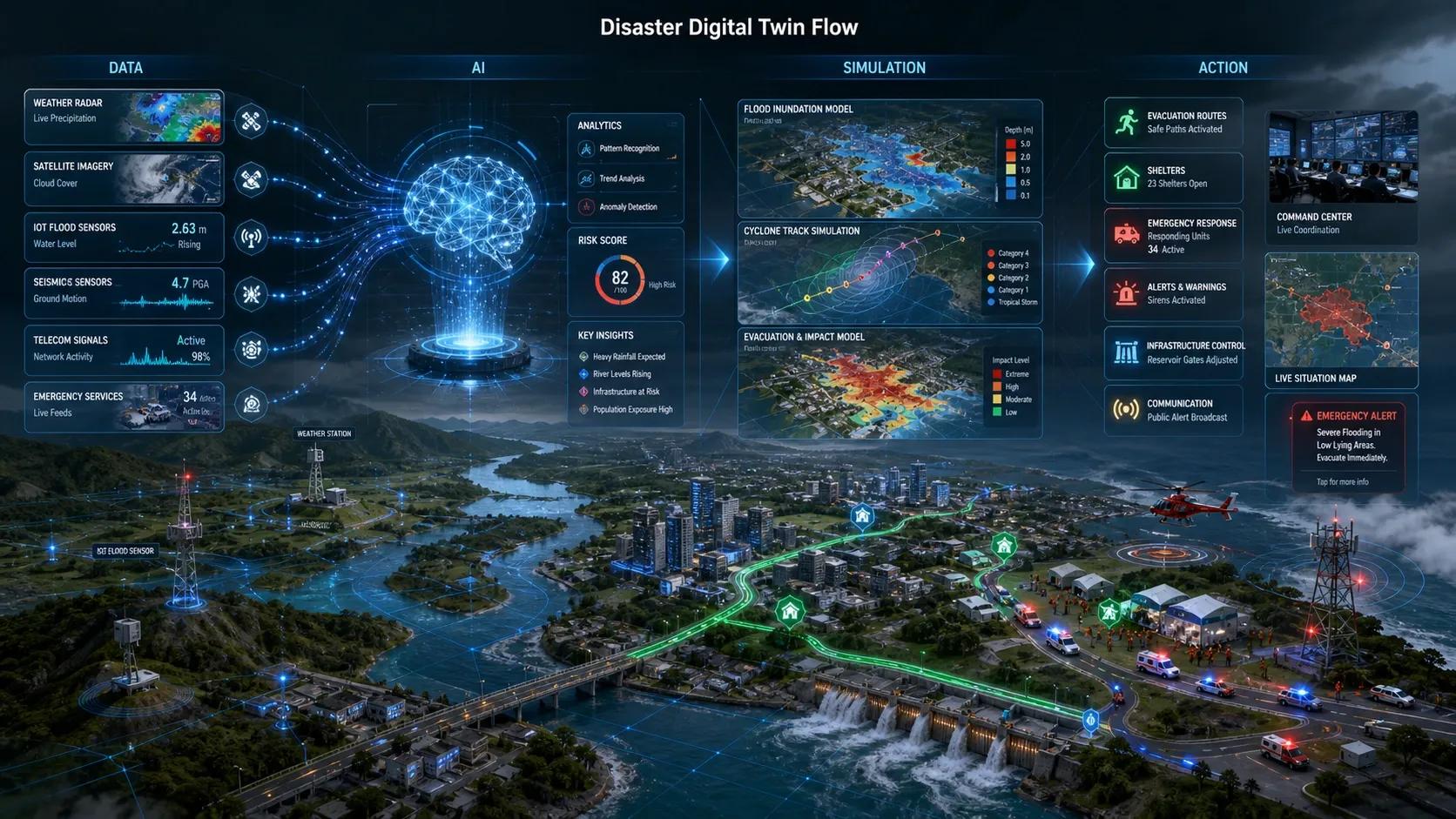
Key Components of a Disaster Digital Twin
1. Data Layer
weather data
seismic data
satellite imagery
IoT sensors
2. Integration Layer
connects: environmental data infrastructure data emergency services
👉 creates a unified system view
3. AI/ML Layer
predicts disaster scenarios
identifies risk zones
forecasts impact
4. Simulation Layer
models disaster propagation
evaluates response strategies
5. Decision Layer
triggers alerts
coordinates response actions
6. Visualization Layer
real-time dashboards
GIS risk maps
impact analysis
Use Case 1: Early Warning Systems
Traditional Approach
alerts based on thresholds
👉 limited lead time
Digital Twin Approach
predict events before thresholds
👉 Outcome:
early preparation
Use Case 2: Real-Time Response Coordination
integrate multiple agencies
guide emergency actions
👉 Outcome:
faster response
Use Case 3: Evacuation Planning
simulate evacuation routes
optimize movement
👉 Outcome:
reduced casualties
Use Case 4: Post-Disaster Recovery
assess damage
plan restoration
👉 Outcome:
faster recovery
Practical Example
Scenario: Cyclone Impact
weather data predicts cyclone path
Digital Twin simulates:
👉 impact zones
System triggers:
evacuation planning
resource allocation
👉 Outcome:
reduced damage
improved response
Where Most Implementations Fail
1. Data Without Coordination
agencies operate independently
2. Alerts Without Action
warnings issued 👉 response delayed
3. Lack of Simulation
no scenario planning
4. Governance Gaps
unclear decision ownership
Ask Yourself
Is your system:
👉 reacting to disasters
Or
👉 preparing for them?
Indian Context
India faces:
floods and cyclones
earthquakes
urban disaster risks
Digital Twins can help:
👉 improve preparedness
👉 enable coordinated response
👉 enhance resilience
Benefits & ROI
reduced loss of life
improved response time
better coordination
faster recovery
enhanced resilience
Conclusion
Disasters are inevitable.
Damage is not.
Managing disasters requires:
👉 prediction
👉 coordination
👉 timely action
Digital Twins enable this shift.
From:
👉 reactive response
To
👉 resilient, proactive systems