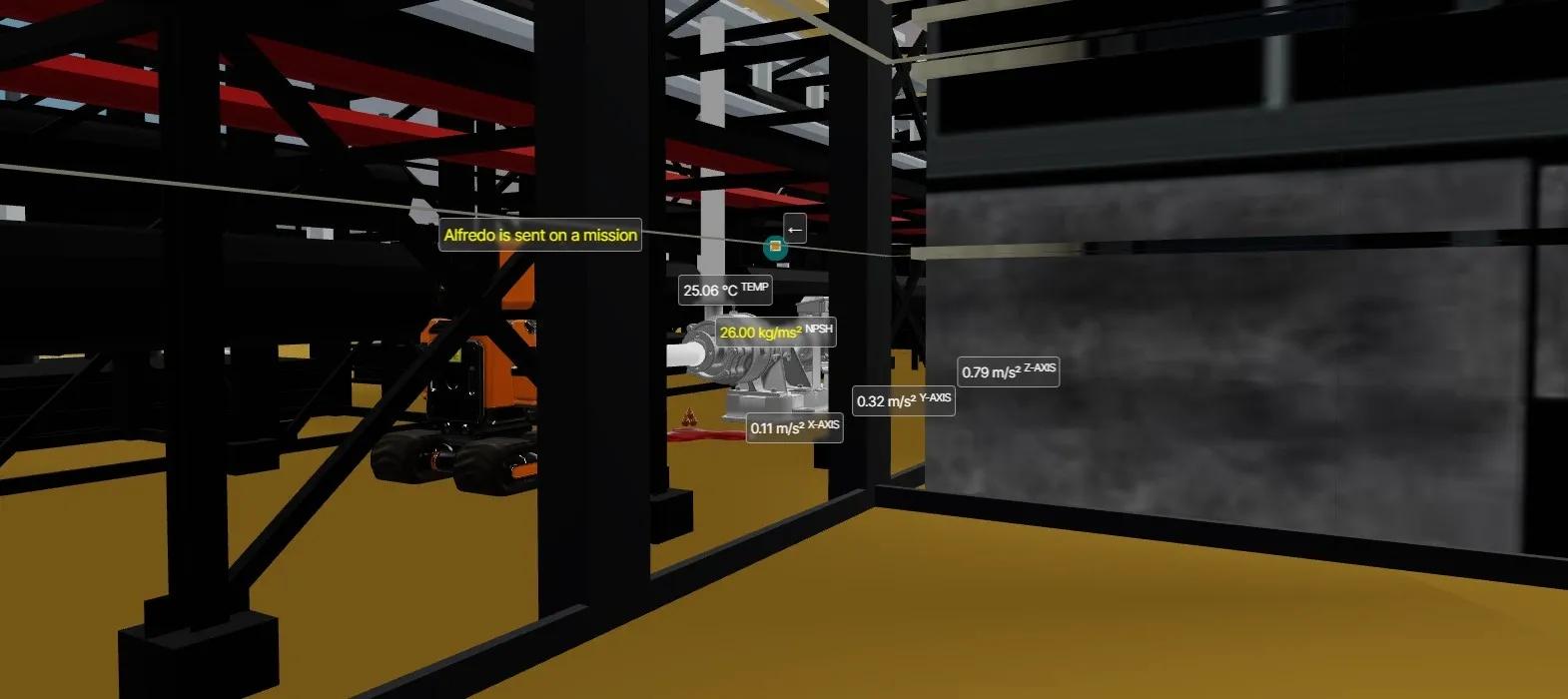
Health & safety compliance is a critical area across industries, from manufacturing to construction and beyond. Traditional methods of ensuring compliance often involve periodic inspections, manual checklists, and reactive responses to incidents. However, with the advent of digital twins, these approaches are being revolutionized, offering real-time monitoring, predictive analytics, and comprehensive oversight that significantly enhance health and safety outcomes. This article explores how digital twins, particularly those developed by platforms like Fabrik, are transforming health and safety compliance, providing more efficient, proactive, and comprehensive solutions.
Understanding Digital Twins
A digital twin is a virtual replica of a physical entity, such as a building, a piece of machinery, or even an entire industrial plant. These digital replicas integrate real-time data from sensors, IoT devices, and other sources to simulate the physical object or system’s behavior under various conditions. By mirroring the real world, digital twins provide a dynamic environment where stakeholders can monitor, analyze, and optimize operations remotely.
Fabrik’s digital twin technology, for example, leverages advanced 3D modeling, real-time data integration, and predictive analytics to create comprehensive digital replicas of complex systems. These replicas are not static models but living simulations that evolve with their physical counterparts, enabling continuous monitoring and analysis.
Enhancing Health and Safety Compliance with Digital Twins
Health and safety compliance is governed by stringent regulations aimed at protecting workers, the environment, and the public. Non-compliance can lead to severe consequences, including legal penalties, financial losses, and damage to reputation. Digital twins offer a proactive approach to compliance, helping organizations anticipate and mitigate risks before they result in incidents.
1. Real-time Monitoring and Alerts
One of the most significant advantages of digital twins is their ability to provide real-time monitoring of operations. By integrating data from various sensors and devices, a digital twin can track the condition of machinery, environmental parameters, and worker activities. For instance, Fabrik’s digital twins can monitor equipment utilization, energy consumption, and safety metrics, providing a continuous stream of data that can be analyzed to ensure compliance with safety standards.
If a parameter exceeds a predefined threshold, the system can trigger alerts, prompting immediate corrective actions. This capability is crucial in environments where conditions can change rapidly, such as in manufacturing plants or construction sites. By addressing issues in real-time, organizations can prevent accidents and ensure that operations remain within safe limits.
2. Predictive Maintenance and Risk Management
Predictive maintenance is another area where digital twins excel. Traditional maintenance schedules are often based on time intervals or after equipment failure, which can lead to unexpected downtime and safety hazards. Digital twins, however, use data analytics to predict when a piece of equipment is likely to fail, allowing for maintenance to be scheduled before an actual breakdown occurs.
For example, Fabrik’s platform integrates predictive monitoring to track the health of assets continuously. This approach not only extends the lifespan of equipment but also minimizes the risk of accidents caused by equipment failure. By anticipating issues before they arise, organizations can reduce the likelihood of safety incidents and maintain compliance with regulatory requirements.
3. Visual Work Instructions and Training
Effective training is essential for ensuring that workers understand and adhere to safety protocols. Digital twins can enhance training programs by providing immersive, interactive simulations of real-world environments. For instance, Fabrik offers visual work instructions (VWI) that can be deployed in training modules, allowing workers to practice tasks in a controlled, virtual setting before performing them in the real world.
This approach not only improves the learning curve but also reduces human error, a significant factor in many safety incidents. By using digital twins for training, organizations can ensure that workers are better prepared to handle complex operations safely, thereby enhancing overall compliance.
4. Remote Inspections and Audits
Conducting regular inspections and audits is a cornerstone of health and safety compliance. However, traditional methods can be time-consuming and may require physical presence on-site, which is not always feasible, especially in remote or hazardous locations. Digital twins offer a solution by enabling remote inspections and audits.
Fabrik's platform, for example, allows inspectors to interact with the digital twin of a facility from anywhere in the world. They can navigate through the 3D model, check real-time data, and even conduct simulations to test various scenarios. This capability ensures that inspections are thorough and that compliance is maintained, even when on-site visits are not possible.
5. Incident Simulation and Response Planning
In the event of an incident, how quickly and effectively an organization can respond is critical to minimizing harm and ensuring compliance. Digital twins provide a powerful tool for simulating incidents and testing response plans. By creating a virtual model of a facility, organizations can simulate different emergency scenarios, such as fires, chemical spills, or machinery malfunctions.
These simulations allow safety teams to refine their response plans, ensuring that all potential risks are accounted for and that the response is swift and effective. Fabrik’s digital twins, for instance, enable detailed simulations that help organizations prepare for emergencies, thereby enhancing their ability to maintain safety compliance under all circumstances.
Conclusion: The Future of Health and Safety Compliance
Digital twins represent a significant advancement in the field of health and safety compliance. By providing real-time monitoring, predictive maintenance, enhanced training, and remote inspection capabilities, they allow organizations to move from reactive to proactive management of safety risks. Platforms like Fabrik are at the forefront of this transformation, offering tools that not only improve compliance but also enhance overall operational efficiency.
As industries continue to evolve and regulatory requirements become more stringent, the role of digital twins in ensuring health and safety compliance will only grow. Organizations that embrace this technology will be better equipped to protect their workers, reduce risks, and maintain a safe and compliant operational environment.