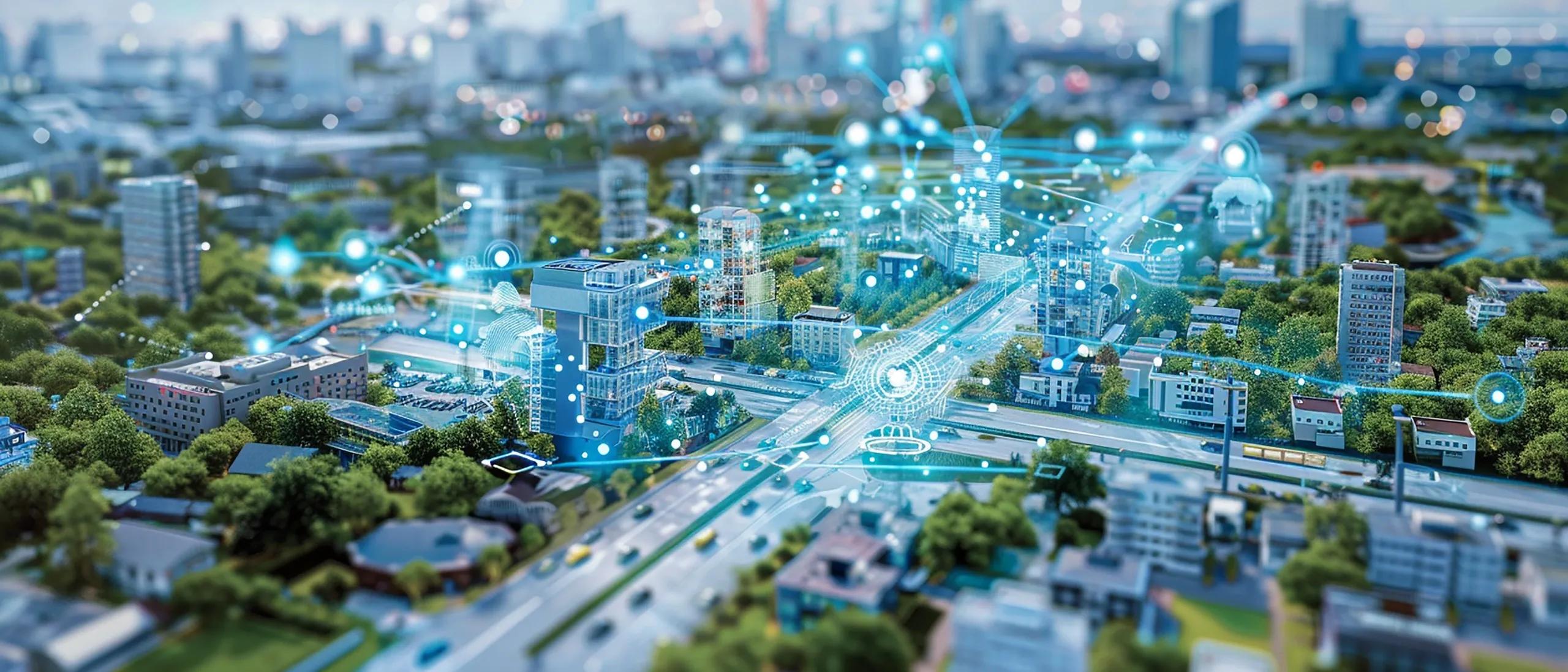
Digital twins are rapidly becoming a crucial component in managing modern infrastructure, providing transformative capabilities that enhance efficiency, predictive maintenance, and real-time monitoring of physical assets. With the continuous integration of cutting-edge technologies such as the Internet of Things (IoT), Artificial Intelligence (AI), and geospatial data, digital twins are emerging as the backbone of infrastructure management. This article explores how digital twin technology is revolutionizing infrastructure management and why it is considered one of the most influential technological advances in recent years.
What is a Digital Twin?
A digital twin is a virtual replica of a physical asset, system, or process. It mirrors real-world objects and environments, allowing engineers, operators, and decision-makers to interact with them in a digital space. The digital twin of an infrastructure asset is dynamically updated using data from various sources, including IoT sensors, geospatial data, and operational systems. This continuous feedback loop enables real-time monitoring, simulation, and analysis, thus facilitating a more profound understanding of the asset's behavior and performance.
For example, a digital twin of a bridge can provide real-time data on structural integrity, traffic load, and environmental impacts, allowing infrastructure managers to make data-driven decisions for its maintenance and operation.
The Role of Digital Twins in Infrastructure Management
The construction, operation, and maintenance of infrastructure assets such as buildings, roads, bridges, utilities, and energy systems are complex undertakings. Historically, infrastructure management has been challenged by inefficiencies in data collection, predictive capabilities, and resource optimization. Digital twin technology offers an integrated approach to manage these complexities.
Real-Time Monitoring and Data Integration
One of the most significant advantages of digital twins is their ability to provide real-time monitoring of infrastructure assets. Infrastructure components are embedded with IoT sensors that continuously gather data on temperature, vibration, pressure, energy consumption, and other critical parameters. This data is fed into the digital twin, creating a comprehensive model that reflects the current state of the physical asset.
For infrastructure management teams, having access to this real-time data means that they can instantly detect deviations or anomalies in asset performance. This proactive approach minimizes downtime and allows for rapid response to potential issues before they escalate into critical failures.
Predictive Maintenance and Cost Efficiency
Maintenance is one of the most significant cost factors in infrastructure management. Traditional maintenance strategies often rely on reactive or scheduled maintenance, leading to either excessive downtime or unnecessary servicing. Digital twins, however, enable predictive maintenance through advanced analytics and AI.
By simulating various scenarios and using historical performance data, digital twins can predict when an asset will require maintenance. For example, a digital twin of a railway network can predict when certain tracks will experience wear and tear based on the number of train crossings, environmental conditions, and historical maintenance records. This predictive capability enables infrastructure managers to plan maintenance only when it is necessary, thus optimizing resources and reducing operational costs.
Enhanced Operational Efficiency
The integration of digital twin technology into infrastructure management also facilitates better decision-making and resource optimization. With a digital twin, infrastructure managers have a comprehensive view of the asset's lifecycle, from design and construction to operation and eventual decommissioning.
Digital twins can simulate different operational strategies, allowing managers to identify the most efficient approach for resource utilization, energy consumption, or logistical planning. For instance, a digital twin of a smart city’s water distribution system can simulate water flow patterns based on consumption data and optimize water distribution to minimize waste.
Simulation and Scenario Testing
Infrastructure is often subjected to a range of external factors, such as weather, wear, traffic, or demand fluctuations. These conditions can significantly impact the longevity and efficiency of assets. With digital twins, infrastructure managers can simulate these conditions and observe how the infrastructure will react in different scenarios.
For example, geospatial digital twins, which incorporate geospatial data, can be used to simulate how rising sea levels, flooding, or seismic activity will affect a coastal city's infrastructure. By testing these scenarios, managers can identify vulnerabilities and make informed decisions to strengthen or modify the infrastructure before disaster strikes.
Digital Twins in Geospatial Infrastructure Management
Geospatial digital twins integrate geographic information system (GIS) data with the digital twin model, providing a spatial context that is essential for managing infrastructure over large geographic areas. This combination is particularly valuable for infrastructure management in sectors like transportation, utilities, and urban planning.
For example, in transportation management, a geospatial digital twin can provide a holistic view of a city’s road network. Real-time traffic data, coupled with geospatial data, can help optimize traffic flow, reduce congestion, and improve road safety. Similarly, for utilities such as power grids or water supply systems, geospatial digital twins enable infrastructure managers to monitor asset locations, evaluate accessibility, and improve maintenance strategies in difficult-to-reach areas.
Geospatial data also allows infrastructure managers to assess the environmental impact of their assets. By incorporating topographic, meteorological, and environmental data, digital twins can simulate the impact of construction or operational activities on the surrounding environment, allowing managers to implement more sustainable practices.
Applications of Digital Twins in Infrastructure Management
Digital twins have a wide range of applications across different infrastructure sectors, including transportation, energy, utilities, and urban development.
Transportation
In the transportation sector, digital twins are used to optimize the management of roads, railways, bridges, and ports. For instance, digital twins can simulate traffic patterns and help manage congestion, leading to improved public transportation planning and reduced commuting times. Digital twins of rail networks enable predictive maintenance of tracks and trains, reducing delays and accidents.
Energy and Utilities
In the energy and utilities sector, digital twins play a pivotal role in managing power grids, water treatment plants, and renewable energy sources. For example, digital twins of wind farms or solar power plants can monitor energy output in real-time, allowing for adjustments to maximize efficiency. Geospatial digital twins can help monitor power lines, enabling rapid response to outages or faults.
Urban Planning and Smart Cities
In urban planning, digital twins provide city planners with an interactive model of the city’s infrastructure. From road networks to public utilities, city planners can use digital twins to simulate urban growth, traffic flow, and resource consumption, ensuring that future development is both sustainable and efficient.
Smart cities, which rely on integrated technologies to manage resources, services, and infrastructure, are leveraging digital twins to enhance operational efficiency. These cities use digital twins to manage lighting, water distribution, waste collection, and even emergency services. By incorporating real-time data from IoT sensors, smart cities can respond to changing conditions in real-time, improving the quality of life for their residents.
Challenges in Implementing Digital Twins
While digital twins offer numerous advantages, there are also challenges associated with their implementation in infrastructure management. One of the primary challenges is the integration of legacy systems with modern IoT sensors and digital twin platforms. Infrastructure assets often span decades and upgrading them to support digital twins requires significant investment.
Our digital twin platform addresses these integration challenges through modular and scalable solutions. By designing a system that can interface with both legacy equipment and modern IoT devices, we ensure that existing infrastructure can be upgraded without the need for a complete overhaul. Our platform is built with flexibility in mind, allowing gradual integration of new technologies and minimizing disruption to operations. Moreover, we offer custom API integrations that enable seamless communication between older systems and modern digital twin environments, thereby reducing the need for expensive infrastructure replacements.
Data privacy and security are also concerns. As digital twins rely on large amounts of data from IoT sensors and operational systems, protecting this data from cyber threats is critical. Infrastructure managers must ensure that the digital twin platform is equipped with robust cybersecurity measures to prevent unauthorized access or data breaches.
Our platform incorporates advanced encryption protocols and multi-layered security frameworks to safeguard the data flowing between physical assets and their digital counterparts. Additionally, we implement AI-driven threat detection systems that continuously monitor for abnormal activity, ensuring that infrastructure data remains secure. With compliance to global data protection standards, including the Digital Personal Data Protection Bill, we provide confidence that critical infrastructure data is fully protected against modern cyber threats.
Another challenge is the need for specialized expertise to manage and interpret the vast amounts of data generated by digital twins. Infrastructure management teams must either train their staff or hire experts capable of leveraging digital twin technology to its fullest potential.
We have streamlined the user experience with intuitive dashboards and AI-powered analytics tools, reducing the reliance on specialized expertise. Our platform's self-service analytics allow users to interact with and interpret data with minimal training. For more complex tasks, we offer comprehensive training programs and dedicated support, ensuring that infrastructure managers can unlock the full potential of digital twin technology without the steep learning curve typically associated with such systems. This combination of user-friendly interfaces and expert support ensures that our clients can overcome the skills gap and maximize the value derived from their digital twin investment.
In conclusion, digital twin technology is revolutionizing the way we manage infrastructure by providing real-time insights, predictive maintenance, and simulation capabilities. Its ability to mirror physical assets in a digital space allows for better decision-making, cost efficiency, and enhanced operational performance. As infrastructure becomes more complex and interconnected, digital twins will continue to serve as the backbone of modern infrastructure management, driving innovation and sustainability across industries.