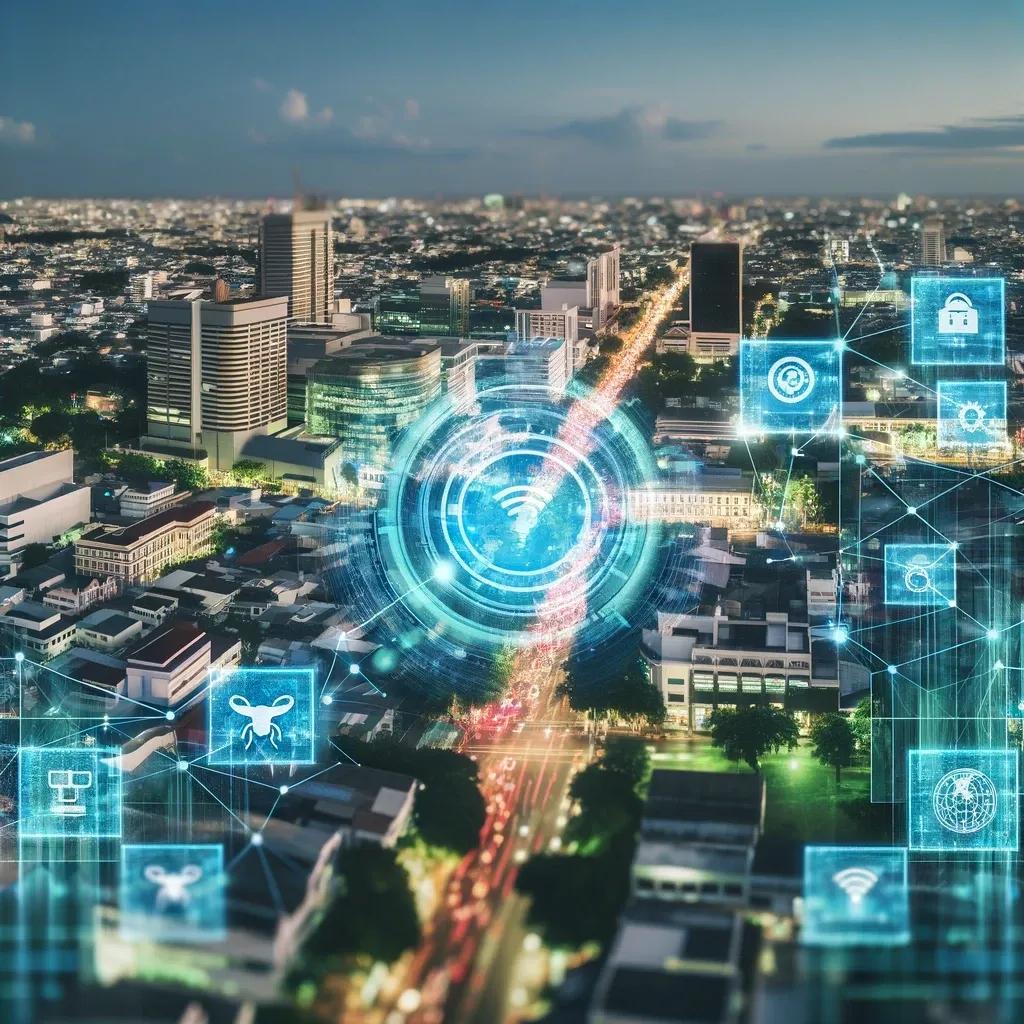
In the realm of urban development and smart city initiatives, the concept of Digital Twins has emerged as a transformative technology with the potential to reshape how cities are planned, built, and managed. Yet, as with any rapidly evolving technology, it's essential to move beyond the initial hype to understand its practical applications, benefits, and challenges. This article delves into the essence of Digital Twins within the context of smart cities, exploring their significance, implementation challenges, and the future trajectory of this innovative technology.
What are Digital Twins?
At its core, a Digital Twin is a dynamic, virtual replica of a physical entity or system, built using real-time data, simulations, machine learning, and reasoning. In the context of smart cities, Digital Twins can model entire urban environments, infrastructure, and services, enabling city planners, engineers, and policymakers to simulate, predict, and manage urban phenomena with unprecedented precision.
Beyond the Hype: The Real Value of Digital Twins
The excitement surrounding Digital Twins in smart cities is not unfounded. Their potential to revolutionize urban planning and management is immense. By integrating data from various sources, including IoT sensors, geospatial technologies, and urban databases, Digital Twins offer a comprehensive and interactive model of city life, infrastructure, and the environment.
Enhanced Decision-Making and Urban Planning
Digital Twins enable decision-makers to visualize the impact of urban planning decisions before they are implemented. For example, by simulating traffic flow changes resulting from new infrastructure projects, city planners can identify potential bottlenecks and optimize designs to improve mobility and reduce congestion.
Efficient Urban Management and Maintenance
The real-time data feeding into a Digital Twin allows for the proactive management of city infrastructure. Predictive analytics can forecast maintenance issues, enabling preemptive repairs and reducing downtime. Furthermore, during emergencies, Digital Twins can facilitate rapid response strategies, improving resilience and safety.
Sustainable Urban Development
Digital Twins support sustainable city initiatives by enabling the simulation of environmental impacts of urban activities. By analyzing scenarios for energy use, waste management, and resource distribution, cities can develop strategies that reduce their carbon footprint and enhance environmental sustainability.
Implementation Challenges
Despite their potential, the deployment of Digital Twins in smart cities faces several challenges:
Data Integration and Management
The effectiveness of a Digital Twin depends on the quality, accuracy, and timeliness of the data it utilizes. Integrating data from diverse sources, ensuring its reliability, and managing its volume and velocity pose significant challenges.
Technical Complexity and Skill Gaps
Building and maintaining a Digital Twin requires sophisticated software, hardware, and specialized skills in data science, AI, and urban planning. The current skill gap and the complexity of the technology can be significant barriers to widespread adoption.
Privacy and Security Concerns
As Digital Twins rely heavily on data, including potentially sensitive information about citizens and critical infrastructure, addressing privacy and cybersecurity concerns is paramount. Ensuring data protection and compliance with regulations is a crucial challenge that needs to be addressed.
The Future of Digital Twins in Smart Cities
Looking ahead, the evolution of Digital Twins in smart cities is likely to be shaped by advancements in AI, machine learning, and IoT technologies. As these technologies continue to mature, they will enhance the capabilities of Digital Twins, making them even more accurate, dynamic, and useful for urban management.
Furthermore, as cities and technology providers work together to overcome implementation challenges, Digital Twins will become more accessible and cost-effective, paving the way for their adoption in a wider range of cities and urban projects.
Interoperability and Standardization
For Digital Twins to reach their full potential, improving interoperability between different systems and standardizing data formats and protocols will be crucial. Efforts to develop universal standards and open platforms for Digital Twins will facilitate more seamless integration and collaboration between cities and technology providers.
Public Engagement and Participation
Future developments in Digital Twins should also focus on enhancing public engagement and participation. By making Digital Twins accessible to citizens through interactive platforms and applications, cities can foster a more inclusive approach to urban planning and decision-making, allowing residents to visualize and contribute to the development of their urban environment.
In conclusion, Digital Twins in smart cities represent a paradigm shift in urban planning and management, offering unparalleled insights and capabilities to enhance efficiency, sustainability, and resilience. While challenges remain in their implementation, the ongoing advancements in technology and collaborative efforts to address these hurdles hold the promise of making Digital Twins an integral part of the future of smart cities. Beyond the initial hype, the real value of Digital Twins lies in their potential to transform the way we understand, interact with, and shape our urban environments for the better.