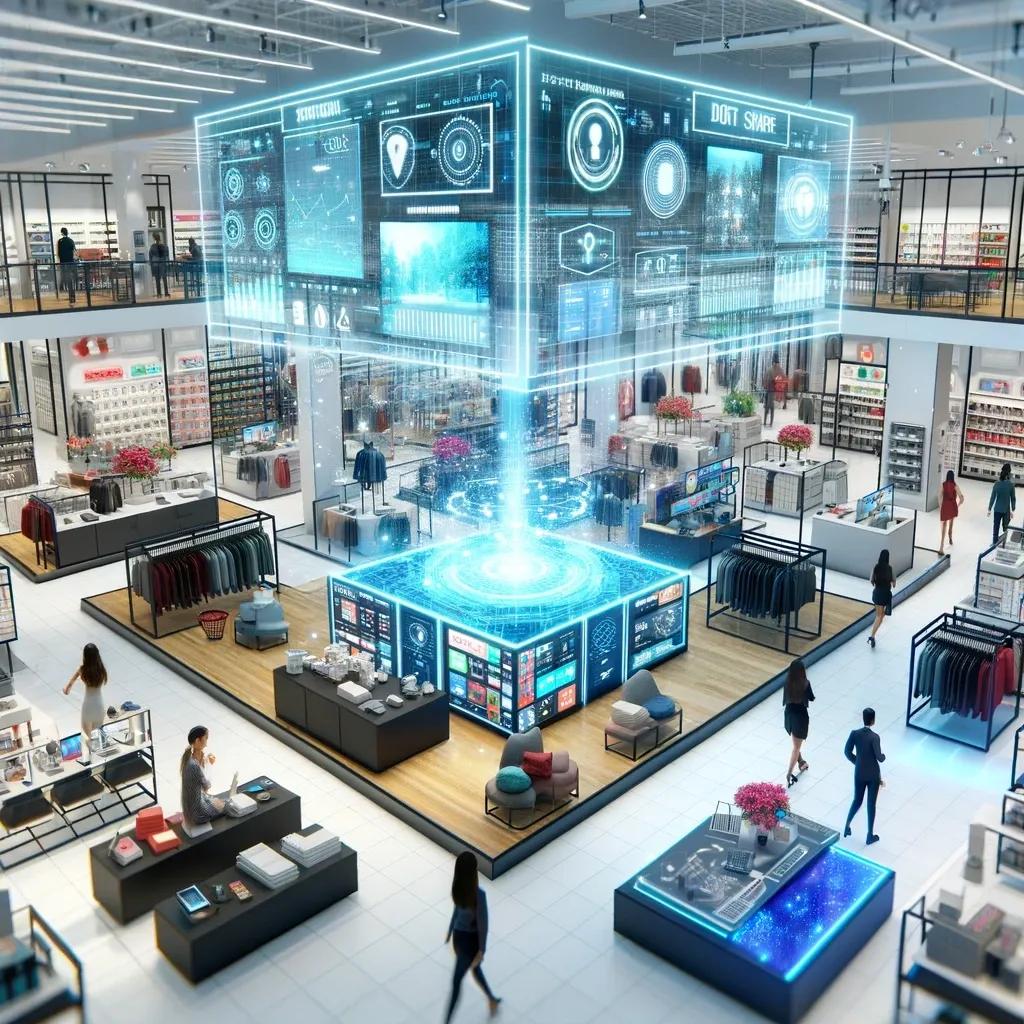
In the fast-paced world of retail, businesses continuously seek innovative ways to enhance operational efficiency, optimize store layouts, and manage inventories more effectively. The adoption of digital twins technology has emerged as a transformative solution, revolutionizing these aspects of retail management. This article explores how digital twins are applied in retail settings, specifically focusing on inventory management and store layout optimization, to create more dynamic, responsive, and customer-oriented shopping experiences.
Understanding Digital Twins
A digital twin is a virtual model of a process, product, or service. This pairing of the virtual and physical worlds allows for data analysis and system monitoring to prevent problems before they occur, prevent downtime, offer new opportunities, and even plan for the future by using simulations. In the context of retail, digital twins can simulate store environments, inventory systems, and customer interactions, providing a holistic view of retail operations.
Application in Inventory Management
One of the most critical challenges in retail is managing inventory efficiently. Excess inventory ties up capital, whereas insufficient inventory leads to lost sales and dissatisfied customers. Digital twins can address these issues by creating a dynamic model of the inventory system, which is continuously updated in real time as sales occur and stock levels change.
Real-time Inventory Tracking
By integrating IoT sensors and RFID tags, digital twins facilitate real-time tracking of inventory levels. This integration allows retailers to monitor stock movements across multiple locations accurately, reducing the likelihood of overstocking or stock-outs. For instance, a digital twin model can alert managers when a particular item is running low and automatically trigger replenishment orders.
Predictive Analytics for Demand Forecasting
Digital twins utilize predictive analytics to forecast future demand based on historical sales data, trends, and external factors such as weather or local events. Retailers can adjust their stock levels more accurately, ensuring that they have the right products in the right quantities at the right times, thereby maximizing sales and minimizing unsold inventory.
Enhancing Store Layout and Design
The layout of a store plays a crucial role in influencing customer behavior and, consequently, sales performance. Digital twins offer a sophisticated tool for analyzing and optimizing store layouts, taking into account customer traffic, behavior patterns, and product placement effectiveness.
Simulating Customer Movements
With digital twins, retailers can simulate customer movements within the store based on various scenarios and time frames. This simulation helps identify high-traffic areas, bottlenecks, and points of interest. Retailers can use this data to optimize the placement of products, promotional displays, and even checkout counters to enhance customer experiences and increase sales.
A/B Testing of Layout Changes
Digital twins enable retailers to conduct virtual A/B testing with different store layouts and designs before implementing physical changes. This capability allows them to predict the impacts of layout adjustments on customer behavior and store performance without the risk and expense of trial-and-error in the real environment. Consequently, decision-making is faster, less costly, and more effective.
Integration with Other Technologies
To maximize the benefits, digital twins in retail are often integrated with other technologies such as artificial intelligence (AI), machine learning (ML), and augmented reality (AR). AI and ML algorithms can analyze data collected by the digital twin to offer deeper insights into customer preferences and behavior patterns. AR, on the other hand, can be used to visualize the digital twin in a real-world setting, providing a more interactive and immersive experience for planning and management.
Case Studies and Success Stories
Several leading retailers have successfully implemented digital twins to enhance their operations. For example, a major fashion retailer used a digital twin to optimize its inventory management across hundreds of stores. The system provided precise predictions about fashion trends and customer preferences, reducing stock-outs by 20% and unsold inventory by 15%. Another example involves a large supermarket chain that used digital twins to redesign its store layout, resulting in a 10% increase in overall sales due to improved traffic flow and product placement.
Challenges and Considerations
Despite the benefits, implementing digital twins in retail is not without challenges. It requires significant investment in technology and training, and there is a need for a cultural shift within organizations to embrace data-driven decision-making. Furthermore, the success of digital twins depends on the quality and timeliness of the data fed into the system, making robust data management practices essential.
In conclusion, digital twins are rapidly becoming a cornerstone technology in the retail sector, offering substantial improvements in inventory management and store layout. By providing a real-time, comprehensive view of retail operations, digital twins enable retailers to make informed decisions, respond swiftly to market changes, and provide enhanced customer experiences. As technology continues to evolve, the adoption of digital twins in retail is expected to increase, further transforming the industry and setting new standards for efficiency and customer engagement.