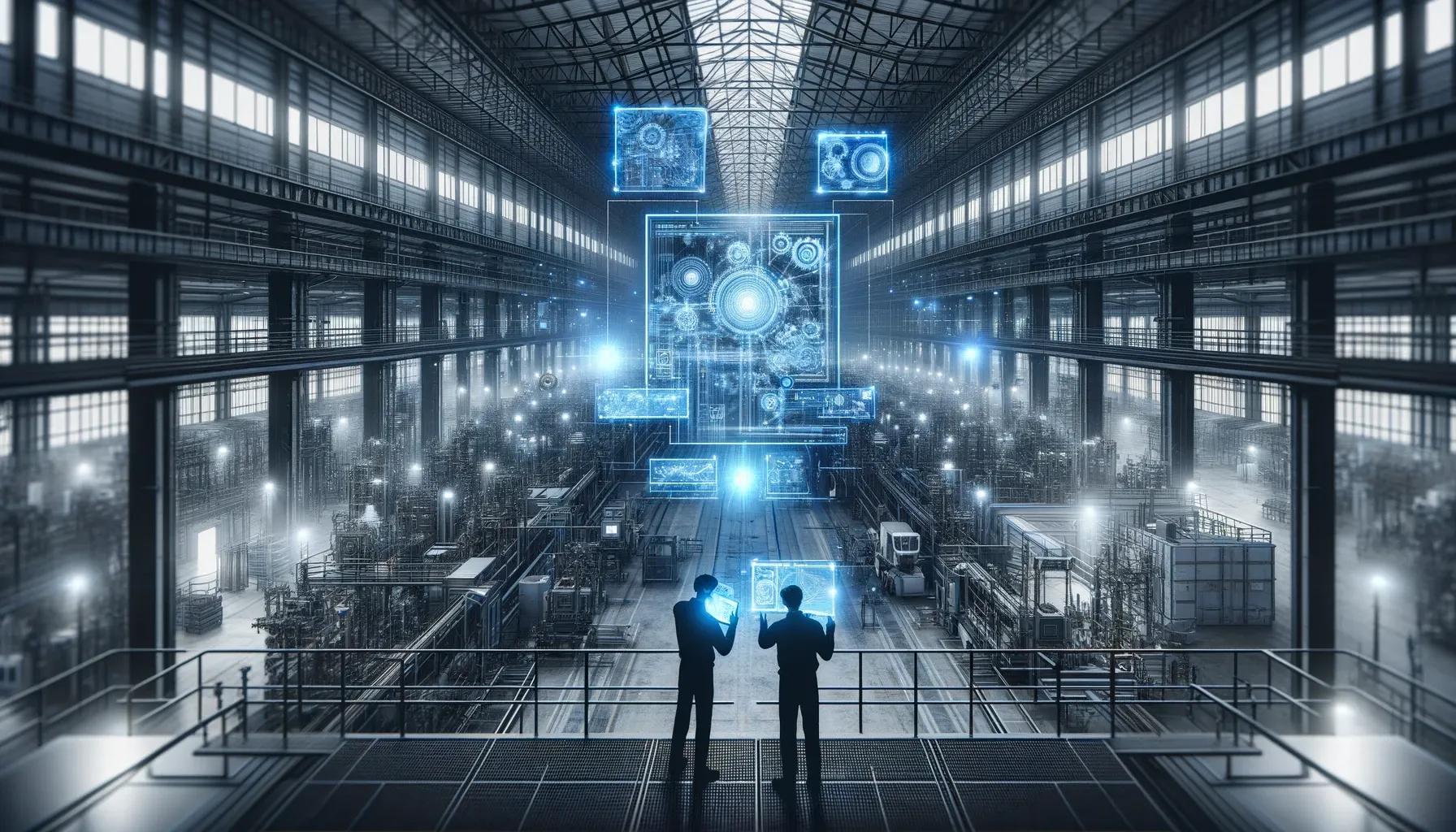
In the burgeoning landscape of the metaverse, the fusion of digital and physical realms through digital twins stands as a testament to technological prowess and innovation. Digital twins, precise digital replicas of physical entities, are revolutionizing productivity and collaboration across industries, smart cities, and urban infrastructures. This article delves into how digital twins within the metaverse are not just a novelty but a necessity, transforming the way we interact with and manage complex systems.
The Advent of Industrial Digital Twins
In the industrial sector, digital twins serve as a nerve center, capturing the essence of machines, systems, and processes in a virtual echo. They are the digital fabric that binds the physical machinery to its virtual counterpart, allowing for simulation, analysis, and control. For instance, in manufacturing, digital twins enable predictive maintenance, reducing downtime by alerting to potential failures before they occur. They also enhance operational efficiency by allowing for the optimization of systems in a risk-free virtual environment before implementing changes in the real world.
Smart Cities and Urban Planning
The concept of smart cities is predicated on interconnectedness and intelligence, attributes that digital twins amplify within the metaverse. They serve as a platform for urban planners, civic authorities, and citizens to interact with a virtual model of their city, envisaging changes and understanding their implications. This is not mere speculation; this outlines the use of platforms which converts geospatial data into immersive 3D environments, facilitating a new era of urban design that is both participative and predictive.
Infrastructure Management and Digital Twins
When it comes to infrastructure, digital twins are the cornerstone of proactive management. They enable the monitoring of structures such as bridges, roads, and utilities in real-time, providing a living digital reflection that helps in making informed decisions about maintenance and development. The integration with the metaverse enhances this capability, bringing a level of collaboration that transcends geographical boundaries. Teams across the globe can interact with the same model, share insights, and solve problems without the need for physical presence.
Collaboration in the Metaverse
The metaverse is redefining the paradigms of collaboration. With digital twins, it is possible to conduct virtual meetings in the context of the actual digital representation of a project. For instance, engineers, architects, and contractors can convene within the digital twin of a building under construction, experiencing and inspecting every aspect as if they were on-site. This not only saves time and resources but also improves the quality of interactions and decisions.
The Role of Geospatial Data
At the core of digital twins in the metaverse lies geospatial data – the coordinates, attributes, and imagery that form the backbone of any digital representation. This highlights the crucial role of geospatial analytics in enriching digital twins, providing layers of data that add depth and utility. This data is instrumental in creating simulations that mirror the real world, allowing for scenarios such as emergency response drills, infrastructure stress tests, and environmental impact studies.
Technological Synergy for Enhanced Productivity
The metaverse and digital twins are products of a symphony of technologies. AI algorithms analyze patterns and predict outcomes, while IoT devices feed real-time data into the system. Cloud computing provides the horsepower for processing vast amounts of data, and VR/AR interfaces offer intuitive ways for users to explore and interact with digital twins. This convergence is what propels productivity to new heights, fostering a culture of innovation and continuous improvement.
Ethical and Privacy Considerations
The importance of navigating the ethical landscape that comes with the creation of digital twins. Issues of privacy, data ownership, and security are paramount. In the metaverse, where digital twins might hold sensitive information about industries and urban infrastructures, establishing robust governance and compliance frameworks is non-negotiable.
Future Directions
As we look to the future, digital twins in the metaverse are set to become more sophisticated. Advancements in AI will lead to more autonomous digital twins capable of self-optimization. Enhanced AR/VR capabilities will make interactions with digital twins more immersive and realistic. Moreover, the rise of 5G technology promises to enhance the connectivity and responsiveness of digital twins, enabling more complex and comprehensive models.
In conclusion, digital twins in the metaverse are redefining the landscape of productivity and collaboration across industries, smart cities, and urban infrastructures. They offer a glimpse into a future where the barriers between the digital and physical are indistinguishable, allowing humanity to tackle some of the most challenging problems with a level of precision and foresight previously unattainable.