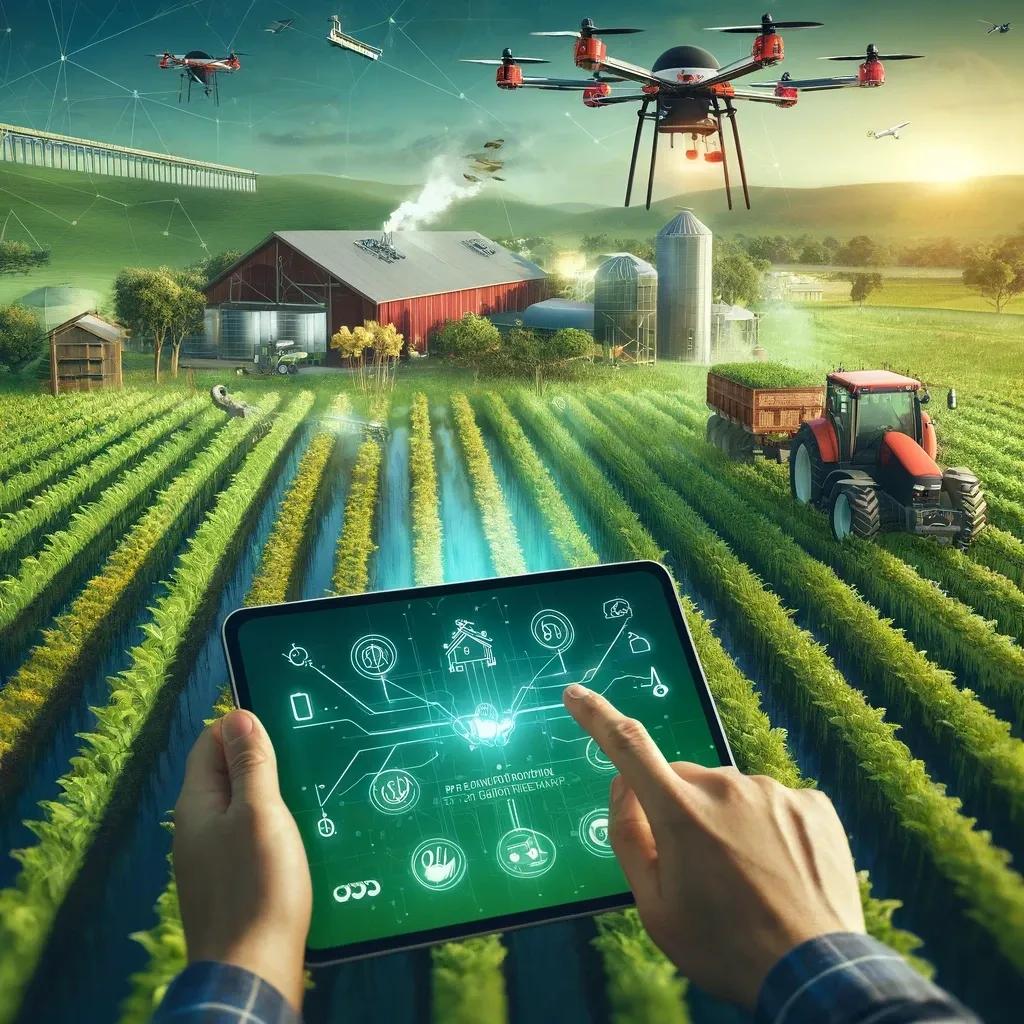
In recent years, the integration of digital twins in agriculture has marked a significant shift in how we approach precision farming and agricultural management. As we delve into this technology, it becomes evident that digital twins can offer much more than just enhanced crop yields; they can fundamentally transform agricultural practices by enabling smarter, more efficient, and sustainable farming methods.
What are Digital Twins?
Digital twins are virtual replicas of physical entities, processes, or systems, built using real-time data collected via sensors or other data-gathering methods. These virtual models allow for the simulation, analysis, and optimization of processes in a virtual environment before they are implemented in the real world. Originating in industries such as manufacturing and aerospace, digital twins have found a new and significant role within the agricultural sector.
The Role of Digital Twins in Agriculture
In agriculture, digital twins can model entire farming operations, from individual plants to entire ecosystems. This capability enables farmers to make precise decisions based on predictive analytics and simulations. Here are several ways digital twins are being utilized in modern agriculture:
1. Crop Health Monitoring and Management
Digital twins enable farmers to monitor the health of their crops in real-time. By analyzing data from various sources, such as satellite images, UAVs (Unmanned Aerial Vehicles), and ground sensors, these models can predict the growth patterns of crops, foresee potential diseases, and even suggest optimal harvesting times. This kind of detailed analysis helps in applying the right amount of resources at the right time, thereby reducing waste and increasing efficiency.
2. Soil Management
Soil health is critical to successful farming. Digital twins help in mapping soil properties across different parts of a farm. Sensors can collect data on soil moisture, pH levels, and nutrient content, which is then used to create a dynamic, virtual model of the farm’s soil. This model can simulate how changes in farming practices affect soil health, enabling farmers to make better-informed decisions about fertilization and irrigation.
3. Water Resource Management
Water scarcity is a major challenge in many parts of the world. Digital twins contribute significantly to water management by optimizing irrigation practices. Through simulations, farmers can determine the most effective irrigation methods and schedules, ensuring that crops receive the right amount of water at the right time, thus conserving water and improving crop yields.
4. Supply Chain and Logistics Optimization
Beyond the field, digital twins help streamline the agricultural supply chain. By simulating logistics scenarios, farmers can determine the best times to harvest and transport goods, minimizing spoilage and reducing transportation costs. This also includes better management of equipment and machinery, leading to lower maintenance costs and longer service life.
5. Impact on Sustainability
One of the most significant advantages of digital twins in agriculture is their contribution to sustainable farming practices. By enabling more accurate and efficient use of resources, digital twins help minimize the environmental impact of farming. This includes reduced use of water, fertilizers, and pesticides, which leads to fewer pollutants entering our ecosystems.
Challenges and Future Prospects
Despite the potential benefits, the implementation of digital twins in agriculture faces several challenges. High setup costs, the need for continuous data inputs, and the requirement for specialized skills to interpret and use the data effectively are some of the hurdles that need to be overcome.
However, the future of digital twins in agriculture looks promising. As technology advances and becomes more accessible, and as farmers become more tech-savvy, these challenges are likely to diminish. Integration with other technologies like AI and machine learning could further enhance the capabilities of digital twins, making them an indispensable tool in the farmer’s arsenal.
In conclusion, digital twins represent a frontier in agricultural technology with the potential to revolutionize how we farm. By bridging the gap between physical and digital, they allow for a level of monitoring, simulation, and optimization that was previously unimaginable. As we move towards a more data-driven approach in agriculture, digital twins stand out as a pivotal technology that not only enhances productivity and efficiency but also champions sustainability. The journey of integrating digital twins in agriculture is just beginning, and it promises a future where precision farming is just the starting point.