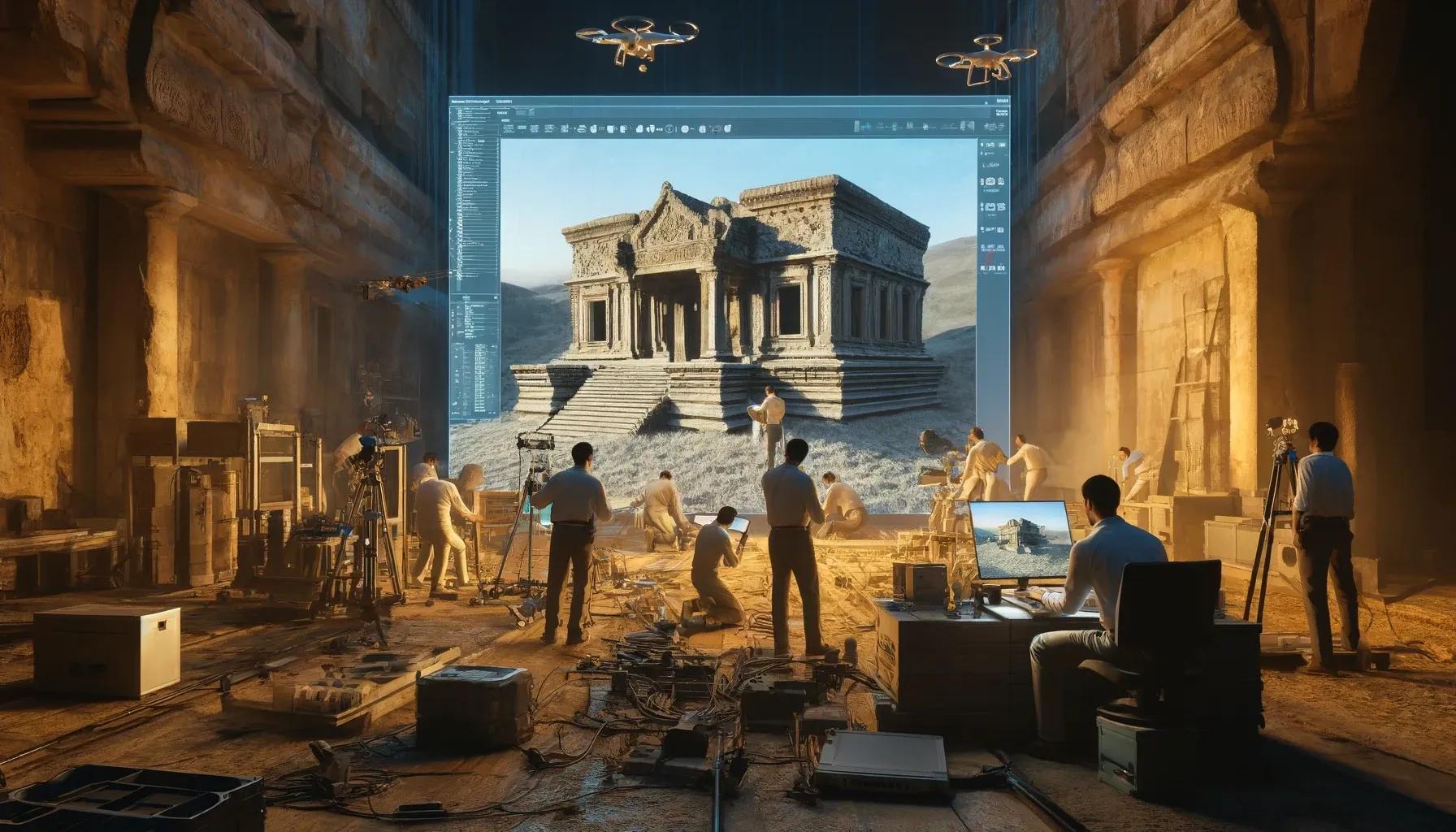
In the era of rapid technological advancement, the conservation of cultural heritage and historic sites has embraced a new frontier: Digital Twins. This technology, while primarily associated with industrial applications, is now making significant inroads into heritage conservation and cultural preservation. Digital Twins, essentially dynamic digital replicas of physical assets, processes, or systems, offer a groundbreaking approach to documenting, managing, and preserving cultural heritage with unprecedented precision and interactivity. This article delves into the concept of Digital Twins within the context of heritage conservation, exploring its applications, benefits, and the future it heralds for the preservation of our cultural legacy.
Understanding Digital Twins in Heritage Conservation
Digital Twins in heritage conservation represent a comprehensive digital representation of a historic site or artifact. These replicas are not static; they are updated in real-time or near real-time, mirroring the physical state and dynamics of their real-world counterparts. The creation of a Digital Twin involves meticulous data collection through advanced technologies such as 3D scanning, photogrammetry, Geographic Information Systems (GIS), and Building Information Modeling (BIM). This data is then integrated with historical records, conservation data, and other relevant information to create a multi-layered, interactive model that can be used for various purposes, from maintenance and restoration to virtual tourism.
Applications of Digital Twins in Heritage Conservation
Documentation and Archiving
The primary application of Digital Twins in heritage conservation is for documentation and archiving. These digital models provide a detailed, accurate record of historical sites and artifacts at a specific point in time. This is invaluable for sites that are at risk from natural disasters, war, or urbanization, ensuring that their precise condition can be preserved for future generations even if the physical site is altered or destroyed.
Restoration and Preservation
Digital Twins facilitate the restoration and preservation of heritage sites by allowing conservators to simulate and evaluate the impact of different conservation strategies before they are implemented. This predictive capability helps in making informed decisions that minimize the risk of damage to valuable historical structures during restoration.
Enhanced Visitor Experience
Heritage sites can use Digital Twins to offer an enhanced visitor experience through virtual tours and interactive exhibits. This not only makes cultural heritage more accessible but also helps in engaging younger audiences, ensuring that the knowledge and appreciation of our shared history are passed on to future generations.
Research and Education
Researchers and students can benefit from the rich, detailed data contained within Digital Twins for historical research, educational purposes, and the development of conservation techniques. This opens up new avenues for understanding historical sites and artifacts, promoting a deeper engagement with our cultural heritage.
The Benefits of Digital Twins for Heritage Conservation
The integration of Digital Twins into heritage conservation brings a host of benefits. It enhances the accuracy and efficiency of conservation efforts, reduces costs by enabling precise planning and resource allocation, and improves the management and monitoring of historical sites. Additionally, by facilitating virtual access, Digital Twins play a crucial role in democratizing access to cultural heritage, allowing people from around the world to explore and appreciate historic sites and artifacts remotely.
Challenges and Considerations
Despite the significant advantages, the adoption of Digital Twins in heritage conservation faces several challenges. The initial cost and complexity of creating digital replicas can be substantial, requiring expertise in both technology and heritage conservation. Moreover, there are concerns about data security and privacy, especially for sensitive or sacred sites. Addressing these challenges requires a collaborative effort among technology providers, conservation experts, and governing bodies to develop standards and best practices that ensure the respectful and effective use of Digital Twins in heritage conservation.
The Future of Digital Twins in Heritage Conservation
Looking ahead, the role of Digital Twins in heritage conservation is poised for significant growth. Advancements in technologies such as Artificial Intelligence (AI), Machine Learning (ML), and the Internet of Things (IoT) are expected to enhance the capabilities of Digital Twins, making them even more accurate, interactive, and insightful. These developments will not only improve the conservation and preservation of cultural heritage but also expand the ways in which people interact with and learn from history.
In conclusion, Digital Twins represent a revolutionary approach to heritage conservation and cultural preservation, offering a powerful tool for documenting, preserving, and engaging with our cultural heritage in the digital age. As technology continues to evolve, so too will the possibilities for conserving the past, ensuring that it remains a vibrant and accessible part of our collective future. The integration of Digital Twins into heritage conservation is a testament to the potential of technology to safeguard and celebrate the rich tapestry of human history, ensuring that it endures for generations to come.