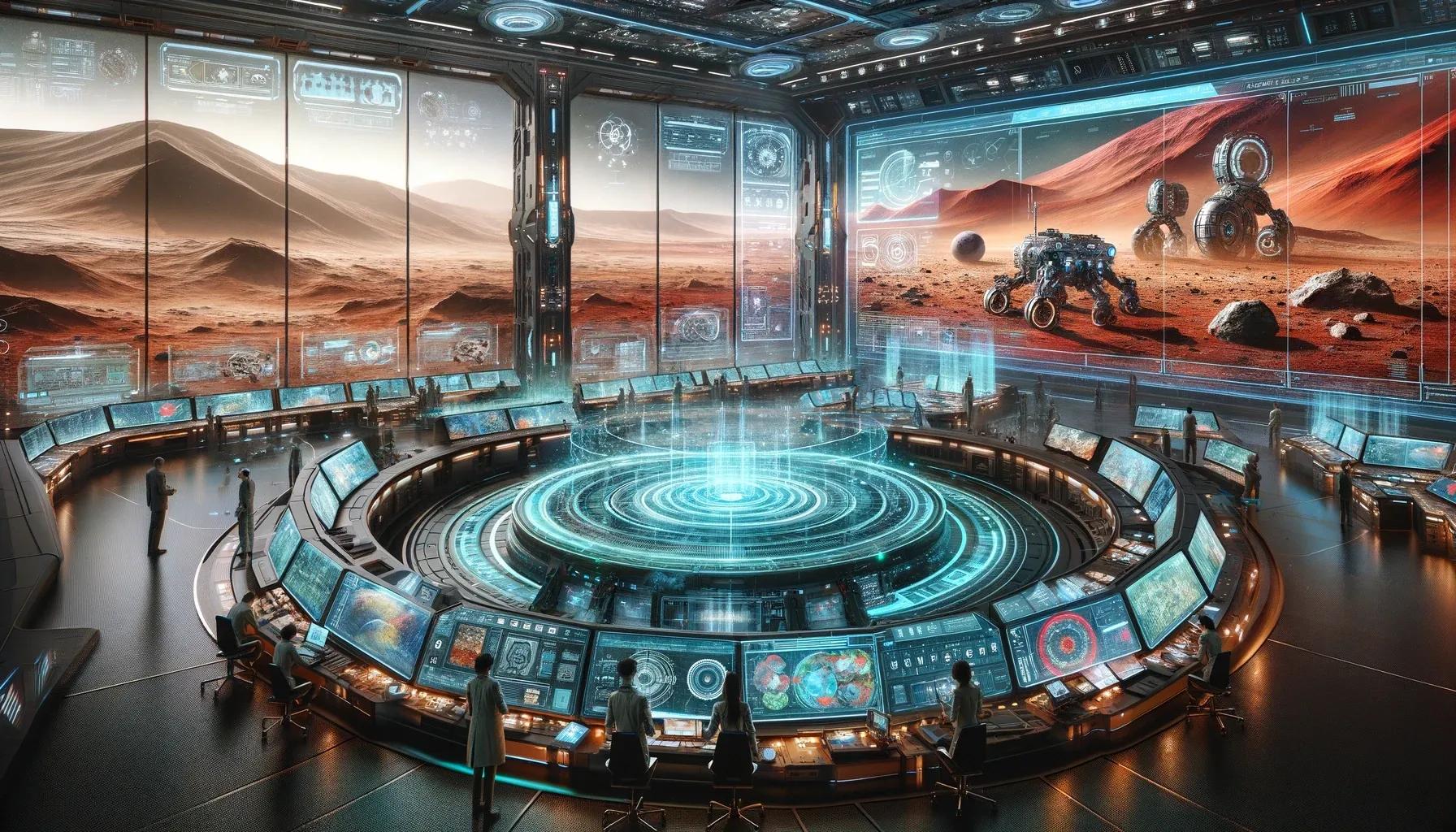
In the realm of space exploration, the ability to simulate environments and scenarios accurately is paramount. This necessity has given rise to the innovative application of "Digital Twins" technology—a concept that has transformed several industries on Earth and is now becoming a linchpin in the quest to explore and inhabit outer space. This article delves into the significance of Digital Twins in space exploration, discussing its potential, implementation, and future prospects.
Understanding Digital Twins Technology
A Digital Twin is a virtual model designed to accurately reflect a physical object, system, or process. The technology integrates internet of things (IoT), artificial intelligence (AI), machine learning (ML), and software analytics to create living models that update and change as their physical counterparts evolve. Initially prominent in manufacturing, urban planning, and healthcare, Digital Twins are now making a significant impact on space exploration.
Application in Space Exploration
The harsh, unpredictable conditions of space pose unique challenges that require innovative solutions. Digital Twins serve as a crucial tool in this domain by providing a robust platform for simulation, analysis, and prediction.
Design and Testing of Spacecraft
Building spacecraft involves enormous cost and risk. Digital Twins allow engineers to create and test spacecraft designs in a virtual environment, identifying potential issues and optimizing systems without the need for physical prototypes. This application not only reduces the time and cost associated with the design process but also enhances the safety and reliability of space missions.
Mission Planning and Simulation
Digital Twins can simulate entire missions, from launch to landing. By creating a virtual replica of the mission, scientists and engineers can foresee the outcomes of different scenarios and make informed decisions. This capability is vital for long-duration missions to destinations like Mars, where real-time troubleshooting is not feasible and pre-mission planning is critical.
Onboard Systems Management
Once a spacecraft is deployed, Digital Twins can continue to serve as a diagnostic and management tool. By mirroring the spacecraft’s systems, the technology can predict equipment failures, suggest preventative maintenance, and optimize the operation of onboard systems, thereby extending the mission’s life and enhancing its overall success.
Habitat Construction and Life Support
As humans move towards establishing habitats on other planets, Digital Twins will be instrumental in designing and managing these complex systems. For instance, the technology can help simulate and manage life support systems, ensuring they are efficient and capable of adapting to the needs of their residents under extraterrestrial conditions.
Challenges and Considerations
The implementation of Digital Twins in space exploration is not without its challenges. The accuracy of a Digital Twin depends on the quality and quantity of data from the physical counterpart and the environment. In space, capturing comprehensive, high-quality data can be challenging due to communication delays and the hostile environment. Moreover, the computational power required to process and model data on a granular level is substantial. Addressing these issues requires advancements in data acquisition, transmission, and processing capabilities.
Future Prospects
Looking forward, the evolution of Digital Twins technology promises even greater contributions to space exploration. The integration of more advanced AI and ML algorithms can enhance the predictive accuracy of Digital Twins, allowing for more autonomous spacecraft systems. Additionally, as communication technology advances, real-time data synchronization between Earth and spacecraft will improve, enhancing the utility of Digital Twins during long-duration missions.
Moreover, the concept of Digital Twins could extend beyond spacecraft and habitats to include modeling entire extraterrestrial environments like the surface of Mars. Such comprehensive models could significantly advance our understanding of these environments, aiding in the planning of colonization and in-situ resource utilization.
In conclusion, Digital Twins represent a powerful tool in the ongoing exploration of space. By providing a means to simulate, predict, and optimize, this technology helps mitigate risks, reduce costs, and enhance the effectiveness of space missions. As we stand on the brink of interplanetary exploration, Digital Twins not only offer a glimpse into the future of space travel but also solidify their role as a cornerstone technology in making life beyond Earth a reality. With continued advancements and integration, Digital Twins are set to revolutionize our approach to conquering the final frontier, making the cosmos not just a place to visit but a place to live.