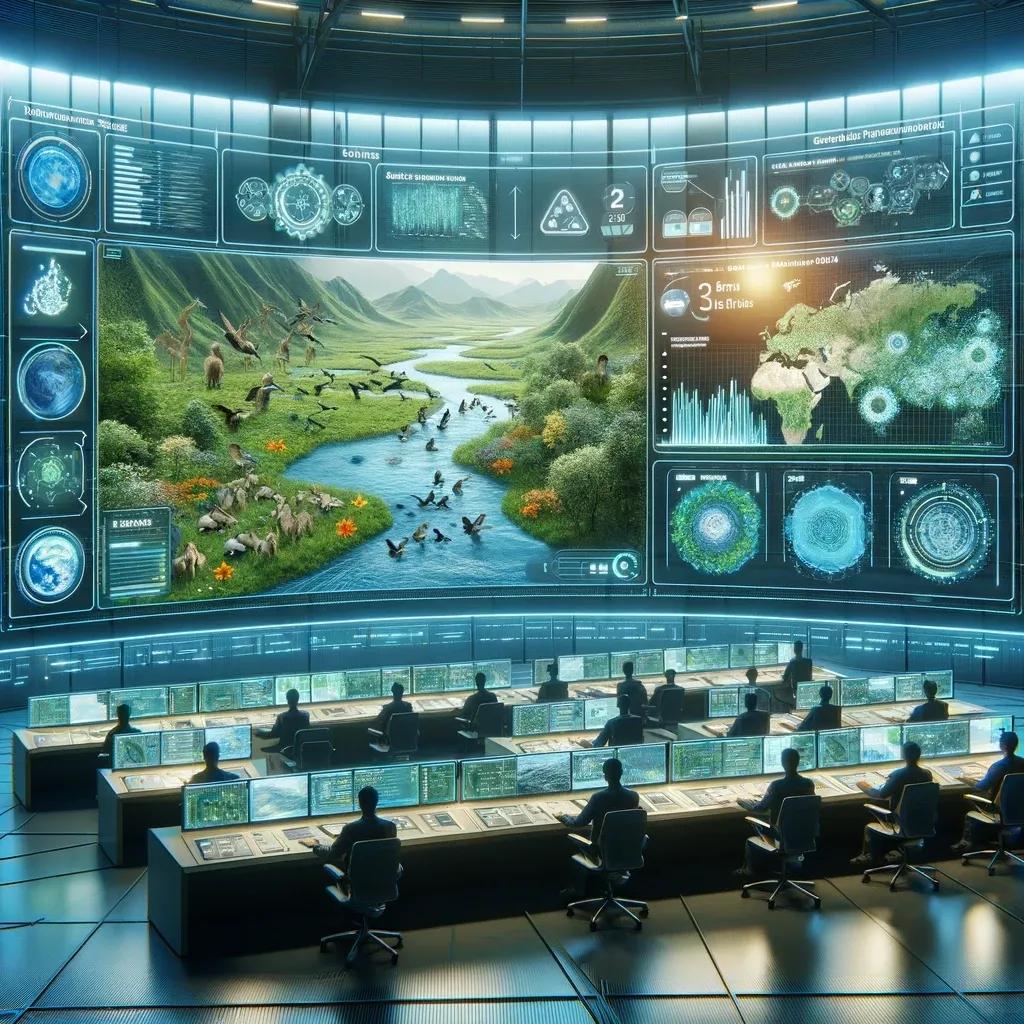
In the quest for sustainable development and environmental preservation, technology has consistently offered new tools that revolutionize our approach to managing ecological challenges. Among these innovations, Digital Twins represent a transformative technology with significant implications for environmental monitoring and sustainability. This article explores how Digital Twins serve as a vital tool in understanding and managing our environment more effectively.
Understanding Digital Twins
Digital Twins refer to virtual replicas of physical entities, systems, or processes. These replicas are dynamic, updating continuously in real-time as they receive data from their physical counterparts through sensors and other data collection methods. The concept, originating from the fields of aerospace and manufacturing, has since permeated various sectors, including urban planning, healthcare, and, notably, environmental management.
The Role of Digital Twins in Environmental Monitoring
The application of Digital Twins in environmental monitoring is multifaceted, encompassing air quality, water resources management, biodiversity conservation, and more. By mirroring the real-time status of natural environments, Digital Twins enable precise monitoring and predictive analysis, which are crucial for effective environmental management.
Air Quality Monitoring
Digital Twins can integrate data from various sources, including satellite imagery, ground sensor networks, and weather stations, to create comprehensive models of air quality. These models predict pollution patterns and the dispersion of airborne contaminants. By providing these insights, Digital Twins allow for proactive measures, reducing the impact of air pollution on health and the environment.
Water Resources Management
In water management, Digital Twins simulate water flow, quality, and distribution systems to help in predicting floods, managing water resources, and ensuring the safety of aquatic ecosystems. By simulating different scenarios, such as heavy rainfall or drought conditions, stakeholders can make informed decisions to mitigate risks and enhance water resource efficiency.
Biodiversity Conservation
Digital Twins help conserve biodiversity by simulating habitats and ecosystems to foresee the impacts of environmental changes, urban development, and climate change. These models facilitate targeted conservation efforts, helping to preserve species and their habitats by predicting and mitigating potential adverse effects.
Enhancing Sustainability Through Predictive Analysis
One of the most significant advantages of Digital Twins is their ability to perform predictive analysis. By understanding potential future scenarios, decision-makers can implement strategies that lead to more sustainable outcomes.
Predicting Environmental Impact
Digital Twins can simulate the environmental impact of proposed projects or policies before they are implemented. For example, by creating a Digital Twin of a proposed wind farm, planners can analyze its potential environmental impact, including noise pollution, disruption to local wildlife, and visual impacts, thereby allowing for adjustments before physical construction begins.
Optimizing Resource Use
In manufacturing and urban development, Digital Twins optimize resource use, reducing waste and minimizing environmental footprints. For instance, a Digital Twin of a manufacturing process can optimize energy consumption and material usage, significantly lowering the ecological impact of production activities.
Enhancing Renewable Energy Systems
Digital Twins are pivotal in the energy sector, particularly in enhancing the efficiency and integration of renewable energy sources. They can model the behavior of renewable energy systems under various conditions, predict maintenance needs, and optimize energy production to ensure maximum efficiency and minimal environmental disruption.
Challenges and Considerations
Despite their potential, the implementation of Digital Twins in environmental monitoring faces several challenges. Data quality and availability are critical; inaccurate or incomplete data can lead to misleading models. Additionally, the complexity of environmental systems and the need for interdisciplinary expertise can complicate the development and application of Digital Twins. Privacy and security concerns also need to be addressed, particularly when sensitive environmental data is involved.
In conclusion, Digital Twins stand at the forefront of technological advancements in environmental monitoring and sustainability. By providing detailed, real-time simulations of physical environments and predictive insights, they allow for more informed decision-making and proactive environmental management. As technology advances and more sectors adopt Digital Twins, their role in fostering a sustainable future becomes increasingly vital. However, for their full potential to be realized, ongoing challenges regarding data quality, model complexity, and security must be continually addressed. This dynamic tool, therefore, not only represents a significant technological leap but also embodies the collaborative effort required to protect and preserve our natural environment for future generations.