Data centres are the backbone of the digital economy, powering everything from cloud services to artificial intelligence workloads. But they are also among the fastest-growing consumers of electricity worldwide. As pressure mounts to reduce carbon footprints, the demand for clean, reliable, and continuous energy is urgent. Exowatt , a U.S.-based innovator, proposes a solution: delivering solar power on demand by storing captured energy and converting it into electricity when needed, helping both data centres and the grid operate on clean energy 24/7.
This article explores the underlying technology, its implications for grid resilience, and how it could transform data centre sustainability.
The Problem: Solar Power’s Intermittency
Solar is one of the fastest-growing renewable energy sources. However, two challenges limit its adoption as a primary energy source for critical facilities like data centres:
Intermittency : Solar power generation depends on daylight and weather conditions, making it unpredictable.
Mismatch of supply and demand : Peak solar production often occurs midday, while demand peaks later in the evening.
Traditional solutions such as batteries and pumped hydro are either costly, geographically constrained, or environmentally intrusive. What’s needed is a scalable, low-cost, and continuous system for turning solar into dispatchable power.
Exowatt’s Approach: Solar Energy Storage and On-Demand Conversion
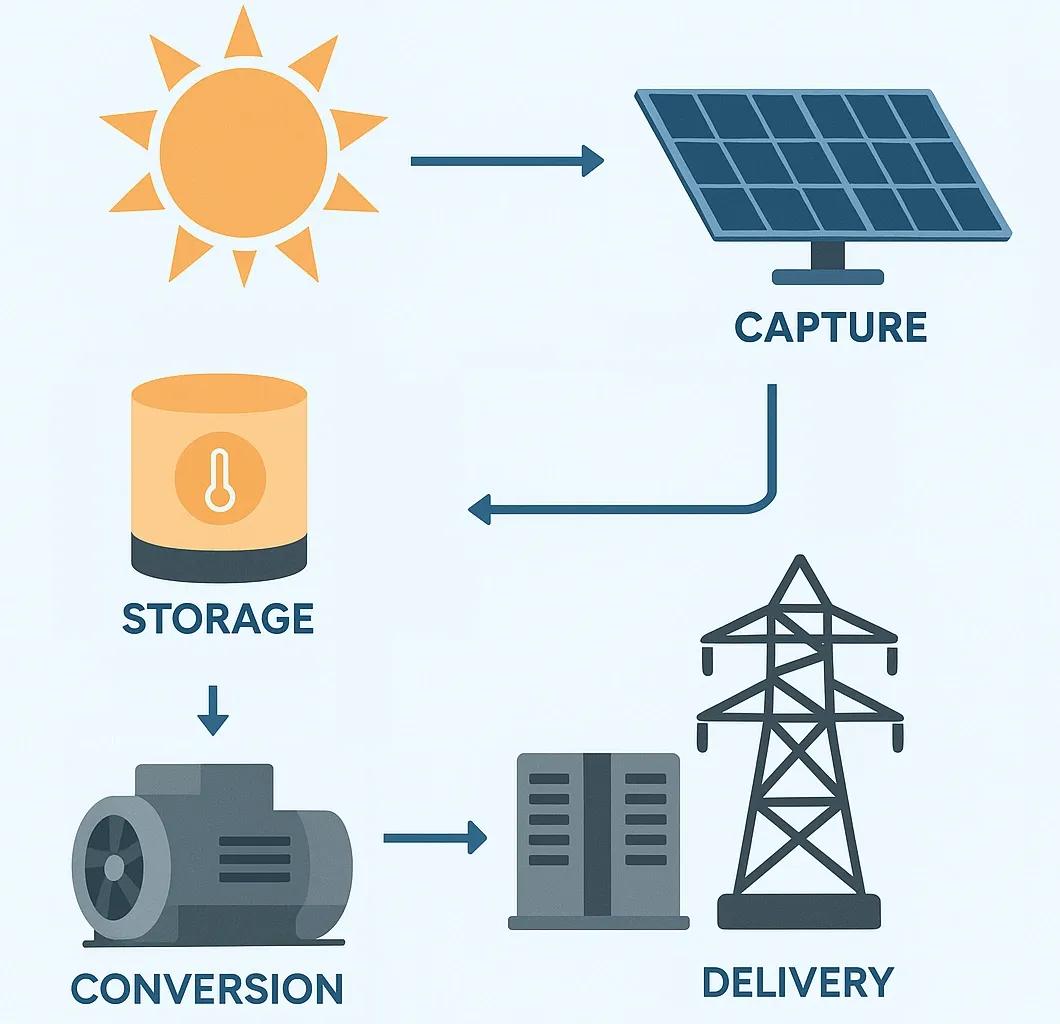
Exowatt’s solution lies in combining thermal storage and advanced conversion technologies. Instead of feeding solar energy directly into the grid, the system stores the energy first, then converts it into electricity only when required.
Core Components:
Capture Photovoltaic or concentrated solar panels harvest energy.
Storage Instead of lithium-ion batteries, Exowatt uses thermal storage (e.g., heated salts or other high-efficiency materials) that hold energy for extended periods.
Conversion The stored heat is converted into electricity using turbines or advanced thermophotovoltaic cells.
Delivery Power is dispatched precisely when data centres or grids demand it, day or night, rain or shine.
This approach allows solar energy to behave like baseload power, eliminating dependence on fossil fuels for “backup” energy.
Why This Matters for Data Centres
Data centres operate with strict uptime requirements, downtime costs thousands of dollars per minute. They cannot afford to depend on fluctuating renewable sources without backup. Exowatt’s on-demand solar solves this by:
Guaranteeing 24/7 clean energy supply
Reducing dependency on diesel or gas peaker plants
Lowering operational costs compared to grid-supplied fossil-based power
Meeting sustainability pledges from hyperscalers like Google, Microsoft, and Amazon aiming for carbon-free operations by 2030
Implications for the Grid
Beyond data centres, this technology can help stabilize power grids:
Peak shaving : Dispatching stored solar during evening peaks reduces strain on grids.
Grid resilience : Localized, dispatchable solar reduces blackout risks.
Decarbonization : Continuous clean energy enables faster coal and gas phase-out.
This is especially relevant as electrification accelerates in sectors like EV charging, smart cities, and industrial operations.
Technical Advantages Over Conventional Batteries
Feature - Lithium-ion Batteries - Exowatt’s Solar Storage
Storage Duration - Hours - Days
Scalability - Limited by cost/materials - High
Environmental Risk - Mining-heavy, fire risk - Minimal toxic waste
Cost per kWh - Relatively high - Competitive, falling with scale
Thermal storage is less constrained by rare-earth supply chains and offers lower degradation rates, making it attractive for long-term infrastructure.
Adoption Challenges
Despite its promise, challenges remain:
High upfront infrastructure costs for thermal storage plants.
Integration with existing grid systems requires new regulatory frameworks.
Geographic and climatic suitability must be evaluated for deployment sites.
Addressing these barriers will determine how quickly the technology scales.
Use Case Example
Imagine a hyperscale data centre in Texas:
Daytime: Solar panels feed excess energy into Exowatt’s thermal storage system.
Night: Stored heat is converted into electricity, powering servers through peak workloads.
Grid benefit: Extra electricity supports surrounding communities during demand spikes.
The result: zero fossil-fuel dependence, predictable costs, and 100% uptime.
Benefits and ROI
For Data Centres:
Reduced operational costs (avoiding fluctuating grid prices)
Improved sustainability scorecards (critical for ESG reporting)
Long-term energy security
For Grids:
More resilient networks
Reduced reliance on fossil peaker plants
Greater renewable penetration
For Society:
Lower emissions
Energy democratization, regions without fossil infrastructure can leapfrog to clean energy
Conclusion
Exowatt’s model of delivering solar energy on demand has the potential to redefine how renewable power is consumed. For data centres and grids, it transforms solar from an intermittent source into a dispatchable, reliable, and scalable energy backbone. If scaled, it could mark a turning point in the race toward 24/7 carbon-free power systems.