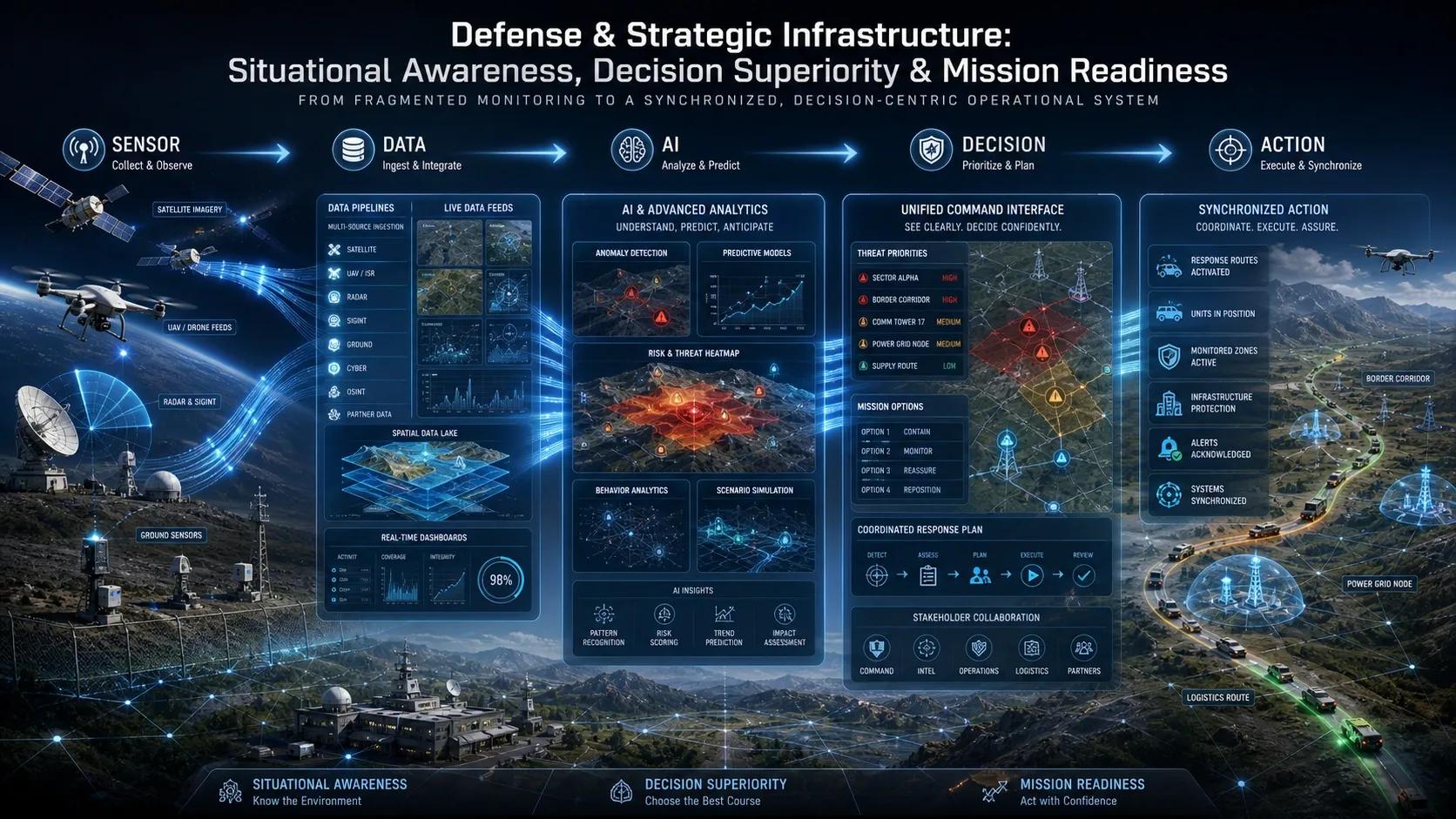
In defense systems, failure is not a system breakdown.
It’s a delay in decision-making.
Introduction
Over the past 20 days, we explored how Digital Twins enable:
infrastructure monitoring
operational optimization across sectors
environmental intelligence
disaster management and resilience
telecom, retail, and logistics coordination
Across all these domains, one pattern emerged:
👉 systems generate data, but decisions lag
Now we move to a sector where:
👉 decision speed defines outcomes
👉 Defense & Strategic Infrastructure
This includes:
border monitoring
critical infrastructure protection
military operations
surveillance and intelligence systems
This final article brings together everything we’ve discussed in Phase 3:
👉 how Digital Twins enable situational awareness, predictive intelligence, and real-time decision execution
The Core Problem: Information Without Action
Modern defense systems:
collect massive data
monitor environments continuously
deploy advanced sensors
But:
👉 decision-making remains fragmented
This leads to:
delayed response
lack of coordination
operational inefficiencies
Where Digital Twins Change the Approach
A Defense Digital Twin enables:
👉 real-time situational awareness and decision orchestration
Instead of:
monitoring systems
It creates:
a unified, actionable intelligence system
Key Components of a Defense Digital Twin
1. Data Layer
satellite imagery
UAV/drone feeds
radar systems
sensor networks
2. Integration Layer
combines: spatial intelligence surveillance data operational inputs
👉 creates a unified operational picture
3. AI/ML Layer
detects anomalies
predicts threats
identifies patterns
4. Simulation Layer
models mission scenarios
evaluates response strategies
5. Decision Layer
prioritizes actions
coordinates response
6. Execution Layer
triggers operational actions
integrates with field systems
Use Case 1: Border Monitoring
Traditional Approach
periodic surveillance
manual analysis
👉 delayed detection
Digital Twin Approach
continuous monitoring
anomaly detection
👉 Outcome:
early threat identification
Use Case 2: Infrastructure Protection
monitor critical assets
detect risks in real time
👉 Outcome:
improved security
Use Case 3: Mission Planning
simulate operational scenarios
evaluate outcomes
👉 Outcome:
better decision-making
Use Case 4: Real-Time Coordination
integrate multiple systems
guide operations
👉 Outcome:
faster response
Practical Example
Scenario: Suspicious Activity Detection
sensor detects unusual movement
AI identifies:
👉 anomaly
System triggers:
alert
resource deployment
👉 Outcome:
rapid response
Where Most Implementations Fail
1. Data Without Integration
multiple systems operate independently
2. Visibility Without Decision Authority
insights available 👉 action delayed
3. Lack of Simulation
no scenario-based planning
4. Fragmented Execution
poor coordination across units
Ask Yourself
Is your system:
👉 monitoring threats
Or
👉 acting on them in time?
Indian Context
India’s defense systems face:
complex borders
diverse terrains
evolving threats
Digital Twins can help:
👉 improve situational awareness
👉 enable faster decisions
👉 enhance operational efficiency
Benefits & ROI
improved response time
enhanced situational awareness
better coordination
reduced risk
increased operational efficiency
Conclusion
In defense systems:
👉 time defines outcomes
Managing operations requires:
👉 real-time intelligence
👉 predictive insight
👉 coordinated action
Digital Twins enable this shift.
From:
👉 monitoring systems
To
👉 decision-centric operational systems
Final Insight (Phase 3 Wrap-Up)
Across all sectors, the pattern is clear:
👉 data alone does not create value
👉 visibility alone does not create outcomes
The real shift is:
👉 from systems that observe to systems that decide and act