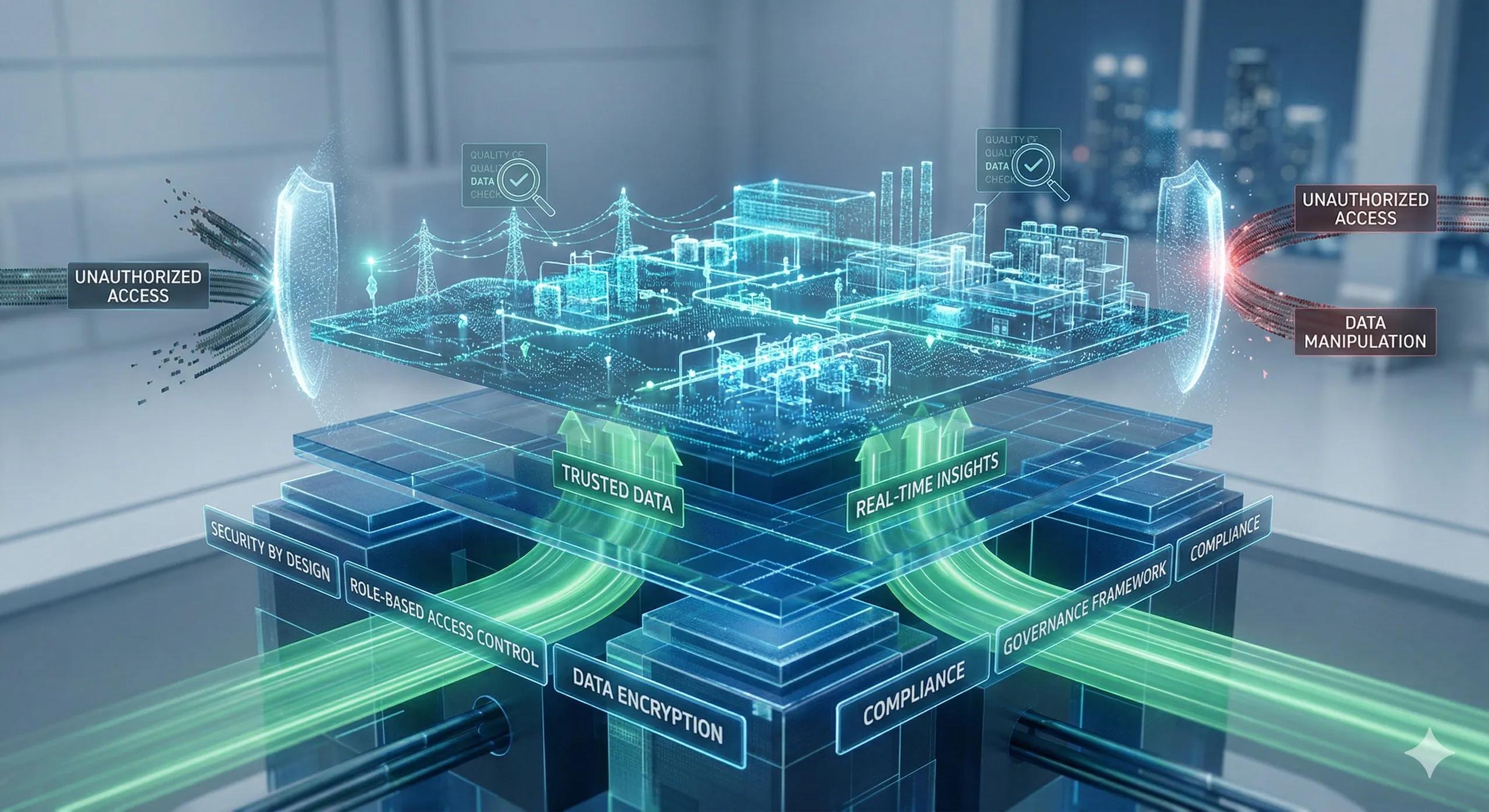
The more connected your Digital Twin becomes, the more vulnerable it gets.
Introduction
So far in Phase 2, we’ve explored:
architecture and integration
data pipelines
cloud vs edge
AI-driven intelligence
interoperability challenges
All of these increase one thing:
👉 connectivity
But with increased connectivity comes:
👉 increased risk
Because Digital Twins are not just visual systems anymore.
They are connected to:
operational assets
real-time data streams
decision-making workflows
Which means:
👉 security and governance are no longer optional layers, they are foundational
The Core Problem: Security is Often an Afterthought
In many Digital Twin implementations:
focus is on functionality
integration is prioritized
speed of deployment is emphasized
Security and governance are often added later.
👉 That’s where risks emerge.
Why Digital Twins Are High-Risk Systems
Digital Twins connect:
physical infrastructure
digital systems
operational decisions
This creates exposure across:
IT systems
OT (Operational Technology) environments
cloud platforms
edge devices
👉 A breach is not just a data issue, it can become an operational issue
Key Cybersecurity Risks
1. Unauthorized Access
weak authentication
shared credentials
unsecured APIs
👉 Risk: unauthorized control or data access
2. Data Manipulation
altered sensor data
tampered inputs
👉 Risk: incorrect decisions based on false data
3. API Vulnerabilities
exposed endpoints
lack of validation
👉 Risk: system exploitation
4. Edge Device Weakness
unsecured IoT devices
outdated firmware
👉 Risk: entry points for attacks
5. Data Leakage
sensitive operational data exposed
poor encryption practices
👉 Risk: loss of confidentiality and competitive advantage
What is Data Governance in Digital Twins?
Data governance defines:
👉 how data is managed, controlled, and trusted
It includes:
data ownership
data quality standards
access control
lifecycle management
compliance
Why Governance Matters
Without governance:
data becomes inconsistent
trust erodes
decisions become unreliable
👉 Governance ensures:
data integrity
accountability
consistency across systems
The Key Governance Challenges
1. Ownership Ambiguity
who owns the data?
IT, operations, or business teams?
2. Data Quality Issues
inconsistent inputs
missing values
3. Lack of Standards
no defined schema
inconsistent definitions
4. Lifecycle Gaps
no control over updates
outdated data persists
What Works in Practice
1. Security by Design
embed security in architecture
not as a later addition
2. Role-Based Access Control (RBAC)
restrict access based on roles
ensure accountability
3. Data Encryption
secure data in transit and at rest
4. API Security
authentication and validation
monitoring and logging
5. Governance Frameworks
define ownership
establish data standards
enforce quality checks
6. Continuous Monitoring
detect anomalies
respond to threats in real time
Practical Example
Scenario: Smart Utility Network
sensors provide real-time data
Digital Twin monitors system performance
Without security:
👉 data can be manipulated
👉 decisions become unreliable
With governance:
👉 data is validated
👉 access is controlled
👉 decisions are trustworthy
Ask Yourself
Can you trust the data your Digital Twin is using and who is responsible for that trust?
Indian Context
In India:
critical infrastructure is becoming digitized
data regulations are evolving
multi-vendor ecosystems are common
This increases the need for:
👉 strong governance frameworks
👉 secure system design
Benefits of Strong Security & Governance
trusted decision-making
reduced operational risk
regulatory compliance
improved system reliability
long-term scalability
Conclusion
A Digital Twin is only as reliable as the data it uses and as secure as the systems it connects.
Security protects the system.
Governance ensures its integrity.
Without both:
👉 Digital Twins cannot be trusted