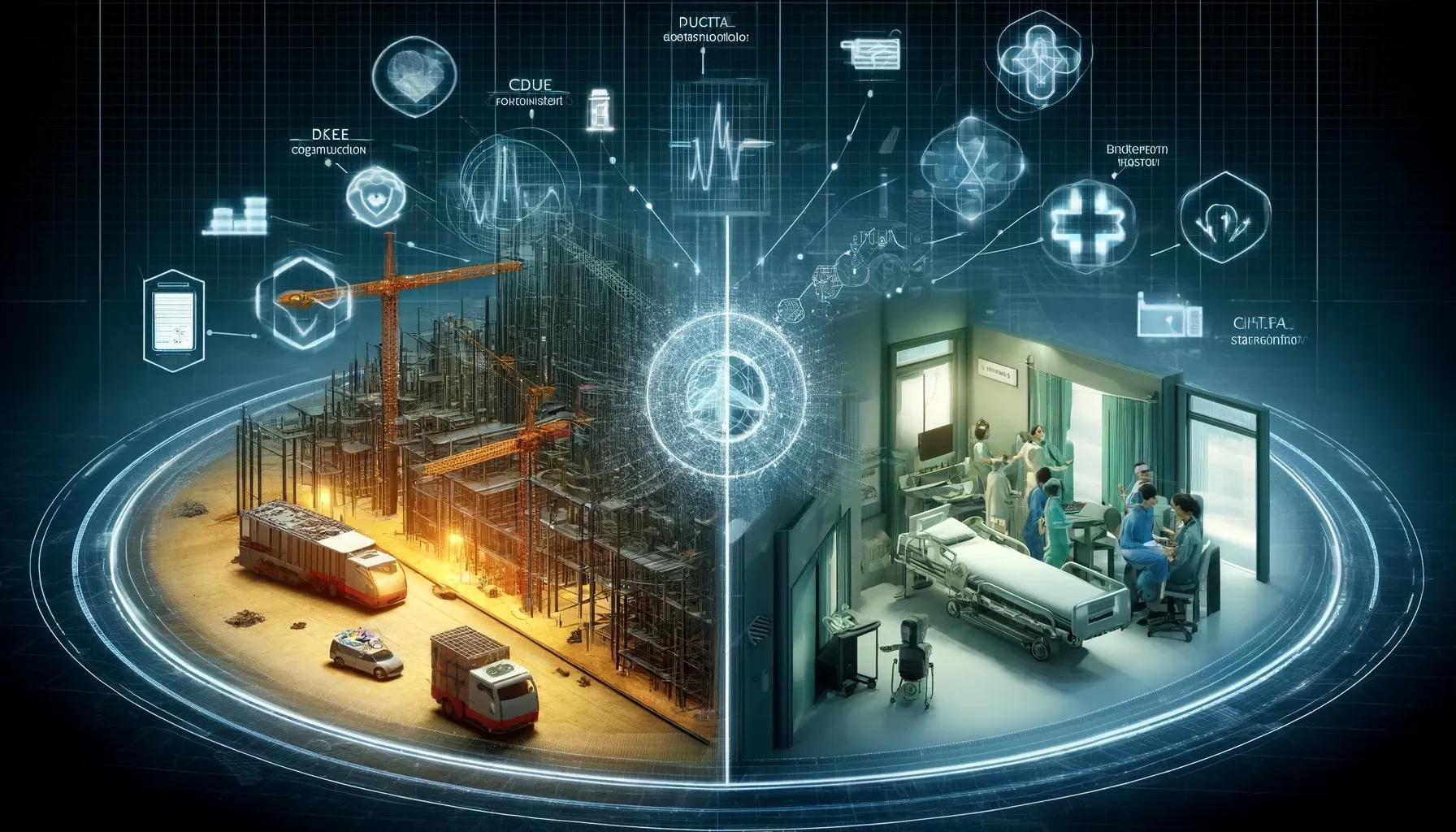
In an era where digital transformation is paramount across sectors, both the construction and healthcare industries are witnessing revolutionary changes thanks to advanced technologies like digital twins. While these two fields may seem worlds apart, there are profound lessons and insights that healthcare can derive from the implementation of digital twins in construction. This exploration not only illuminates the potential efficiencies and enhancements but also underscores a broader theme of cross-industry learning.
Digital Twins Defined
A digital twin is a dynamic digital replica of a physical object, process, or system that can be used for various purposes including simulation, analysis, and monitoring. In construction, digital twins replicate building processes or entire structures to optimize the design, enhance operational efficiency, and reduce risks associated with construction projects. Similarly, in healthcare, digital twins can simulate medical or biological processes to predict outcomes, personalize medicine, and improve healthcare delivery.
Lesson 1: Enhanced Decision-Making through Simulation
Construction has harnessed the power of digital twins for predictive analytics and simulation to foresee the outcomes of projects under different scenarios. By integrating data from various sources, constructors can simulate construction processes in advance, allowing them to make informed decisions that mitigate risk, reduce costs, and ensure the completion of projects on time.
In healthcare, applying a similar strategy could revolutionize patient care and treatment plans. For instance, digital twins of organs or entire physiological systems can enable medical professionals to test the effects of different treatment options virtually before applying them to a real patient. This approach could significantly reduce medical errors, enhance patient outcomes, and tailor treatments to individual needs.
Lesson 2: Real-time Monitoring and Predictive Maintenance
The construction industry utilizes digital twins for real-time monitoring of structures. Sensors embedded in buildings collect data that is mirrored in their digital counterparts, allowing for ongoing analysis and maintenance predictions. This proactive approach helps in identifying potential issues before they escalate, thereby extending the life of the structure and reducing maintenance costs.
Healthcare facilities could adopt this lesson by using digital twins to monitor critical equipment, hospital infrastructure, and even patient health in real-time. For example, a digital twin of a heart monitor could predict a malfunction before it occurs, ensuring continuous, reliable patient monitoring. Extending this further, a digital twin of a patient’s heart could provide real-time insights into their health status, predicting complications before they become life-threatening.
Lesson 3: Collaborative Frameworks
Digital twins in construction foster a collaborative environment where architects, engineers, and construction managers can all interact with the digital model. This not only ensures that everyone is on the same page but also allows for seamless integration of changes and updates without significant disruptions.
Healthcare can learn from this integrative approach by creating collaborative frameworks using digital twins that involve various stakeholders such as doctors, nurses, and patients. For example, a digital twin of a patient’s treatment process could be used by multidisciplinary teams to discuss, update, and optimize treatment plans collaboratively and transparently. This would enhance the coordination among care providers and improve patient engagement in their own care.
Lesson 4: Improved Training and Education
In construction, digital twins are used as a tool for training new engineers and workers under virtually simulated conditions, enhancing their learning experience without the immediate risks of physical site training. This method provides practical, hands-on experience in a controlled environment, enhancing learning outcomes and worker safety.
Adopting this educational strategy, healthcare could utilize digital twins for the training of medical staff. Surgeons, for instance, could perform virtual surgeries on a digital twin of the human body to hone their skills or try new surgical techniques without risking patient safety. This approach would not only improve the skills of healthcare professionals but also speed up the training process.
In conclusion, as industries continue to evolve, the importance of cross-industry learning becomes increasingly clear. Healthcare stands to gain immensely from the lessons learned in the construction industry’s application of digital twins. By adopting enhanced decision-making through simulation, real-time monitoring, collaborative frameworks, and improved training methods, healthcare can achieve significant advancements in efficiency, safety, and patient outcomes. As both industries further develop their digital twin capabilities, continued observation and adaptation of these technologies will likely uncover even more valuable insights and innovations.