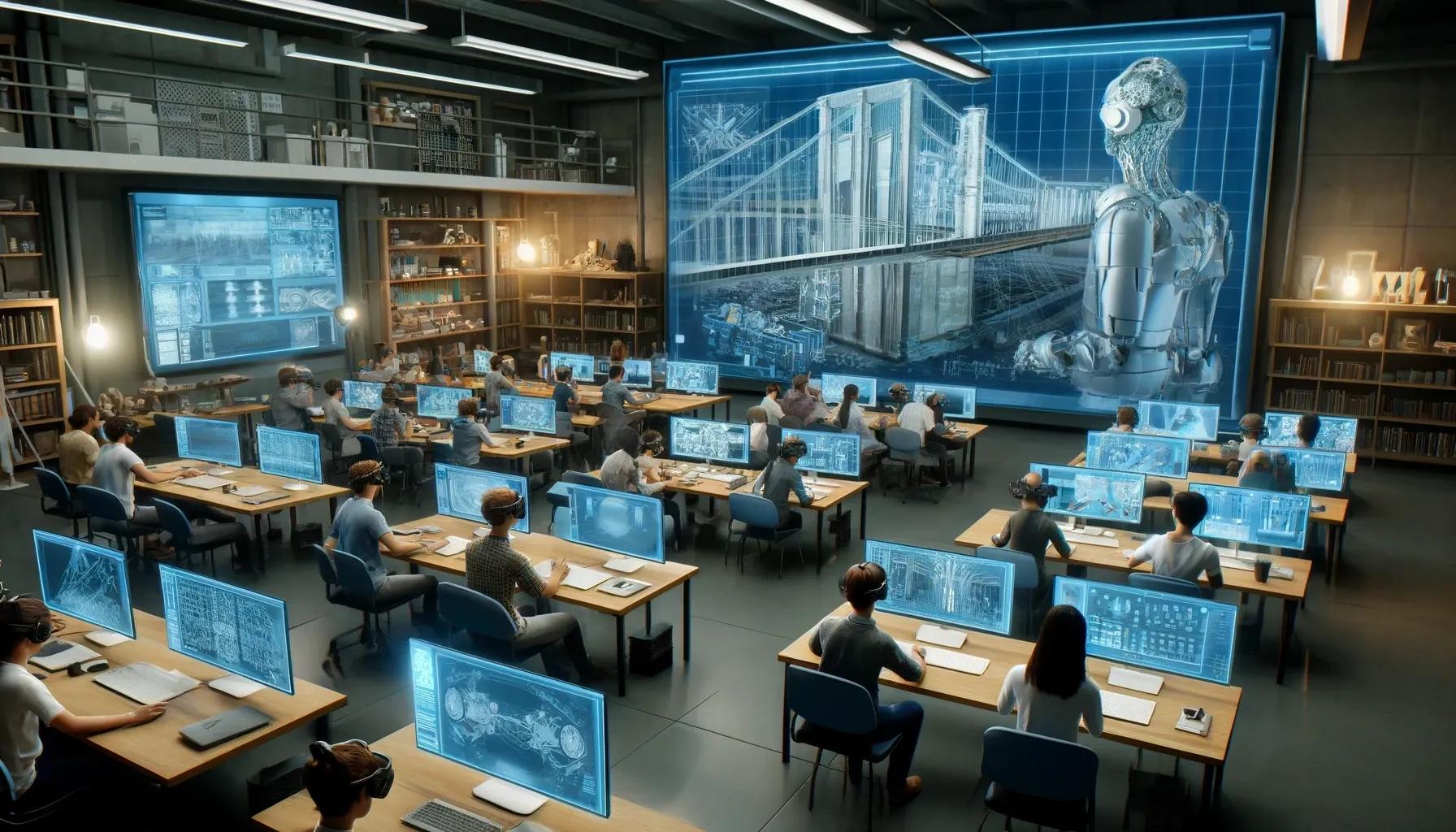
In the realms of education and training, the integration of digital technology has consistently offered new vistas for enhancing learning experiences and operational training. Among the most promising digital advancements is the creation of interactive digital twins. This technology not only provides a detailed simulation of real-world environments and processes but also introduces a hands-on, immersive component to learning that was previously unattainable through traditional methods.
Understanding Digital Twins
A digital twin is a virtual replica of a physical entity, system, or process. It is designed to mirror real-life conditions accurately, allowing for real-time monitoring, analysis, and simulation. The technology leverages data from various sources, including sensors and real-time data feeds, to create models that dynamically respond to changes in their physical counterparts.
In the context of education and training, digital twins serve as an innovative tool for delivering complex content in an interactive and engaging manner. They enable students and trainees to explore intricate systems and infrastructures without the constraints of physical or geographic limitations.
Applications in Education
Science and Engineering Education
In fields like engineering and the sciences, digital twins allow students to interact with large-scale infrastructures, mechanical systems, or even biological systems within a controlled environment. For example, a digital twin of a bridge or building enables civil engineering students to see the effects of stress, weather, and traffic in real-time. They can experiment with different materials and design modifications to observe potential outcomes, thereby gaining a deeper understanding of subject matter that is often abstract and theoretically complex.
Medical Training
Medical education is another area where digital twins are proving invaluable. They can simulate human anatomy, allowing medical students to perform virtual surgeries and diagnostic procedures without risking real patients. This application is not only safer but also more cost-effective, as it reduces the need for physical resources like cadavers and medical supplies.
Benefits of Interactive Digital Twins in Training
Enhanced Engagement and Understanding
Digital twins create a more engaging learning environment. They transform traditional learning methods by allowing direct interaction with the study material, making learning more active rather than passive. This engagement helps in better retention of information and deeper understanding of the subject matter.
Safe and Controlled Learning Environment
One of the significant advantages of using digital twins in education and training is the ability to provide a safe, controlled environment where learners can experiment and make mistakes without real-world consequences. This aspect is particularly beneficial in high-risk industries such as aerospace, chemical, and nuclear sectors.
Customization and Flexibility
Digital twins also offer flexibility in education and training programs. They can be customized to fit the specific learning goals of different disciplines or even tailored to individual learning paces and styles. This customization ensures that all learners, regardless of their previous knowledge or experience, can benefit from the technology.
Implementing Digital Twins in Education Systems
The integration of digital twins into educational frameworks requires careful planning and consideration of several factors:
Technological Infrastructure
Firstly, educational institutions must have the necessary technological infrastructure to support the complex data processing and visualization capabilities of digital twins. This infrastructure includes robust computing systems, high-speed internet connections, and advanced visualization tools.
Curriculum Development
Integrating digital twins into the curriculum involves more than just providing access to the technology. It requires a redesign of existing courses to incorporate digital twin activities and learning modules. Educators need to develop new teaching methods and assessment models that leverage the interactive capabilities of digital twins.
Training for Educators
Educators themselves must be trained not only on the operational aspects of digital twins but also on how to effectively incorporate them into teaching strategies. This training is crucial for maximizing the potential benefits of digital twins in education.
Privacy and Security
As with any technology that relies heavily on data, digital twins raise concerns about privacy and security. Educational institutions need to implement stringent data protection measures to safeguard sensitive information, particularly when personal data is involved.
In conclusion, interactive digital twins represent a transformative approach to education and training. They provide a dynamic platform for learners to interact with complex systems and concepts in a virtual space, offering a richer, more engaging, and more effective educational experience. As technology continues to advance, the role of digital twins in education is set to become more prominent, paving the way for more innovative teaching and learning methodologies. By embracing this technology, educational institutions can significantly enhance their offerings and better prepare students for the demands of the modern world.