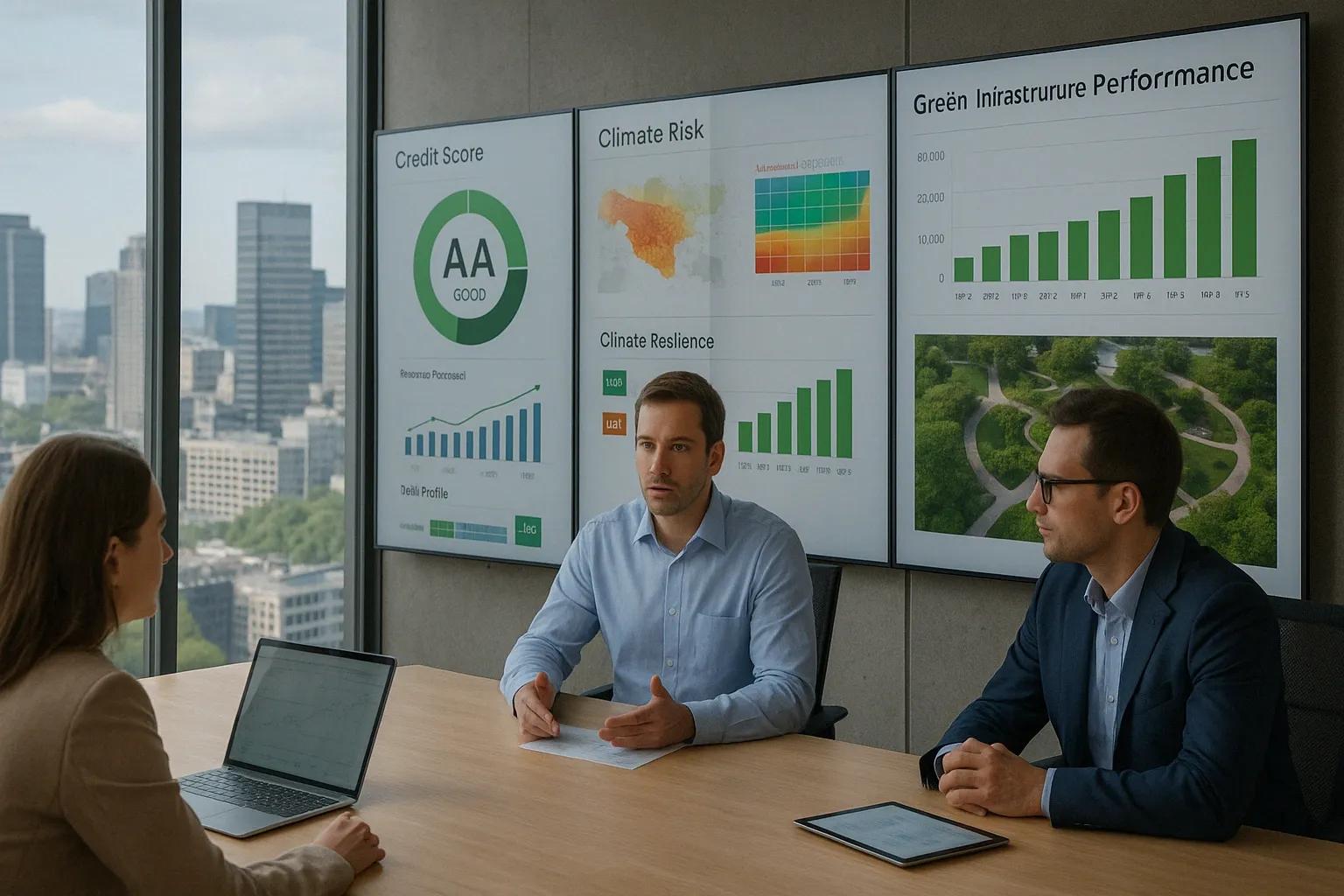
A city’s ability to raise capital for green infrastructure is not just about environmental ambition, it’s about financial trust.
Creditworthiness signals to investors that a city is capable of repaying debt, managing risk, and delivering long-term, verifiable outcomes.
In the context of nature-positive infrastructure financing, credit ratings increasingly reflect a city's capacity to:
Manage climate and ecological risks
Integrate sustainability into infrastructure planning
Track project performance and financial returns
Cities that improve their credit profiles can unlock larger, cheaper, and more flexible funding for nature-based solutions.
Why It Matters
Cities are under pressure to deliver sustainable infrastructure, but those with weak credit ratings face:
Higher borrowing costs
Limited access to green bonds
Reduced investor interest
Meanwhile, those with strong ratings can:
Issue sustainable municipal bonds
Attract blended finance
Secure multilateral funding with better terms
Creditworthiness is more than a financial metric; it’s a trust signal that connects sustainability with investability.
Key Factors Affecting City Credit Profiles
1. Revenue Stability
Cities with diversified, predictable income sources fare better.
Nature investments must align with long-term fiscal planning.
2. Debt Management
Sustainable debt ratios and repayment records increase rating confidence.
3. Governance and Transparency
Integrated planning, stakeholder alignment, and data transparency improve ratings.
4. Risk Exposure
High climate risk or unmanaged ecological degradation lowers credit standing.
5. Project Track Record
Cities with history of delivering on infrastructure projects, and tracking impact, attract more investment.
How Technology Supports Creditworthiness
Modern digital tools improve a city’s ability to demonstrate financial and environmental reliability:
Objective: Technology
Track fiscal health: AI dashboards, ERP-integrated tools
Visualize risk zones: Geospatial mapping & climate overlays
Model cost savings: Digital Twins + ecosystem service calculators
Monitor performance: UAV surveys, IoT networks
Report outcomes: ESG-compliant data platforms
These tools convert sustainability plans into measurable, auditable data, a key requirement for improving credit scores and securing green finance.
Real-World Application: Building Investor Confidence
Imagine a city planning to issue a green bond to finance urban forest expansion and bioswale networks.
To improve their credit standing, they could:
Use Geospatial and UAV data to assess target sites and demonstrate ecological need.
Build a Digital Twin to model outcomes: reduced flood risk, temperature drops, maintenance costs.
Integrate IoT sensors for ongoing monitoring, feeding data into investor dashboards.
Use AI-powered fiscal modeling to show repayment capacity tied to tax savings and avoided costs.
Result: A strong, transparent investment case with environmental and financial co-benefits.
Conclusion
City creditworthiness is not just about balance sheets, it’s about preparedness, transparency, and risk management.
By integrating digital technologies into planning and monitoring, cities can boost their credibility and tap into deeper pools of climate finance.
The greener a city’s future, the stronger its financial position, if it can prove it.