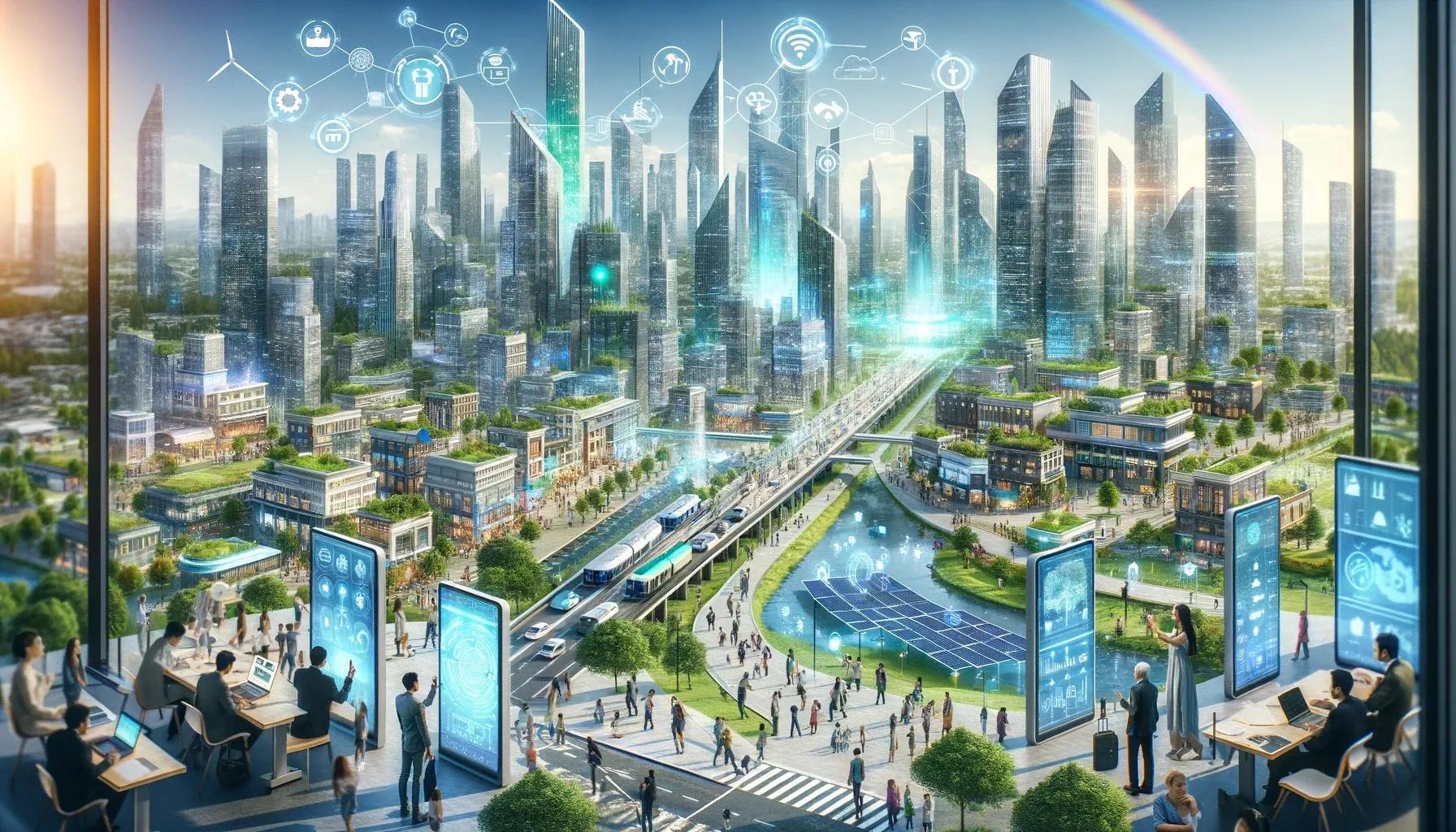
In the contemporary era of rapid urbanization and technological advancement, the concept of smart cities has emerged as a beacon of sustainable development. Smart cities leverage the latest in digital and communication technologies to enhance the quality of urban life, optimize city services, and ensure environmental sustainability. However, the endeavor of building a smart city from scratch presents a unique set of challenges and opportunities. This article delves into the intricacies of developing new smart urban areas, exploring the hurdles that must be overcome and the potential that such projects hold for the future.
Understanding the Smart City
At its core, a smart city employs a network of sensors, cameras, wireless devices, and data centers to collect and analyze data. This data is then used to improve infrastructure, public utilities, and services, ranging from traffic management and energy distribution to emergency services and environmental monitoring. The ultimate goal is to create a city that is not only technologically advanced but also efficient, safe, and conducive to a high quality of life for its inhabitants.
Challenges in Building a Smart City from Scratch
Financial Investment : The initial cost of building a smart city is substantial. It requires significant investment in both the physical infrastructure and the technology that powers it. Securing funding and managing the financial aspects of such a massive project can be daunting.
Technological Integration : Integrating advanced technologies into the city's fabric from the ground up requires meticulous planning and coordination. This includes everything from the deployment of IoT (Internet of Things) devices to the implementation of sophisticated data analytics platforms.
Regulatory and Policy Hurdles : Establishing a smart city often involves navigating complex regulatory environments. Policies regarding data privacy, cybersecurity, and technology deployment must be carefully crafted to protect citizens while enabling innovation.
Sustainability and Environmental Concerns : Building a city that is both smart and sustainable demands a careful balance. Environmental considerations must be integrated from the outset, requiring innovative approaches to energy use, waste management, and urban planning.
Social and Ethical Issues : As smart cities collect and analyze vast amounts of data, issues related to privacy, surveillance, and the digital divide come to the forefront. Ensuring that the benefits of a smart city are equitably distributed and that citizens' rights are protected is a significant challenge.
Opportunities in Developing New Smart Urban Areas
Despite these challenges, the development of smart cities from scratch also presents unparalleled opportunities.
Innovative Urban Planning : Starting from scratch allows for a holistic approach to urban design, integrating smart technologies into every facet of the city's operation from the beginning. This can lead to more efficient use of resources, better traffic flow, and enhanced public services.
Economic Growth and Investment : Smart cities attract businesses and investors looking to capitalize on the advantages of a high-tech, efficient urban environment. This can lead to job creation and economic diversification.
Enhanced Quality of Life : The ultimate aim of a smart city is to improve the living conditions of its residents. Through improved services, safer streets, and a cleaner environment, smart cities have the potential to significantly enhance quality of life.
Sustainability and Resilience : Building a smart city from the ground up provides a unique opportunity to embed sustainability and resilience into the city’s DNA. Smart technologies can help manage natural resources more effectively, reduce carbon footprints, and prepare for future challenges, including climate change.
Innovation and Knowledge Economy : Smart cities serve as hotbeds for innovation, drawing in talent and fostering a culture of research and development. They can become centers for the knowledge economy, driving advances in technology and services.
A Path Forward
The path to building a smart city from scratch is fraught with challenges but also rich with opportunities. Success requires a multidisciplinary approach, bringing together experts in technology, urban planning, environmental science, and social policy. Financial models need to be sustainable, and public-private partnerships can play a crucial role in funding and development.
Critical to this endeavor is the involvement of citizens and stakeholders in the planning process, ensuring that the smart city serves the needs and values of those who live there. Privacy, equity, and access must be foundational principles, ensuring that the smart city benefits all residents and does not exacerbate existing inequalities.
The development of smart cities from scratch also offers a unique laboratory for innovation. These projects can serve as models for how technology can be integrated into urban environments to enhance sustainability, resilience, and quality of life. Lessons learned from these endeavors can inform the evolution of existing cities around the world.
In conclusion, while the challenges of building a smart city from scratch are significant, they are not insurmountable. With careful planning, robust investment, and a commitment to sustainability and equity, these projects have the potential to redefine urban living for the 21st century and beyond. As we move forward, the development of new smart urban areas will undoubtedly play a critical role in shaping the future of our global society.