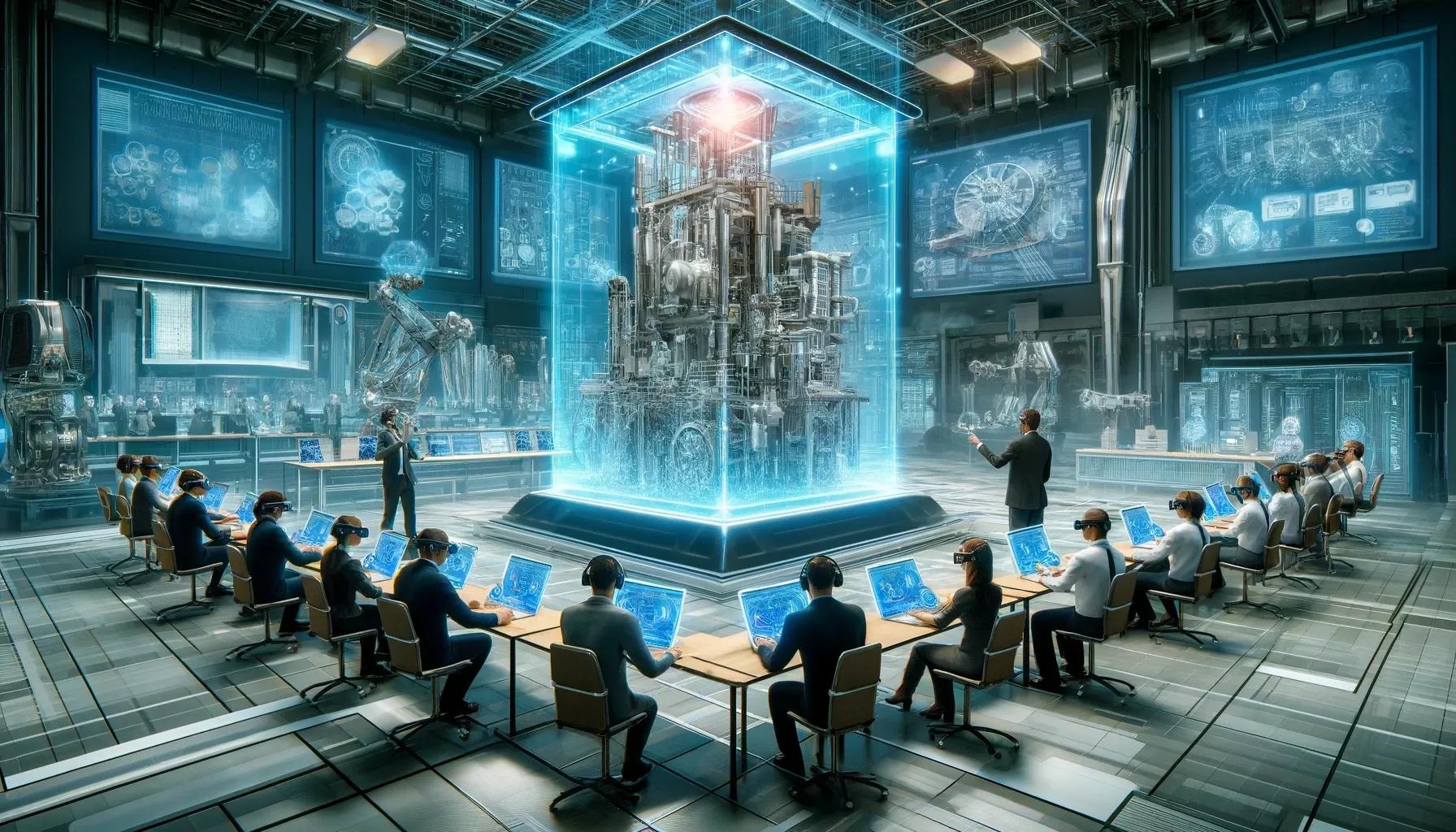
In the realm of technological advancements, the concept of digital twins has emerged as a revolutionary tool, not just in the optimization of manufacturing processes or the enhancement of product development but also as a potent instrument in workforce training and development. Digital twins, essentially virtual replicas of physical systems, processes, or products, enable businesses to simulate, predict, and understand how these entities operate in real life. This article delves into how digital twins are bridging the gap in workforce training and development, offering a detailed examination of their implications, benefits, and challenges.
Understanding Digital Twins in the Context of Workforce Development
A digital twin is a dynamic, digital representation of a physical object or system across its lifecycle, utilizing real-time data to mirror the physical state, including its shape, position, gesture, status, and motion. In workforce training and development, digital twins act as a bridge between theoretical knowledge and practical experience, offering a hands-on learning environment without the associated risks and costs of real-world training.
Applications of Digital Twins in Workforce Training
Simulation-Based Training: Digital twins allow for the creation of highly detailed and accurate simulations of work environments and processes. This is particularly beneficial in industries such as manufacturing, aerospace, and construction, where understanding the intricacies of machinery and equipment is crucial. Trainees can interact with these simulations to gain practical experience, understand the consequences of their actions in a controlled environment, and learn from mistakes without the risk of damage or injury.
Remote Learning and Collaboration: The integration of digital twins with cloud technologies facilitates remote learning and collaboration. Trainees can access digital twin simulations from anywhere, making it easier for organizations to offer training programs to a geographically dispersed workforce. Furthermore, it enables collaborative learning scenarios where trainees from different locations can work together in a virtual environment.
Customized Learning Experiences: Digital twins can be tailored to replicate specific work scenarios or challenges, offering personalized training experiences. This bespoke approach ensures that the training is relevant and aligned with the trainee's role, skill level, and learning objectives, thereby enhancing the effectiveness of the training program.
Real-time Feedback and Analytics: By harnessing the data analytics capabilities of digital twins, organizations can provide real-time feedback to trainees. This immediate response helps learners quickly understand and rectify mistakes, thereby accelerating the learning process. Additionally, analytics can be used to assess the effectiveness of training programs, identify areas of improvement, and optimize the training strategy.
Benefits of Using Digital Twins in Workforce Development
Risk Reduction: Digital twins offer a safe environment for trainees to experiment and learn, significantly reducing the risk of accidents and errors in real-life scenarios.
Cost Efficiency: Simulations eliminate the need for physical prototypes and reduce the wear and tear on actual machinery during training, leading to significant cost savings.
Accelerated Learning Curve: The immersive and interactive nature of digital twin simulations facilitates a deeper understanding of complex systems and processes, accelerating the learning curve.
Increased Accessibility: Digital twins make specialized training more accessible, allowing workers in remote locations to gain the skills necessary for their roles without the need to travel.
Challenges in Implementing Digital Twins for Workforce Training
Despite the numerous benefits, several challenges must be addressed to fully leverage digital twins in workforce training and development:
High Initial Investment: The development and implementation of digital twins require a significant initial investment in technology and expertise.
Data Security and Privacy: As digital twins rely on real-time data, ensuring the security and privacy of this data is paramount to preventing unauthorized access and breaches.
Technical Expertise: The creation and maintenance of digital twins require a high level of technical expertise, posing a challenge for organizations without in-house capabilities.
Integration with Existing Systems: Integrating digital twins with existing training and operational systems can be complex and time-consuming.
Moving Forward
The future of workforce training and development is undeniably intertwined with the advancement of digital twins. As technology evolves, the fidelity, interactivity, and accessibility of digital twin simulations will continue to improve, offering even more realistic and effective training solutions. To navigate the challenges, organizations must invest in the necessary infrastructure and expertise, prioritize data security, and foster a culture of continuous learning and innovation.
In conclusion, digital twins represent a transformative approach to workforce training and development. By bridging the gap between theoretical knowledge and practical experience, they offer a scalable, risk-free, and cost-effective solution to training the workforce of the future. As businesses continue to embrace digital twins, we can anticipate a significant shift in how training is conducted, ultimately leading to a more skilled, efficient, and adaptable workforce.