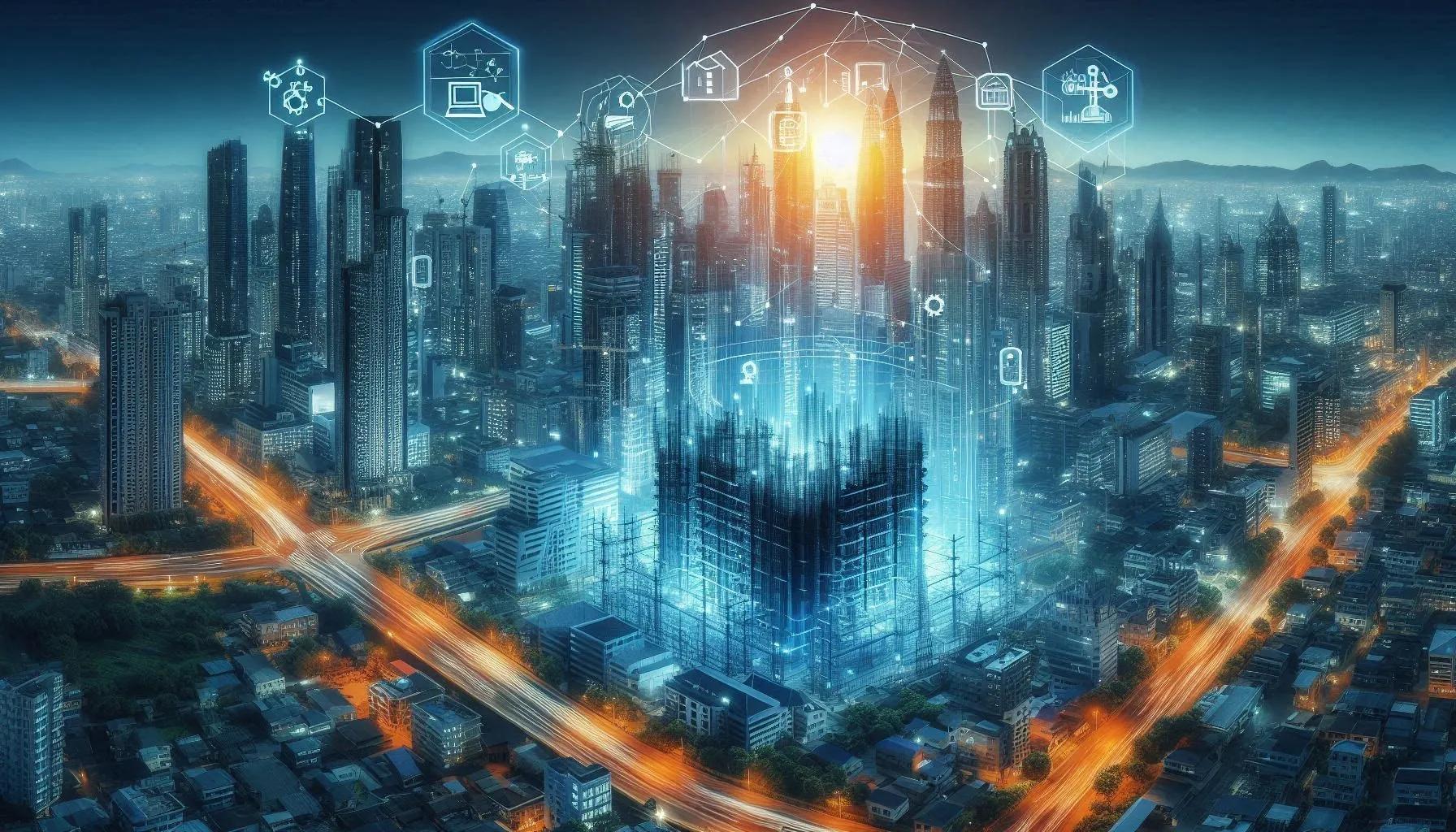
Building Information Modeling (BIM) has revolutionized the Architecture, Engineering, and Construction (AEC) industry by enabling the creation of detailed digital representations of physical and functional characteristics of buildings. As BIM continues to evolve, several emerging trends are poised to shape the future of construction. These innovations promise to enhance efficiency, improve collaboration, and enable more sustainable practices. This article explores the latest trends in BIM and their potential impact on the construction industry.
1. Integration of IoT and Smart Building Technologies
The integration of the Internet of Things (IoT) with BIM is a significant trend that is transforming construction projects. IoT devices, such as sensors and smart systems, can collect real-time data on various aspects of a building's performance, including temperature, humidity, energy consumption, and occupancy levels. When this data is integrated into BIM models, it enables continuous monitoring and optimization of building operations.
For instance, IoT sensors embedded in HVAC systems can provide data on energy usage, which can be analyzed to improve efficiency and reduce costs. Similarly, smart lighting systems can adjust illumination based on occupancy and daylight availability, enhancing both energy efficiency and occupant comfort. The synergy between IoT and BIM facilitates the creation of intelligent buildings that are more responsive to their environments and user needs.
2. Advanced 3D Printing and Prefabrication
3D printing and prefabrication are gaining traction in the construction industry, offering new possibilities for off-site manufacturing and on-site assembly. BIM plays a crucial role in these processes by providing detailed digital models that guide the fabrication of building components.
Advanced 3D printing technologies enable the production of complex architectural elements with high precision and minimal waste. These components can be prefabricated in controlled factory environments, ensuring quality and reducing construction time. BIM models facilitate seamless integration of these prefabricated elements into the overall building design, ensuring that all components fit together accurately during on-site assembly.
Prefabrication and 3D printing also contribute to sustainability by minimizing material waste and reducing the carbon footprint of construction activities. As these technologies continue to evolve, they are likely to become standard practices in the industry, driven by the efficiencies and environmental benefits they offer.
3. Enhanced Collaboration with Cloud-Based BIM Platforms
Collaboration is a cornerstone of successful construction projects, and cloud-based BIM platforms are enhancing this aspect significantly. Traditional BIM software often required stakeholders to work on local copies of the model, leading to version control issues and delays in communication. Cloud-based platforms, on the other hand, provide a centralized repository for BIM models, allowing real-time collaboration among project teams.
These platforms enable multiple stakeholders, including architects, engineers, contractors, and clients, to access and modify the BIM model simultaneously. Changes made by one team member are instantly visible to others, ensuring that everyone is working with the most up-to-date information. This level of collaboration reduces errors, enhances decision-making, and accelerates project timelines.
Moreover, cloud-based BIM platforms support integration with other project management tools and facilitate data sharing across different software applications. This interoperability is crucial for managing complex construction projects that involve diverse teams and technologies.
4. Augmented Reality (AR) and Virtual Reality (VR) Applications
Augmented Reality (AR) and Virtual Reality (VR) are transforming the way construction professionals visualize and interact with BIM models. AR overlays digital information onto the physical world, allowing users to see and interact with virtual elements in real-time. VR, on the other hand, immerses users in a fully virtual environment, providing an interactive and immersive experience.
These technologies have numerous applications in the construction industry. For example, AR can be used for on-site inspections and maintenance, enabling workers to visualize hidden infrastructure such as pipes and wiring. VR can be employed for design reviews and client presentations, allowing stakeholders to experience the building in a virtual environment before construction begins.
AR and VR also enhance training and safety procedures by simulating real-world scenarios and providing interactive learning experiences. As AR and VR technologies become more accessible and affordable, their adoption in construction is expected to increase, offering new ways to engage with BIM models and improve project outcomes.
5. Artificial Intelligence (AI) and Machine Learning (ML) in BIM
Artificial Intelligence (AI) and Machine Learning (ML) are unlocking new possibilities for BIM by enabling predictive analytics and automation. AI algorithms can analyze vast amounts of data generated during the design and construction phases, identifying patterns and making recommendations to optimize processes.
For instance, AI can be used to predict potential clashes in the BIM model, allowing designers to address issues before they become costly problems during construction. ML algorithms can also analyze historical project data to forecast timelines, budget overruns, and resource allocation, helping project managers make informed decisions.
Automation powered by AI and ML can streamline repetitive tasks, such as generating construction schedules, updating project documentation, and managing supply chains. By reducing the manual effort required for these activities, construction professionals can focus on higher-value tasks, improving overall productivity and efficiency.
6. Sustainability and Green Building Practices
Sustainability is a growing concern in the construction industry, and BIM is playing a pivotal role in promoting green building practices. BIM models provide detailed insights into the environmental impact of building materials, energy consumption, and waste generation. This information can be used to design more sustainable buildings that minimize resource use and reduce carbon emissions.
For example, BIM can be used to simulate energy performance and optimize the building envelope for better thermal efficiency. It can also support the selection of sustainable materials by analyzing their lifecycle impacts. Additionally, BIM facilitates the implementation of renewable energy systems, such as solar panels and geothermal heating, by integrating these technologies into the building design.
Green building certifications often require detailed documentation of a building's sustainability features. BIM simplifies the certification process by providing accurate and comprehensive data that demonstrates compliance with these standards. As the demand for sustainable construction continues to rise, BIM will be instrumental in achieving environmental goals and driving the industry towards a greener future.
In conclusion, the future of construction is being shaped by innovative trends in Building Information Modeling. The integration of IoT, advancements in 3D printing and prefabrication, cloud-based collaboration platforms, AR and VR applications, AI and ML technologies, and sustainability practices are all contributing to the evolution of BIM. These trends promise to enhance efficiency, improve collaboration, and promote sustainability in the AEC industry. As these technologies continue to develop and mature, their adoption will lead to more intelligent, efficient, and sustainable construction practices, ultimately transforming the way buildings are designed, constructed, and operated.