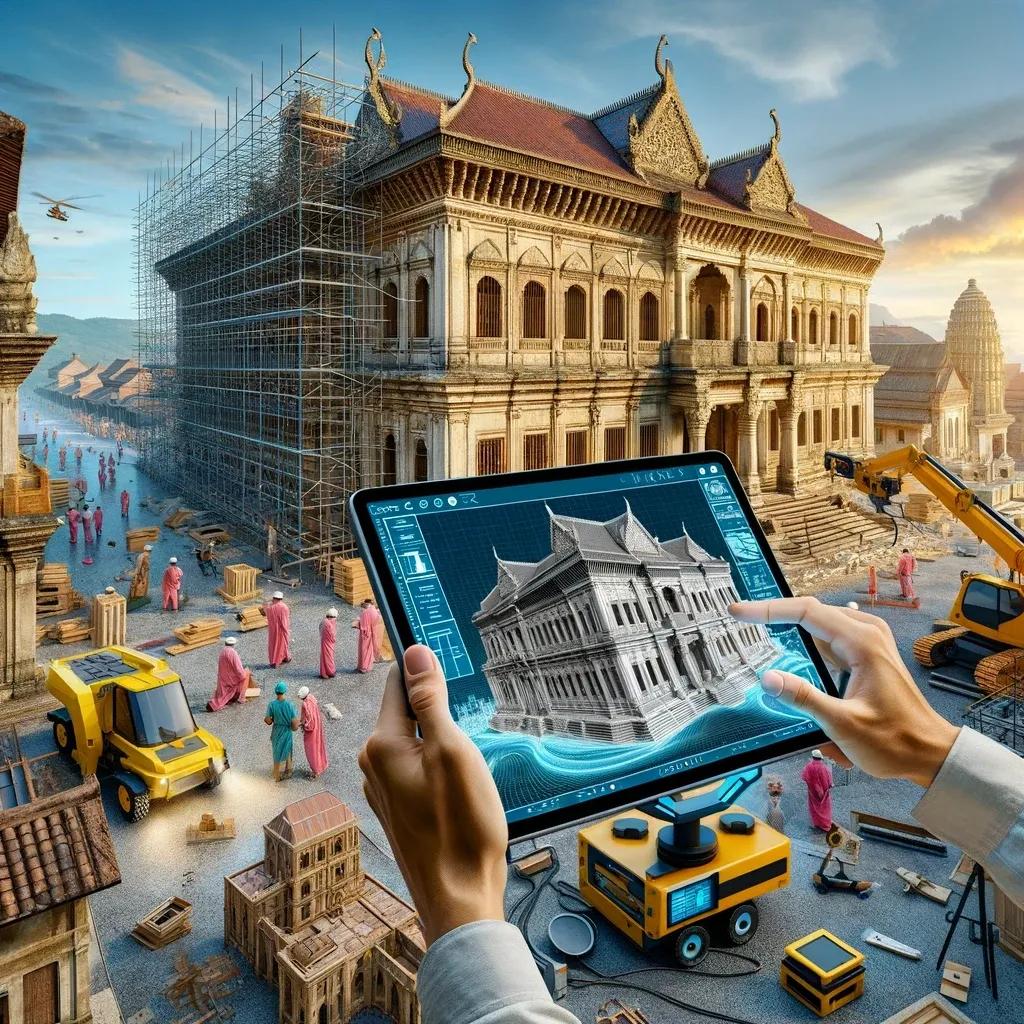
In the realm of architectural conservation and restoration, the integration of Building Information Modeling (BIM) and 3D scanning technologies marks a transformative era. These innovative tools not only provide unprecedented accuracy and detail in documenting historic structures but also ensure sustainable restoration practices. This article explores how BIM and 3D scanning are revolutionizing the restoration and preservation of historic buildings.
The Synergy of BIM and 3D Scanning in Historic Preservation
Historic building restoration is a delicate endeavor, balancing the need for preservation and the necessity of modernization. BIM, a digital representation process, and 3D scanning, a technique for capturing the physical attributes of an object or environment, synergize perfectly in this context. These technologies offer a comprehensive approach to restoration, allowing for precise documentation, analysis, and planning, which are critical in dealing with the intricate details and unique challenges presented by historic structures.
Accurate Documentation and Analysis
One of the primary benefits of BIM and 3D scanning in historic building restoration is the capacity for accurate documentation. 3D scanning captures the minutiae of a building's architecture, including aspects that might be invisible or inaccessible to the naked eye. This data, when integrated into a BIM model, creates a detailed, multidimensional representation of the structure. This model serves as a crucial reference throughout the restoration process, ensuring that every restoration action is informed by an accurate understanding of the building’s original state and current condition.
Informed Decision-Making and Planning
The combination of BIM and 3D scanning also aids in informed decision-making and efficient planning. By analyzing the BIM models, restoration professionals can identify structural weaknesses, deterioration patterns, and potential risks. This analysis guides the restoration team in making critical decisions, such as selecting appropriate materials and techniques that align with both the historical integrity and the current structural needs of the building.
Virtual Tours and Public Engagement
Beyond the technical aspects, these technologies offer an exciting avenue for public engagement. Virtual tours created from BIM and 3D models allow the public to explore historic structures in unprecedented detail, fostering a deeper appreciation and understanding of heritage buildings. These virtual experiences can be particularly valuable in cases where physical access to a site is restricted due to conservation concerns or ongoing restoration work.
Case Studies: Success Stories of BIM and 3D Scanning in Restoration
Numerous successful restorations around the world demonstrate the effectiveness of BIM and 3D scanning. For instance, the restoration of the Notre-Dame Cathedral in Paris, severely damaged by fire in 2019, benefitted immensely from these technologies. Detailed 3D scans taken before the fire provided an exact reference for the reconstruction, ensuring fidelity to the original design.
Another notable example is the restoration of the historical complex at the Alhambra in Granada, Spain. Here, 3D scanning was used to capture the intricate Islamic art and architecture, which was then integrated into a BIM model. This model not only guided the restoration but also provided a valuable digital archive for future conservation efforts.
Challenges and Considerations
While BIM and 3D scanning offer numerous advantages, there are challenges and considerations that must be addressed. The cost and technical expertise required for these technologies can be significant, potentially limiting their use in smaller-scale or underfunded restoration projects. Additionally, the interpretation of historical data and integration into modern restoration practices require careful consideration to respect the integrity and authenticity of the historic structures.
In conclusion, the integration of BIM and 3D scanning technologies in the field of historic building restoration is a game-changer. These tools offer a level of precision and detail that was previously unattainable, enabling more informed decisions and efficient restoration processes. While challenges exist, the potential of these technologies to preserve our architectural heritage for future generations is immense. As we continue to refine and adapt these tools, we open new possibilities in the realm of conservation, ensuring that our historic buildings are not only preserved but also understood and appreciated in new and exciting ways.