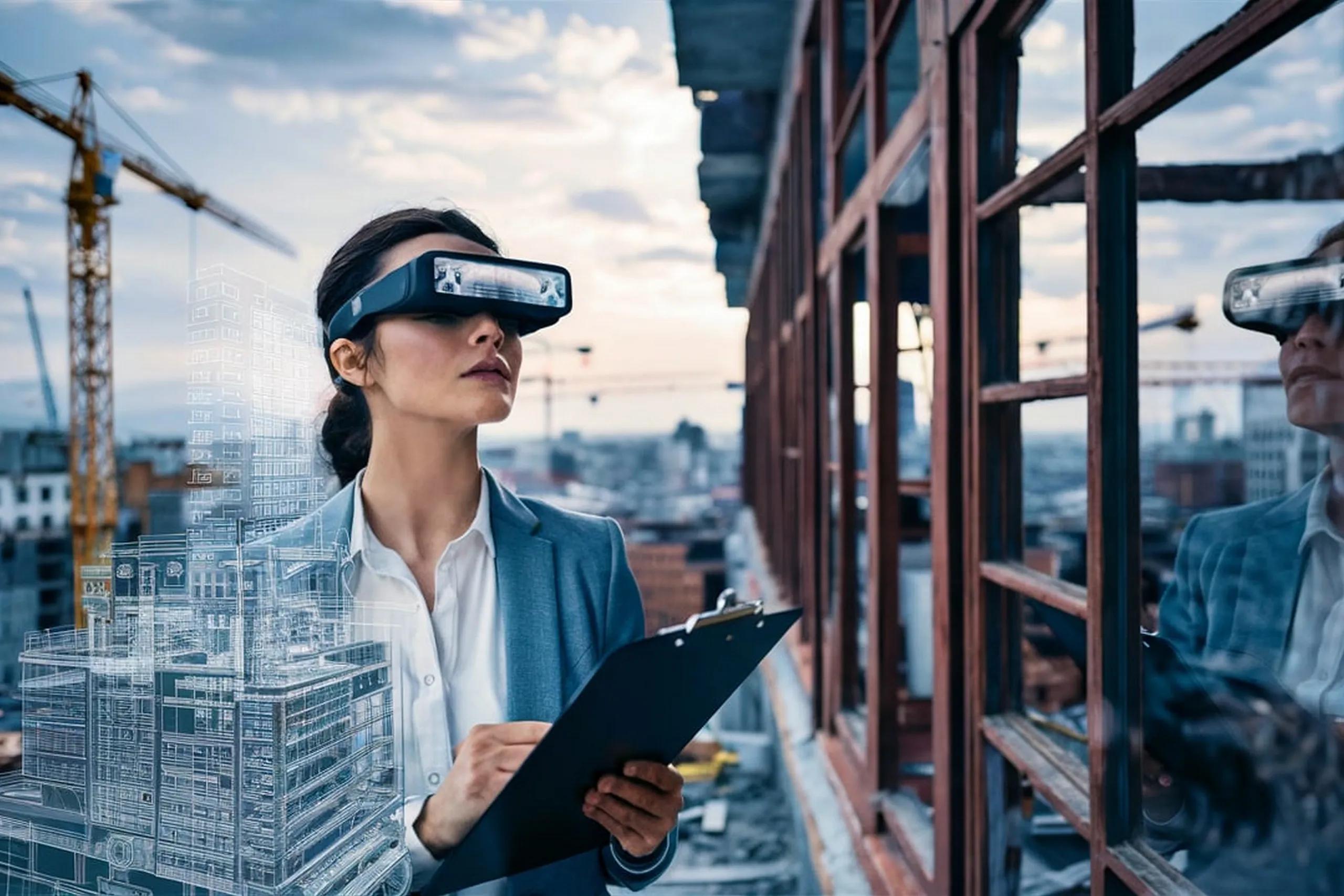
Augmented Reality (AR) and Virtual Reality (VR) are transforming the construction industry by extending their roles from simple visualization tools to integrated solutions that improve design validation, training, and collaboration. This article examines how AR and VR are used in construction projects, detailing their impact on design accuracy, workforce training, and project coordination.
Enhancing Design Validation
Traditionally, construction designs were validated through blueprints, 3D models, and on-site inspections. However, these methods often led to misinterpretations and overlooked details, resulting in costly modifications during later stages. AR and VR now offer more precise methods for design validation.
Virtual Walkthroughs:
VR allows stakeholders to take virtual walkthroughs of a project before construction begins. By immersing users in a simulated environment, designers and clients can evaluate the spatial layout, material choices, and lighting conditions in real time. This approach not only uncovers design issues early on but also provides a clear understanding of how spaces will function once constructed.
Overlaying Digital Models:
AR enhances design validation by overlaying digital models onto the physical construction site. Using mobile devices or head-mounted displays, project managers and engineers can see how planned elements align with existing structures. This overlay helps detect misalignments and inconsistencies between the design and the built environment. For example, AR can reveal if structural reinforcements are correctly positioned or if utilities are routed appropriately according to the design specifications.
Improved Stakeholder Communication:
Both AR and VR create a common ground for communication among architects, engineers, contractors, and clients. Instead of relying on abstract drawings or technical jargon, stakeholders interact with a realistic model of the project. This shared visual context makes it easier to discuss potential modifications and improvements, ensuring that everyone is on the same page before construction begins. Enhanced communication minimizes the risk of errors during the construction phase.
Advancing Training Methods
Construction projects require a skilled workforce that can handle complex machinery, follow safety protocols, and implement intricate designs. Traditional training methods often involve classroom sessions or on-the-job mentoring, which may not fully capture the dynamic nature of a construction site. AR and VR offer innovative approaches to training that combine realism with safety.
Immersive Learning Environments:
VR creates immersive training simulations that replicate real-world scenarios without the risks associated with an active construction site. Trainees can experience hazardous conditions, learn how to operate machinery, and practice emergency procedures in a controlled environment. These simulations help workers develop practical skills and react effectively during actual emergencies.
Error-Free Repetition:
VR allows trainees to repeat tasks multiple times until they achieve the desired level of proficiency. This repeatability is crucial for mastering complex operations, such as crane operation or assembly of prefabricated components. By simulating the tasks in a virtual environment, workers can practice error-free, which builds their confidence and competence.
AR-Assisted On-Site Guidance:
AR plays a significant role in on-site training by providing real-time guidance and contextual information. When a worker points an AR-enabled device at a machine or a section of the construction site, relevant information such as operating procedures, safety checklists, and troubleshooting tips are displayed. This hands-on training approach ensures that workers have access to critical information exactly when they need it, reducing the likelihood of mistakes and enhancing overall safety.
Reducing Training Costs:
Investing in AR and VR for training can lead to significant cost savings over time. By reducing the need for physical training setups, materials, and on-site instructors, companies can train a larger number of workers more efficiently. Technology also allows for remote training sessions, which can be particularly beneficial for large projects spread across multiple locations.
Facilitating Collaboration
Effective collaboration is essential for the success of any construction project. Projects often involve diverse teams, including architects, engineers, contractors, and subcontractors, who must work together seamlessly. AR and VR offer new tools to enhance this collaboration throughout the project lifecycle.
Real-Time Remote Collaboration:
AR and VR enable real-time remote collaboration, which is especially valuable for projects with geographically dispersed teams. Using VR, team members can enter a shared virtual environment where they can discuss designs, review progress, and make decisions collectively. This reduces the need for frequent travel and allows experts from different parts of the world to contribute to the project.
Interactive Project Reviews:
Incorporating AR into project reviews allows team members to interact with the digital twin of the construction site. By using AR headsets or tablets, participants can view up-to-date information on project progress, compare it with the planned design, and identify discrepancies. This interactive review process promotes a proactive approach to problem-solving and ensures that issues are addressed before they escalate.
Integrating BIM with AR/VR:
Building Information Modeling (BIM) is widely used in construction for managing project data. When integrated with AR and VR, BIM models become even more powerful. Stakeholders can interact with BIM data in a virtual environment, where they can access details such as material specifications, structural analysis, and maintenance schedules. This integration streamlines the decision-making process and improves overall project coordination.
Enhanced Project Management:
Project managers benefit from the comprehensive view that AR and VR provide. These technologies allow managers to monitor progress in real time, identify potential bottlenecks, and allocate resources more efficiently. By visualizing the construction process from start to finish, managers can make informed decisions that keep the project on track and within budget.
Challenges and Future Directions
While AR and VR bring significant benefits to the construction industry, there are challenges that need addressing. The initial investment in hardware and software can be high, and integrating these technologies with existing systems requires careful planning. Additionally, training staff to use AR and VR tools effectively is essential for maximizing their potential.
Data security is another important consideration. As digital models and project data move to cloud-based platforms, ensuring the protection of sensitive information becomes critical. Construction companies must invest in robust cybersecurity measures to safeguard their digital assets.
Looking ahead, advancements in AR and VR will likely lead to more seamless integration with other emerging technologies such as artificial intelligence (AI) and machine learning (ML). These technologies can further enhance design validation, predictive maintenance, and project management. As AR and VR become more affordable and user-friendly, their adoption in the construction industry is expected to grow, leading to more efficient and safer construction practices.
Conclusion
AR and VR have moved beyond simple visualization in construction to become key tools in design validation, training, and collaboration. Virtual walkthroughs and AR overlays help stakeholders catch design errors early, reducing costly rework. Immersive training environments and on-site guidance improve worker safety and operational efficiency. Real-time collaboration in virtual spaces streamlines project management and enhances team communication.
By adopting AR and VR, the construction industry is not only improving its current practices but also paving the way for future innovations. As these technologies evolve, they will continue to shape the construction landscape, driving efficiency, accuracy, and safety from the design phase to project execution.