Your systems are connected.
But can they actually understand each other?
Introduction
In the previous article, we discussed where computation happens:
cloud for scale
edge for real-time response
Now we move to a deeper layer:
👉 How do these systems actually communicate?
Because in Digital Twin environments:
BIM platforms
GIS systems
IoT devices
analytics engines
are all generating and consuming data continuously.
The bridge between them is:
👉 APIs and interoperability frameworks
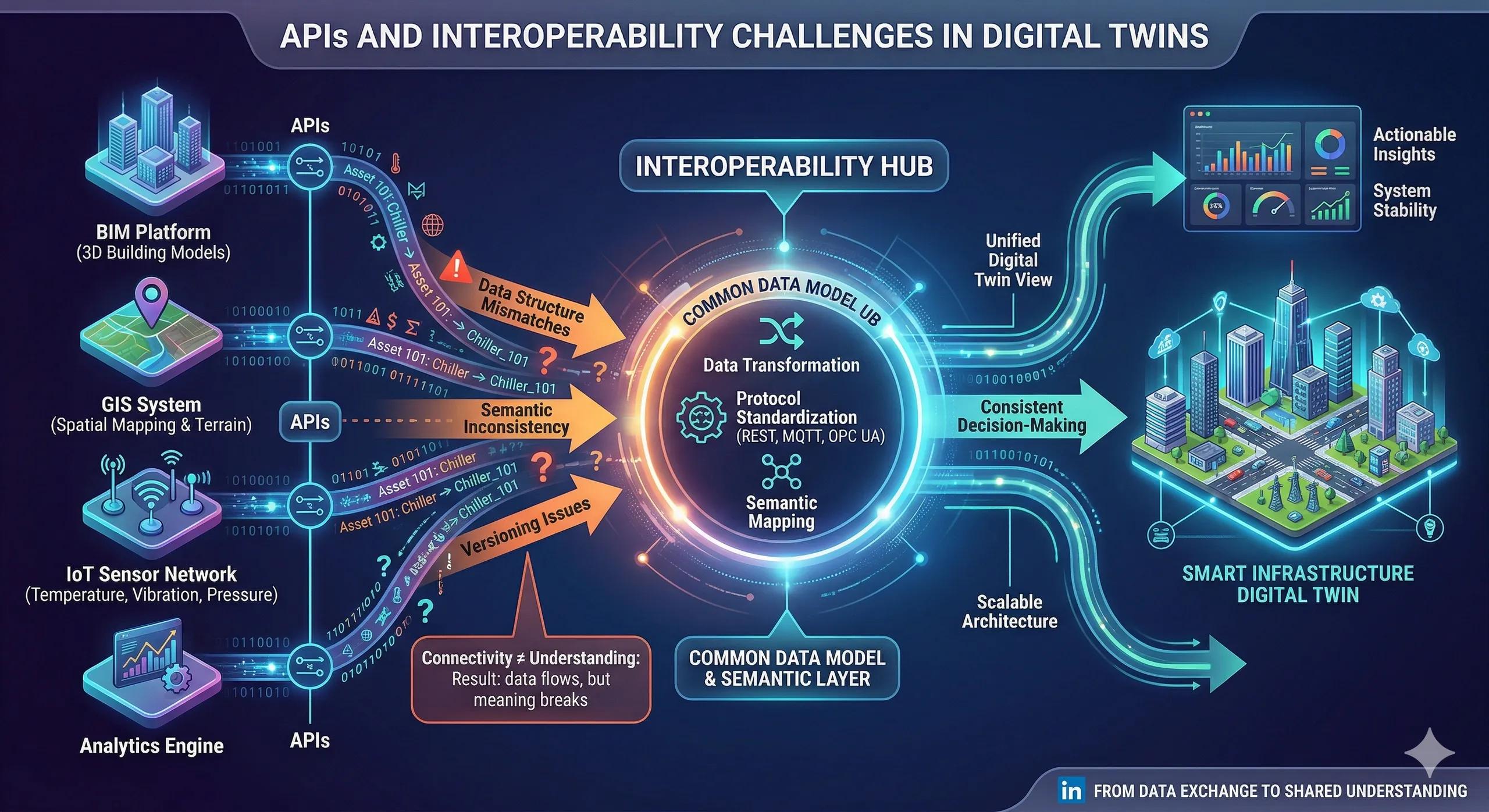
The Core Problem: Connectivity ≠ Interoperability
Most systems today can:
send data
receive data
But that doesn’t mean:
👉 they can interpret that data correctly
Example
A BIM system sends an “asset ID”
An IoT system receives it
But:
naming conventions differ
structure is inconsistent
context is missing
👉 Result: data flows, but meaning breaks
What are APIs in Digital Twins?
APIs (Application Programming Interfaces) are:
👉 interfaces that allow systems to exchange data and trigger actions
In Digital Twin systems, APIs enable:
data ingestion from sensors
communication between platforms
integration with analytics tools
real-time updates
Where APIs Fall Short
1. Data Structure Mismatch
Different systems use:
different schemas
different formats
👉 JSON vs XML vs proprietary formats
Result: 👉 transformation complexity increases
2. Lack of Semantic Consistency
Even if structure matches:
👉 meaning may differ
Example:
“temperature” in one system
“surface temperature” in another
👉 leads to incorrect interpretation
3. Versioning Issues
APIs evolve:
endpoints change
formats update
👉 integrations break over time
4. Performance Constraints
real-time systems require low latency
APIs introduce overhead
👉 impacts system responsiveness
5. Security and Access Control
multiple systems interacting
different authentication models
👉 increases vulnerability surface
Interoperability: The Real Challenge
Interoperability is not just:
👉 “can systems connect?”
It is:
👉 can systems work together reliably and consistently?
Types of Interoperability
1. Technical Interoperability
systems can exchange data
APIs function correctly
2. Structural Interoperability
data formats align
schemas are compatible
3. Semantic Interoperability
data has the same meaning across systems
👉 This is where most failures occur
Why Interoperability Breaks in Digital Twins
1. Siloed System Design
BIM, GIS, IoT built independently
2. No Unified Data Model
each system defines assets differently
3. Late Integration
interoperability considered after deployment
4. Vendor Lock-in
proprietary APIs
limited flexibility
What Works in Practice
1. Define a Common Data Model Early
shared asset definitions
consistent identifiers
2. Use Middleware as an Abstraction Layer
decouple systems
manage transformations centrally
3. Adopt Standard Protocols
Examples:
REST APIs
MQTT for IoT
OPC UA for industrial systems
4. Introduce Semantic Layers
map data meaning across systems
maintain context
5. Plan for Versioning
backward compatibility
controlled updates
Practical Example
Scenario: Smart Infrastructure System
IoT sensors send real-time data via MQTT
Middleware standardizes data
GIS platform maps spatial context
BIM system links asset geometry
👉 APIs connect everything
👉 but interoperability ensures it works reliably
Ask Yourself
Are your systems:
👉 just exchanging data
Or
👉 actually understanding each other?
Indian Context
In India:
multi-vendor ecosystems are common
legacy systems coexist with modern platforms
This increases:
👉 interoperability challenges
Which makes:
👉 standardization and middleware layers critical
Benefits of Solving Interoperability
reliable data exchange
consistent decision-making
reduced integration effort
scalable architecture
long-term system stability
Conclusion
APIs enable connectivity.
Interoperability enables trust.
Without interoperability:
👉 Digital Twins remain fragmented
With it:
👉 they become decision systems