The Tata Consultancy Services (TCS) Future-Ready Skies Study 2025 reveals a comprehensive transformation underway in the aerospace industry, driven by artificial intelligence and digital twin technologies that will fundamentally redefine aircraft manufacturing and operations by 2035. This groundbreaking research, based on surveys of over 323 senior aerospace executives across Europe and North America, presents compelling evidence of an industry at an inflection point, where traditional operations are giving way to intelligent, autonomous systems.
The study captures an aerospace sector investing heavily in digital transformation, with companies recognizing that the convergence of AI, digital twins, and robotics will create unprecedented opportunities for efficiency, safety, and sustainability. As the global aerospace market projects to surpass $1 trillion by 2030, with the MRO segment alone expected to reach $137 billion, these technological advances represent both a strategic imperative and competitive necessity.
Key Findings and Technology Adoption Patterns
Artificial Intelligence Emerges as Primary Change Driver
The research identifies AI for real-time decision-making as the most significant catalyst for industry transformation, with one in three aerospace executives viewing it as the biggest driver of change in aircraft manufacturing by 2035. This finding underscores a fundamental shift from reactive to predictive and autonomous operations across the entire aerospace value chain.
A striking revelation from the study shows that 63% of aerospace executives express readiness to adopt agentic AI for supply chain management, yet only 6% currently implement such systems. This significant gap between intention and implementation highlights both the transformative potential and the innovation challenges facing the industry. Agentic AI represents advanced artificial intelligence systems that function as autonomous agents, capable of perceiving environments, reasoning about objectives, and making proactive decisions with minimal human oversight.
Digital Twins and Robotics as Transformation Enablers
Beyond AI, the study identifies digital twins and robotics as critical enablers for aerospace transformation. Digital twin technology creates virtual representations of physical assets, processes, and systems that continuously synchronize with real-world counterparts through sensor data and IoT connectivity. In aerospace applications, digital twins provide comprehensive insights for aircraft design optimization, predictive maintenance strategies, and manufacturing process improvements.
The integration of digital twins across the aerospace ecosystem enables manufacturers to conduct virtual prototyping, reducing physical prototype requirements and accelerating development timelines. Companies like Rolls-Royce have pioneered engine digital twins that monitor hundreds of parameters in real-time, enabling predictive maintenance and reducing unplanned downtime.
Manufacturing Transformation and Human-AI Collaboration
Hybrid Manufacturing Future
The TCS study reveals that aerospace manufacturers expect human involvement to remain essential in 60% of production processes, reinforcing a hybrid future where human expertise complements AI capabilities. This finding challenges assumptions about complete automation, instead presenting a nuanced vision where technology augments rather than replaces human skills.
Respondents anticipate that only 40% of manufacturing operations will achieve "lights-out" status (requiring minimal human intervention) within the next 5-7 years. This measured approach to automation reflects the aerospace industry's emphasis on safety, quality, and regulatory compliance, where human oversight remains crucial for complex decision-making and exception handling.
Advanced Manufacturing Technologies
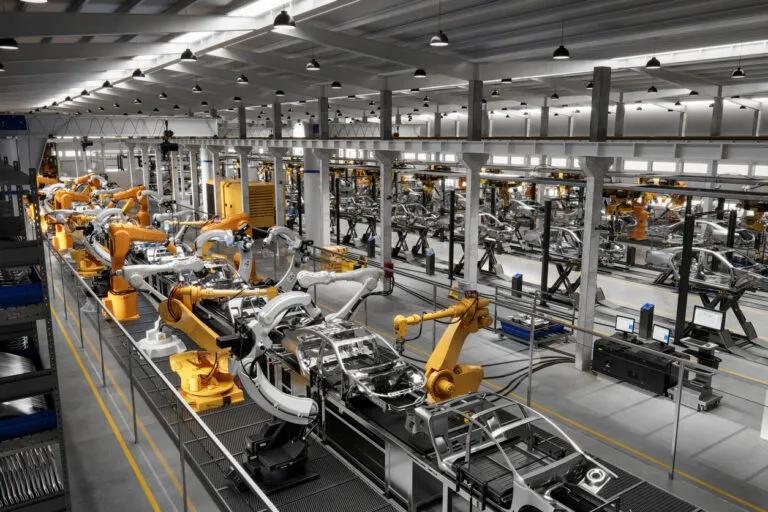
The study highlights significant investments in intelligent robotics, advanced analytics, and AI-powered manufacturing systems. These technologies enable hybrid human-AI manufacturing processes that combine human creativity and judgment with AI's computational power and consistency. Digital twins facilitate this integration by providing real-time feedback loops between physical production lines and virtual optimization models.
Manufacturing digital twins enable aerospace companies to simulate production workflows, identify bottlenecks, and optimize resource allocation before implementing changes on actual factory floors. This approach reduces waste, minimizes disruption, and ensures that manufacturing processes meet strict aerospace quality standards.
Maintenance, Repair, and Operations (MRO) Evolution
Predictive Analytics and Autonomous Maintenance
The MRO segment represents one of the most promising areas for AI and digital twin adoption, with 64% of providers expecting measurable returns from predictive analytics and AI within five years. However, the transformation remains in early stages, with only 5% of MRO executives reporting that their digital strategies are sufficiently scaled for the industry's next phase.
Despite growing investment in advanced technologies, only 2% of surveyed leaders anticipate fully autonomous MRO processes, from fault detection to repair decisions, by 2030. This conservative timeline reflects the complexity of aerospace maintenance requirements and the critical importance of safety in aviation operations.
The shift toward predictive maintenance models represents a fundamental change from reactive to proactive strategies. Digital twins enable continuous monitoring of aircraft components, analyzing sensor data to predict wear patterns, identify potential failures, and optimize maintenance schedules. This approach reduces aircraft downtime while extending component lifecycles and improving operational efficiency.
Return on Investment Expectations
The study reveals optimistic ROI projections, with 32% of aerospace leaders anticipating returns on MRO technology investments within three years. Additionally, 80% of respondents acknowledge that accelerating digital adoption is vital for reducing future operational risks and inefficiencies, indicating strong industry commitment to technological transformation.
Advanced Air Mobility and Electric Aviation
eVTOL and Urban Air Mobility Progress
The research examines the rapidly evolving Advanced Air Mobility (AAM) sector, including electric vertical takeoff and landing (eVTOL) aircraft development. Notably, 70% of surveyed AAM companies are actively building commercial platforms, demonstrating significant industry momentum toward next-generation mobility solutions.
Contrary to common assumptions about public resistance, only 34% of AAM companies cite "public acceptance" as an obstacle to urban air taxi services. This finding suggests that regulatory and infrastructure challenges may be more significant barriers than consumer adoption.
The integration of AI and digital twins proves particularly valuable for eVTOL development, enabling virtual testing of new propulsion systems, flight control algorithms, and operational scenarios. Digital twins allow engineers to simulate electric powertrains, battery performance, and charging requirements before physical implementation.
Supply Chain Resilience and Digital Integration
Supply Chain Vulnerabilities
A critical finding reveals significant fragility in aerospace supply chains, with fewer than 28% of firms capable of pivoting sourcing within 30 days of a Tier-1 supplier disruption. This vulnerability exposes the industry's dependence on complex, global supply networks and highlights the urgent need for more resilient, adaptive supply chain strategies.
Digital Thread Implementation
The study shows that 59% of manufacturers report at least partial implementation of digital thread integration, though full lifecycle integration remains challenging. Digital threads create continuous data flows connecting design, manufacturing, and operational phases, enabling better traceability, quality control, and lifecycle management.
Agentic AI systems offer promising solutions for supply chain challenges by continuously monitoring supplier performance, predicting disruptions, and automatically initiating mitigation strategies. These systems can analyze diverse data sources, including geopolitical events, weather patterns, and economic indicators, to provide early warning of potential supply chain issues.
Industry Leadership Perspectives
Strategic Vision for Transformation
TCS Manufacturing President Anupam Singhal emphasizes that "the aerospace industry has always been one where ambition is matched by precision and safety. Today, ambition is redefined as AI moves from supporting operations to shaping enterprise strategy, advancing passenger experience, safety, and sustainability". This perspective underscores the strategic importance of AI adoption beyond operational efficiency.
Industry leaders recognize that successful AI implementation requires foundational data infrastructure and organizational readiness. Steve Lucas, Chairman and CEO of Boomi, notes that "agentic AI can only succeed when it's built on a strong foundation of connected, reliable data". This insight highlights the importance of data integration and quality management as prerequisites for advanced AI applications.
Future Outlook and Strategic Implications
2035 Transformation Timeline
The TCS study projects that by 2035, aerospace operations will be characterized by intelligent, autonomous systems working in harmony with human expertise. This transformation encompasses design processes enhanced by AI-driven optimization, manufacturing operations guided by digital twins, and maintenance strategies powered by predictive analytics.
The integration of these technologies will enable aerospace companies to achieve higher levels of efficiency, safety, and sustainability while reducing costs and development timelines. Digital twins will facilitate virtual certification processes, potentially revolutionizing how aircraft receive regulatory approval.
Investment and Implementation Priorities
The research indicates that aerospace companies must balance ambitious technological goals with practical implementation challenges. Key priorities include developing robust data infrastructure, training workforce for human-AI collaboration, and establishing governance frameworks for autonomous systems.
Organizations that successfully navigate this transformation will gain significant competitive advantages through reduced development costs, improved operational efficiency, and enhanced customer satisfaction. The study suggests that early adopters of AI and digital twin technologies will lead the industry's evolution toward "future-ready skies" that are safe, sustainable, and intelligent.
The TCS Future-Ready Skies Study 2025 presents compelling evidence that AI and digital twins will fundamentally reshape aerospace operations by 2035. While challenges remain in implementation and workforce adaptation, the industry's commitment to digital transformation positions it for unprecedented levels of efficiency, safety, and innovation. The convergence of human expertise with intelligent technologies promises to create an aerospace ecosystem that is more resilient, adaptive, and capable of meeting the evolving demands of global aviation.