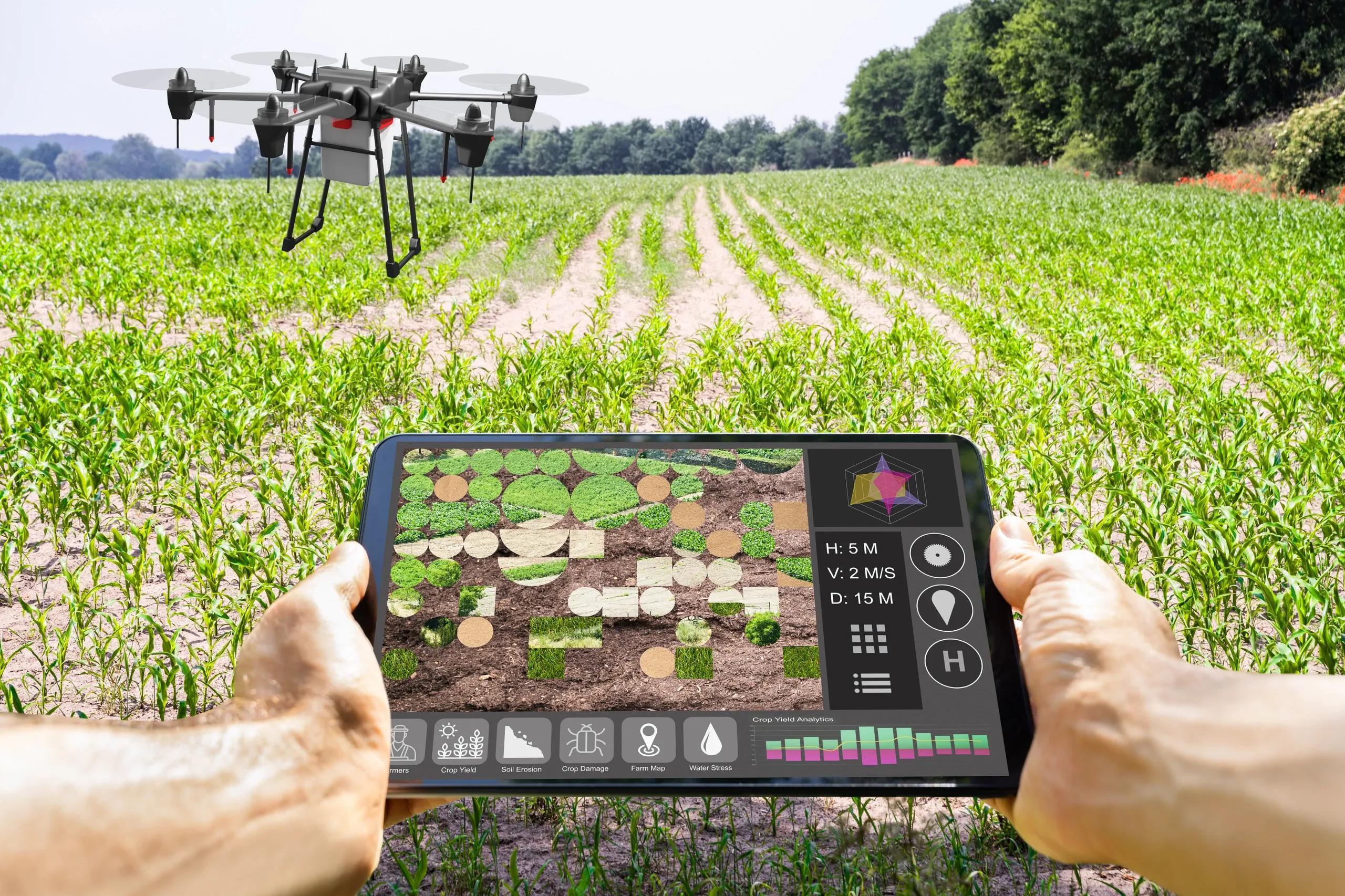
Introduction to Agriculture 4.0
Agriculture 4.0 refers to the next phase of innovation in farming. It combines advanced digital technologies with traditional agricultural practices to address resource constraints and climate challenges. By integrating sensors, data analytics, and automated systems, growers can make precise decisions about planting, irrigation, fertilization, and harvesting. These modern tools are deployed at every stage of the farming process, helping maximize yields while reducing environmental impacts.
The emergence of Agriculture 4.0 is driven by factors such as population growth, climate variability, and the need to enhance resource efficiency. As arable land becomes more limited, farmers must use it strategically and sustainably. In this new era, technology-based solutions are helping agriculture evolve from a resource-intensive industry to a more data-driven and responsive system. The transition emphasizes precision, adaptability, and long-term resilience.
The Significance of Precision Farming
Precision farming is the practice of tailoring agricultural inputs and interventions to specific field conditions. By collecting detailed information about soil characteristics, crop health, weather patterns, and resource availability, farmers can target interventions more accurately. Rather than treating an entire field uniformly, precision farming allows producers to manage smaller sections with customized approaches.
This fine-tuned application of inputs reduces costs and minimizes environmental harm. For example, applying fertilizers and pesticides only where needed helps decrease chemical run-off while preserving beneficial organisms. Precision farming technologies also enable real-time monitoring of crop development. Sensors and data analytics platforms provide alerts on irrigation requirements, soil nutrient levels, and potential pest infestations. The result is a system that reacts quickly to changes and sustains optimal conditions for crop growth.
Drones and Their Role in Modern Agriculture
Drones have become common in agriculture due to their ability to gather high-resolution images at scale. Equipped with thermal, multispectral, or hyperspectral cameras, drones can detect subtle variations in crop health. They can identify issues like nutrient deficiencies, pest infestations, and water stress before they are visible to the naked eye. This timely information helps farmers take corrective action sooner, potentially saving entire fields from damage.
Drones also assist with tasks such as crop spraying and seed dispersal. Automated flight paths make it possible to apply inputs precisely, reducing overlaps and waste. Because drones can survey large areas quickly, they minimize the amount of labor needed while collecting more accurate data. The technology continues to evolve, with improvements in battery life, sensor accuracy, and data processing speeds. Together, these enhancements make drones a crucial component of precision farming strategies, enabling faster response times and improving resource allocation.
Satellite Imagery: A Macro Perspective
Satellite imagery provides vital information on a larger scale. Unlike drones, which focus on individual fields or sections, satellites can cover entire regions. This broad coverage is useful for monitoring environmental trends, weather patterns, and the health of agricultural areas spanning different terrains. With the advent of high-resolution imaging and frequent revisit times, satellites can deliver near-real-time data on indicators such as vegetation index, surface temperature, and water vapor.
Integrating satellite imagery into farm management systems offers valuable insights into seasonal variations and long-term climate patterns. This helps in forecasting weather events and preparing for droughts or excessive rainfall. Machine learning algorithms can sift through vast archives of satellite data, identifying anomalies or patterns that might affect crop yields. By connecting this big-picture perspective with on-the-ground measurements, farmers can align their local practices with regional or global conditions. This fusion of macro and micro data helps optimize resource use and boosts resilience against environmental stress.
AI-Driven Irrigation Systems
Water is a critical resource in agriculture, and its efficient use is becoming more important due to population growth and climate variability. AI-driven irrigation systems aim to reduce water waste while ensuring crops receive the moisture they need. These systems rely on data from soil sensors, weather forecasts, and crop growth models. By analyzing this information, AI algorithms determine the ideal amount of water to deliver at the right time.
These smart systems can be integrated with drip or pivot irrigation setups. They automatically activate valves and pumps, applying water based on real-time conditions rather than preset schedules. For example, if sensors detect adequate moisture in certain areas, the system can pause irrigation there and redirect water to drier zones. This reduces runoff and soil erosion while maintaining uniform crop health.
Automation also frees farmers from constant manual monitoring, providing more time for other tasks. Over the long term, AI-driven irrigation can lead to significant water savings, thus lowering costs and reducing strain on local water resources. Such efficiency supports more stable agricultural production, particularly in regions with frequent droughts or unreliable rainfall patterns.
Climate-Adapted Crops for Future Resilience
Climate-adapted crops are plant varieties engineered or bred to tolerate specific environmental stresses like high temperatures, drought, and salinity. These varieties often exhibit traits such as deeper root systems or altered metabolic pathways that allow them to thrive in challenging conditions. Advances in biotechnology have accelerated the development of such crops, focusing on traits like improved water-use efficiency and disease resistance.
In precision farming, these climate-adapted crops become even more effective. They can thrive in precisely managed environments that match their specific growth requirements. By pairing these resilient plant varieties with data-driven tools, farmers can mitigate the effects of changing weather patterns, erratic rainfall, and shifting pest populations. Climate-adapted crops also play a key role in safeguarding local communities against food shortages. They offer a form of insurance against extreme climate events and can deliver higher yields under stress conditions compared to conventional varieties.
Sustainability and Resource Management
Sustainability in agriculture means meeting present food needs without compromising future generations’ ability to do the same. Precision farming and climate-adapted crops both help achieve this balance. By tailoring the use of inputs, water, fertilizers, pesticides, to actual needs, farmers reduce resource wastage and lessen pollution. Climate-adapted crops further minimize risks associated with environmental changes, requiring less intervention while still producing viable yields.
Waste reduction extends to post-harvest processes as well. With accurate forecasting and planning, farmers can optimize harvest times and storage conditions. This precision helps reduce spoilage and energy consumption. Moreover, sustainable practices include crop rotation and intercropping, which enrich soil health and diversify the farm ecosystem. Data-driven insights into soil composition and pest pressures guide decisions about the best crop combinations, helping maintain a balanced nutrient cycle.
Global Food Security Implications
Global food security hinges on consistent and equitable access to nutritious food. Precision farming practices, paired with climate-adapted crops, can boost overall production while preserving vital resources. This is especially important in areas with limited land or water availability. By enhancing productivity on existing farmland, there is less pressure to convert natural habitats into agricultural land.
Reliable production also stabilizes markets and prevents rapid price fluctuations. Smallholder farmers, who form the backbone of agriculture in many developing regions, can benefit from these innovations if they have access to affordable technologies and training. Government policies and public-private partnerships can accelerate the transfer of knowledge and resources, enabling small-scale producers to implement precision agriculture techniques. This inclusive approach ensures that technological gains do not stay limited to large commercial farms.
Challenges and Considerations
Despite the advantages, challenges remain. Upfront costs of implementing precision technologies can be high, especially for smaller farms. Reliable internet connectivity and power supply are also critical for running drones, satellite-based tools, and AI systems. Without robust infrastructure, the effectiveness of these innovations may be limited in certain regions.
Data management is another area that requires careful planning. Farming operations generate vast amounts of data that must be stored, processed, and analyzed securely. Privacy concerns can arise when data is shared across platforms or with third parties. Regulations around drone flights, satellite imaging, and genetic engineering can further influence how quickly and widely these technologies are adopted. Balancing innovation with ethical and environmental considerations will be essential for building trust among consumers and regulatory bodies.
In conclusion, agriculture 4.0 marks a major shift in how food is produced. Precision farming, driven by drones, satellite imagery, and AI-driven irrigation, increases yields while conserving resources. Climate-adapted crops add a layer of resilience, helping agriculture respond to the planet’s changing conditions. Together, these strategies contribute to a more sustainable and reliable food system, capable of supporting a growing global population.
The journey toward Agriculture 4.0 involves technical, economic, and social considerations. Investments in infrastructure, education, and research will play a key role in ensuring broad-based adoption. As farmers and policymakers work together to scale these innovations, the promise of secure and sustainable food supplies becomes more realistic. Ultimately, Agriculture 4.0 is not just a technological milestone; it is a framework for transforming the world’s food systems to be more adaptive, efficient, and equitable.