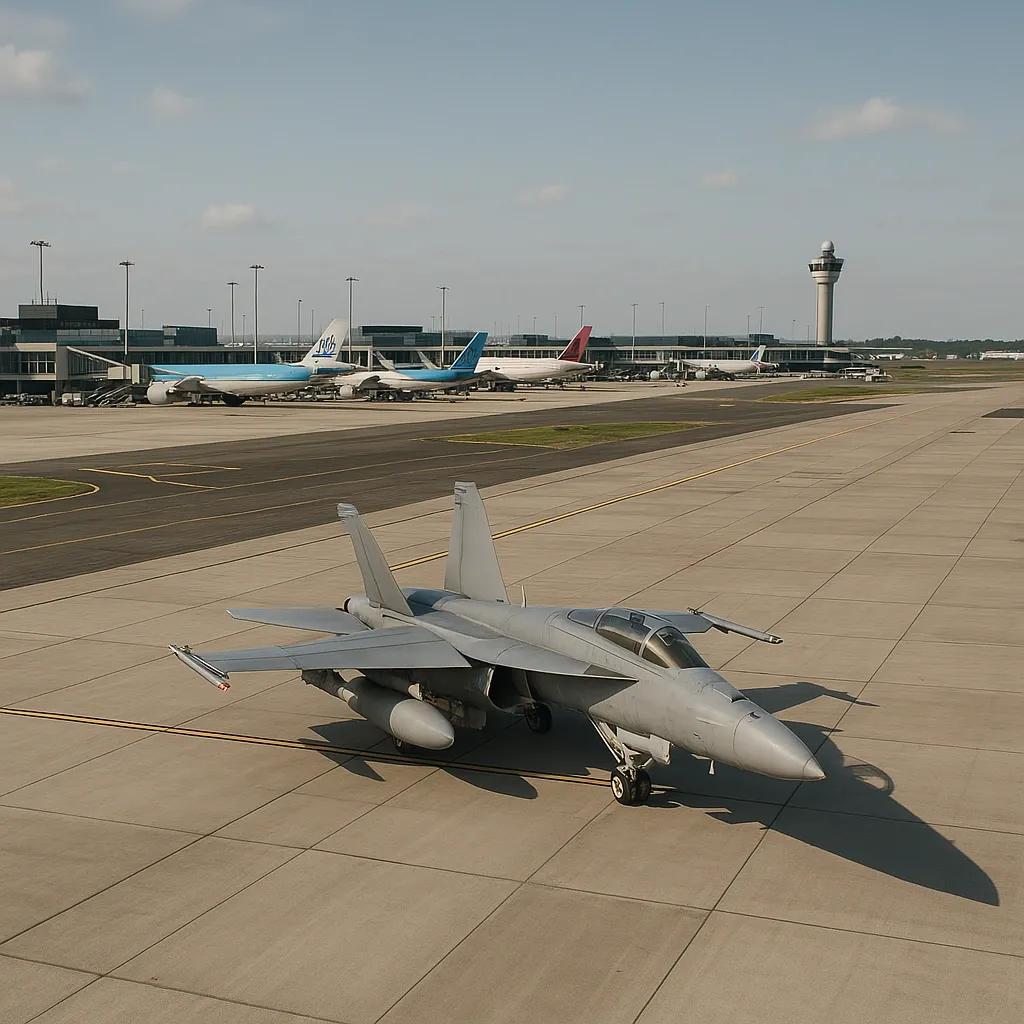
The aerospace and defense (A&D) sector operates some of the world’s most complex, expensive, and high-stakes assets, from fighter jets and satellites to naval ships and missile systems. Managing these assets over their multi-decade life cycles requires precision, security, adaptability, and traceability. Traditionally, this has involved fragmented data systems, manual inspections, and costly downtime.
With the push toward digitization and sustainability, the A&D industry is now turning to two powerful technologies: Extended Reality (XR) and Digital Twins. Together, they are transforming how A&D organizations design, maintain, and retire assets, while enabling circularity, improved mission readiness, and reduced operational costs.
This article explores how XR and digital twins work in tandem to support asset lifecycle management in the aerospace and defense sector, from concept design to maintenance, upgrades, and end-of-life planning.
Understanding the Lifecycle Challenge in A&D
A typical defense or aerospace asset may remain in service for 30–50 years. Managing such a lifecycle involves:
Continuous upgrades for performance and security
Ongoing inspections, maintenance, and certification
Extensive documentation and compliance reporting
Personnel training across globally distributed teams
Planning for phased decommissioning or repurposing
In this context, fragmented paper records, siloed CAD files, and traditional simulation tools are insufficient. Organizations require a centralized, dynamic, and interactive system that can evolve with the asset, and that’s where XR and digital twins come in.
What Are Digital Twins in A&D?
A digital twin is a dynamic, data-driven digital replica of a physical asset, system, or process. In aerospace and defense, digital twins are used for:
Aircraft, UAVs, and satellite platforms
Engines and propulsion systems
Airfields and naval bases
Command and control systems
A digital twin integrates data from various sources, CAD/BIM models, IoT sensors, telemetry, maintenance logs, mission data, and evolves over time to reflect the real-world status of the asset.
Key Capabilities:
Real-time performance monitoring
Predictive maintenance analytics
Failure scenario simulations
Lifecycle cost and risk modeling
Integration with cybersecurity and supply chain data
What is XR and Why It Matters?
Extended Reality (XR) is an umbrella term that includes Virtual Reality (VR), Augmented Reality (AR), and Mixed Reality (MR). In A&D applications:
VR immerses users in simulated environments for training and design review.
AR overlays digital content on physical equipment, supporting field maintenance.
MR allows interaction with holographic representations of assets in real-world settings.
XR applications bring digital twin data to life in an intuitive, spatially aware interface, enhancing understanding, reducing training time, and increasing accuracy.
XR + Digital Twins: Managing the Asset Lifecycle
1. Design and Engineering
During the conceptual and engineering phases:
Digital twins integrate CAD/BIM and simulation data to model asset performance under different operating conditions.
XR allows engineers and stakeholders to visualize complex assemblies at full scale before they are physically built.
Design teams can collaboratively review models in immersive environments, speeding up design cycles and catching issues early.
Example: Aircraft manufacturers use VR-based design reviews of airframe sections, enabling engineers in different countries to collaborate in real time without physical prototypes.
2. Manufacturing and Assembly
Digital twins can simulate production workflows, test tolerances, and optimize the sequencing of complex assemblies.
XR enables step-by-step AR-guided instructions for technicians on the factory floor.
MR headsets reduce reliance on printed manuals and reduce errors during high-precision tasks.
Example: A defense electronics firm uses AR glasses to guide assembly of radar modules, reducing errors by 40% and cutting training time by half.
3. Maintenance, Repair, and Overhaul (MRO)
MRO is one of the most critical phases in the A&D lifecycle, costly downtime can jeopardize readiness and budgets.
IoT-enabled digital twins provide predictive maintenance insights, flagging anomalies before failures occur.
AR overlays can guide technicians through maintenance procedures on-site, with real-time access to digital documentation.
VR simulations train ground crews on rare or dangerous repair procedures in a risk-free environment.
Example: A military airbase uses digital twin dashboards to monitor jet engines and plan parts replacement proactively, extending component life by 20%.
4. Training and Simulation
XR environments powered by digital twin data offer immersive, realistic training for pilots, engineers, and technicians.
VR-based simulators replicate exact aircraft or cockpit conditions.
AR-based field training replicates real-world maintenance tasks.
Digital twins ensure that the training content reflects the exact configuration and status of the deployed asset.
This enhances safety, reduces dependency on physical assets for training, and supports ongoing capability development.
5. Sustainment and Upgrades
Throughout the lifecycle, assets are frequently upgraded with new systems, sensors, or structural modifications.
Digital twins track component-level history and configuration data.
XR allows teams to simulate upgrade integration and test compatibility before field deployment.
Impact on structural integrity, weight distribution, or system performance can be evaluated in advance.
Example: A naval shipyard uses a digital twin to plan upgrades to radar systems across multiple vessels, avoiding conflicts with existing onboard hardware and reducing retrofitting time.
6. End-of-Life and Repurposing
As assets near end-of-life, digital twins support:
Decommissioning planning : Identifying which components can be reused, recycled, or require special disposal.
Historical traceability : Maintaining records for audit and compliance.
Repurposing analysis : Exploring whether an asset can be converted to training or civilian use.
XR can assist with visualizing disassembly sequences and training teams for decommissioning protocols.
Integration with Geospatial Intelligence
Geospatial data further enhances digital twin and XR systems by providing location-based context for:
Asset positioning across global operations
Terrain and weather simulation for mission planning
Base layout optimization and fleet distribution modeling
For example, a defense logistics team can visualize aircraft health across multiple bases in real-time, using a geospatial dashboard linked to digital twin data.
Benefits of XR and Digital Twins in A&D
Benefit: Impact
Reduced Downtime: Predictive maintenance prevents unexpected failures
Cost Efficiency: Virtual prototyping and training cut development and MRO costs
Faster Training: Immersive XR shortens the learning curve
Improved Accuracy: AR guidance reduces human error in assembly and servicing
Sustainability: Longer asset life and planned reuse support circularity
Enhanced Readiness: Real-time monitoring and simulation support mission availability
Challenges and Considerations
Challenge: Mitigation
Data Security: Implement strict access controls and cybersecurity protocols
System Integration: Ensure interoperability with PLM, ERP, and GIS platforms
Hardware Costs: Use scalable deployments, starting with high-impact assets
Talent Training: Upskill teams in XR usage and digital twin management
Conclusion
The integration of XR and digital twins is redefining how aerospace and defense organizations manage complex assets across their lifecycle. From immersive design and virtual training to predictive maintenance and circular end-of-life planning, these technologies provide a unified, real-time, and intuitive view of assets in operation.
As the A&D sector continues to pursue readiness, resilience, and resource efficiency, XR and digital twins will become indispensable tools, enhancing operational performance while enabling the shift to circular, sustainable asset strategies.